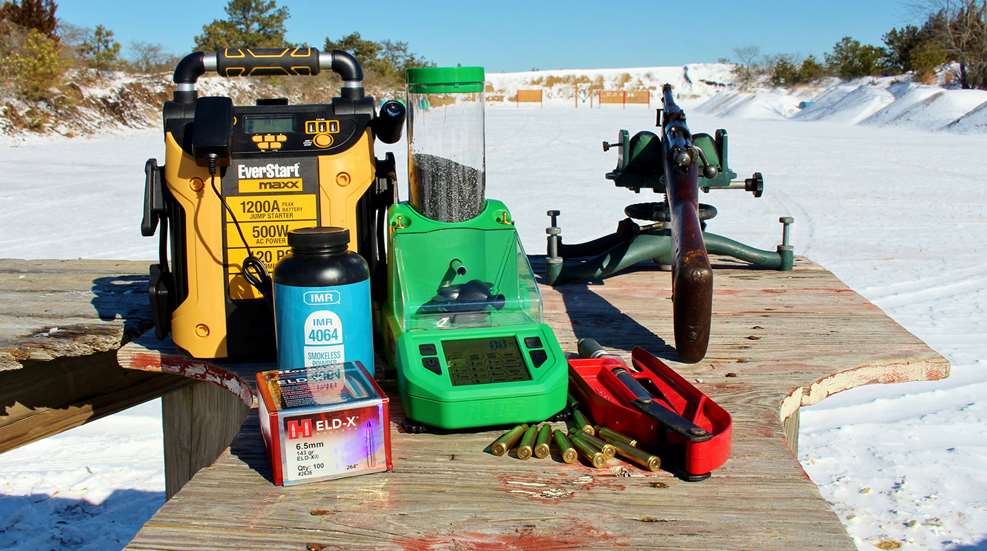
Relatively early in adolescence, I learned that the secret to productivity is to fit smaller tasks into my periods of downtime. Shooting is one of those activities that is chock full of these periods, no matter how hard it is to accept. Between ceasefires, barrel cooling and firing unnecessary rounds it’s a wonder as to how we get anything accomplished at all. I think of these times when a student tells me that “they don’t have time to handload,” and it raises an eyebrow when I suggest that they just do it at the range. For centuries, we have done this with muzzleloaders. Why not apply the process to metallic-cartridge-firing guns? Even if but for load development, the time savings can be astronomical.
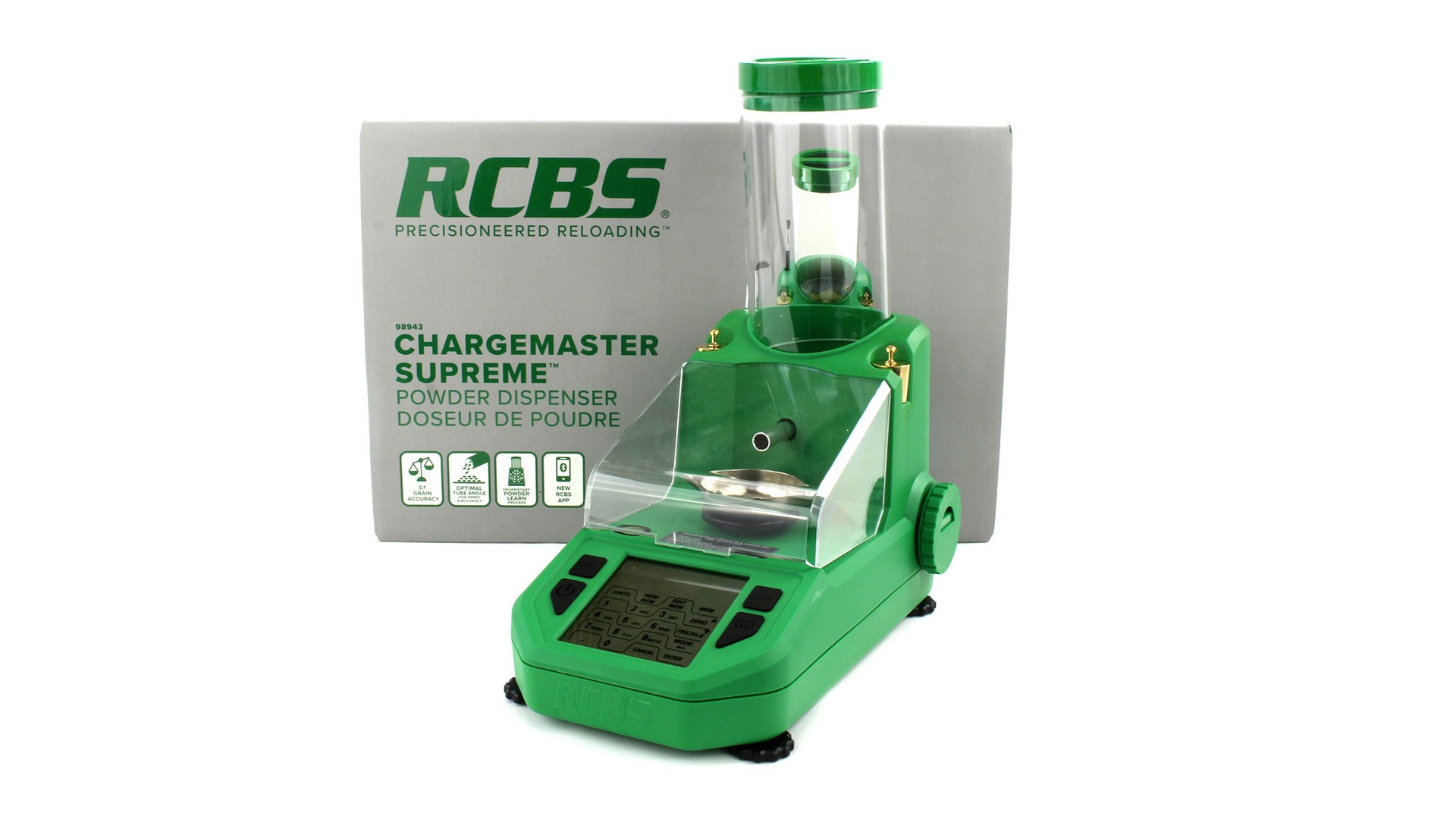
Late in 2021, RCBS released both the Chargemaster Link and the Chargemaster Supreme, both touting the newest Bluetooth technology and a host of features for improved powder dispensing. In addition, the company informed us that these two new models work well with portable power packs, paving the way to conduct load development nearly anywhere imaginable. After reading the press release, I was most interested in the Supreme for its powder “learning” capability and because it could store 50 pre-set loads, cutting down my paperwork a bit too. With that in mind, I requested a sample and then dug out my old Lee handpress, another invaluable tool for making ammo on the go.
To understand the benefits of reloading at the range, we first need to realize the pitfalls of doing it home. The basic process involves making a large variety of loads that span the entire safe powder spectrum in the smallest increments that you can stand. If you are like me, then you likely do this twice so that you can fire two groups instead of just one. Before we get into time, let's just go ahead and examine the additional cost associated with this process, as all but ten of those rounds are going to be used up in the name of research. If we were to load these one at a time at the range, we wouldn’t need to fire two groups of a given powder charge if the first one is a complete dog. Furthermore, we can stop as soon as we find that right charge without the need to fire or pull bullets that we loaded up in anticipation of firing a full series of research.
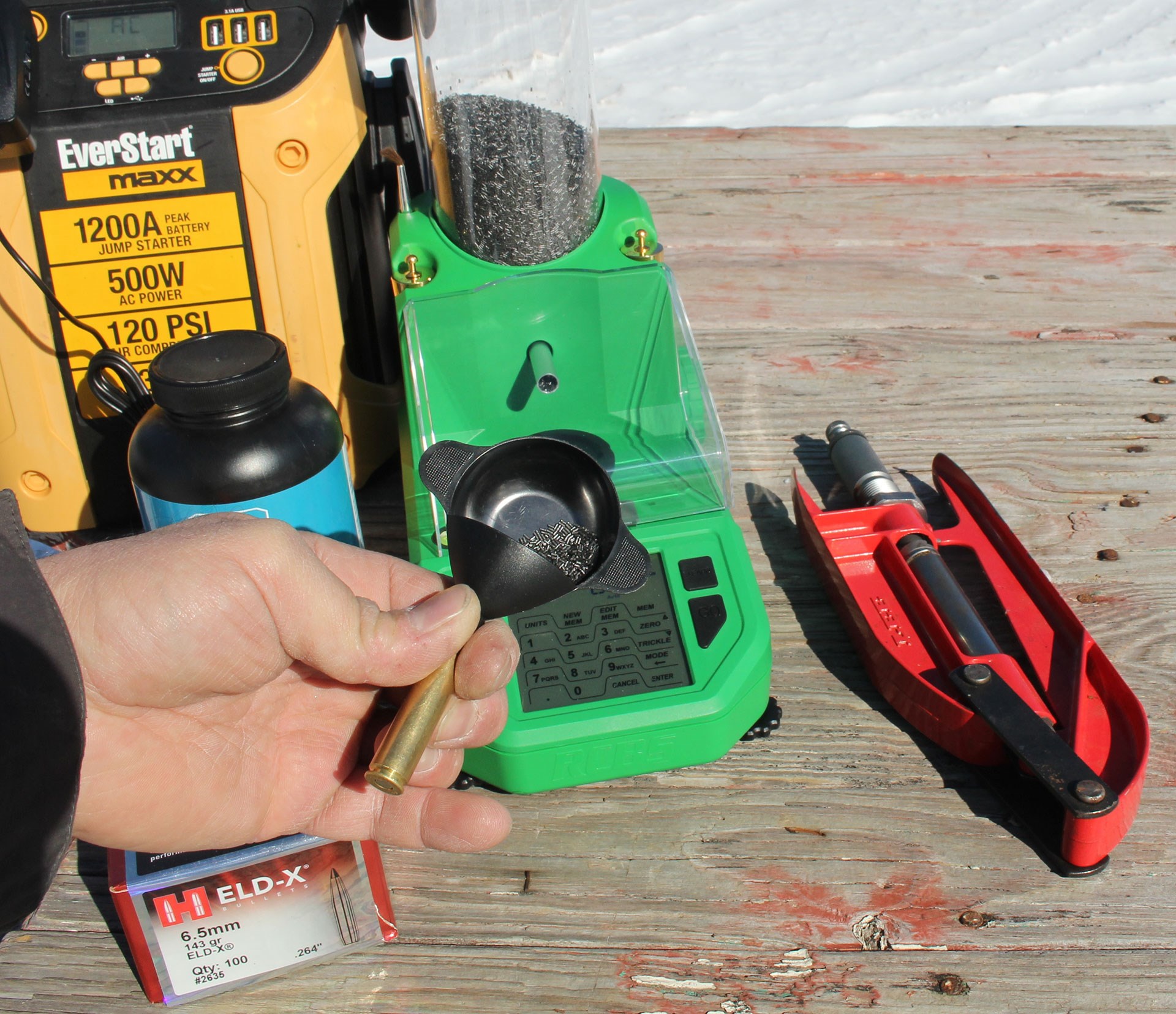
As I started this piece with a reference to time, let’s observe these savings. What do we do in between firing groups? Well, typically nothing. I for one pick up my brass and stare into the clouds waiting for the barrel to cool. This is a prime opportunity to load the next five rounds that I wish to test. It might only be five minutes, but if it’s five minutes in between a dozen loads, we are looking at roughly a full hour. Coincidentally, that is just about the same amount of time that it takes me to roll off a typical series of load development at home. With this practice, I just bought myself enough time for a decent workout or more realistically, two more episodes of my favorite cringe-worthy Netflix show.
If you subscribe to the ladder theory of load development, this is a handy tool for you too. Typically, this process involves testing one round of each increment and studying the group to see where a node might be hiding. This is done in an attempt to narrow down how many different charge weights you need to load and test. After that first day at the range, a ladder tester will then go home and load up a few rounds of what they believe to be winners. That’s a whole lot of back and forth if you ask me (an hour-long round trip in my case). By loading at the range, you can pop off your ladder loads and then test what looks promising before packing your bags. In addition, if you throw a shot you can quickly make a duplicate and retest it, making this form of development far more conclusive.
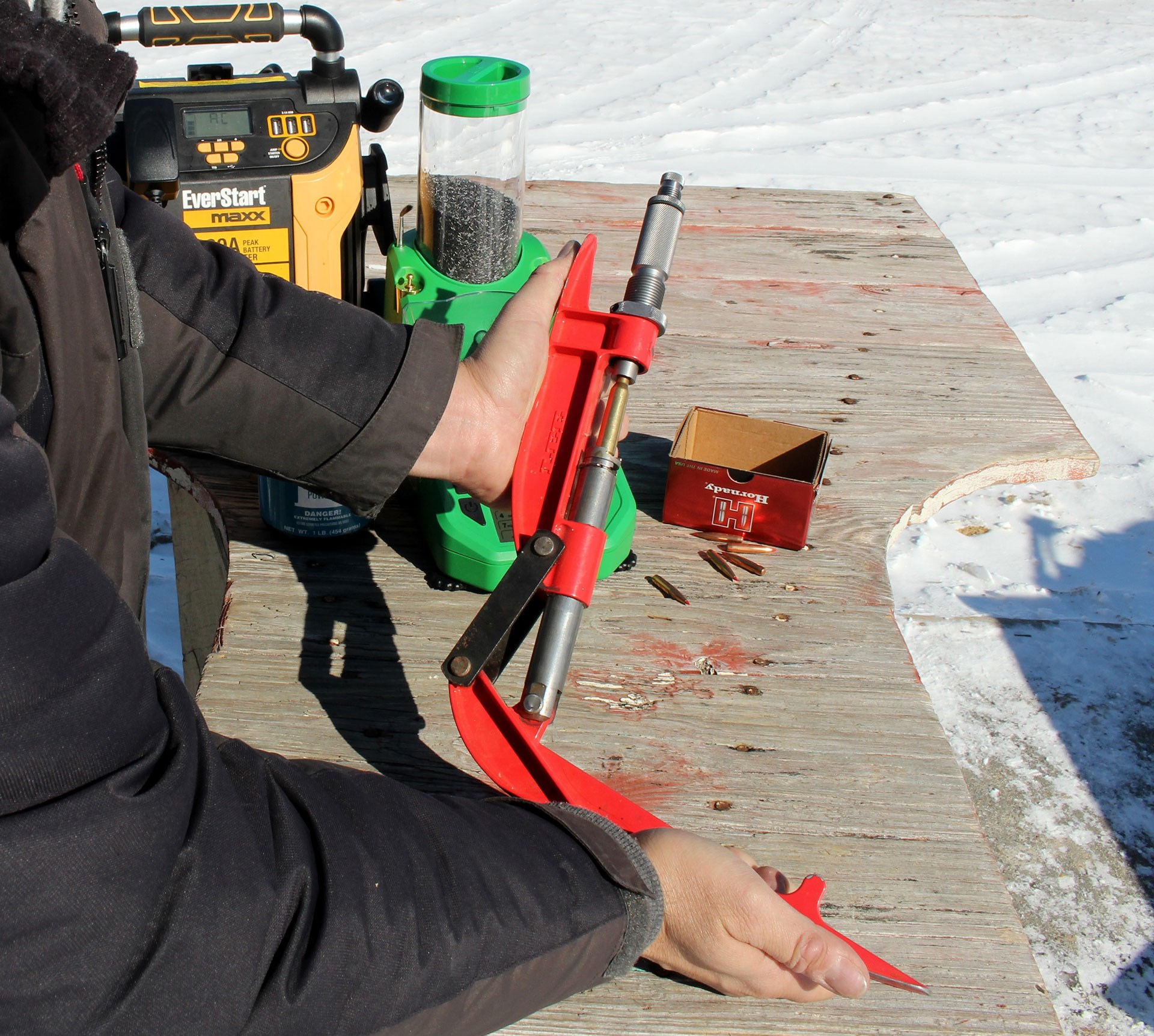
To the tune of duplicate shots, in the aforementioned text, I referenced making a second group to provide a control to a given charge-weight increment. That’s quite a bit of extra rounds to load and either shoot or pull. By loading at the range, I can send five of a given load down and if it looks promising send a second or even third group behind it. Once I hit that node I can then stop, cutting load development down to less than half. In this world of component shortages that in itself is certainly desirable.
Reloading at the range can save you time and money, regardless of how you feel your best load should be discovered. Furthermore, the component savings that it yields might just close the gap enough between product runs, helping you to avoid running dry during these trying times. Lastly, and to a large degree, this practice can impact your entire lifestyle; as it wrings time out of your day that you otherwise wouldn’t realize was there in the first place. When they say, “There aren’t enough hours in the day,” it pays to realize that practices like this will figuratively add a few.
Most Popular