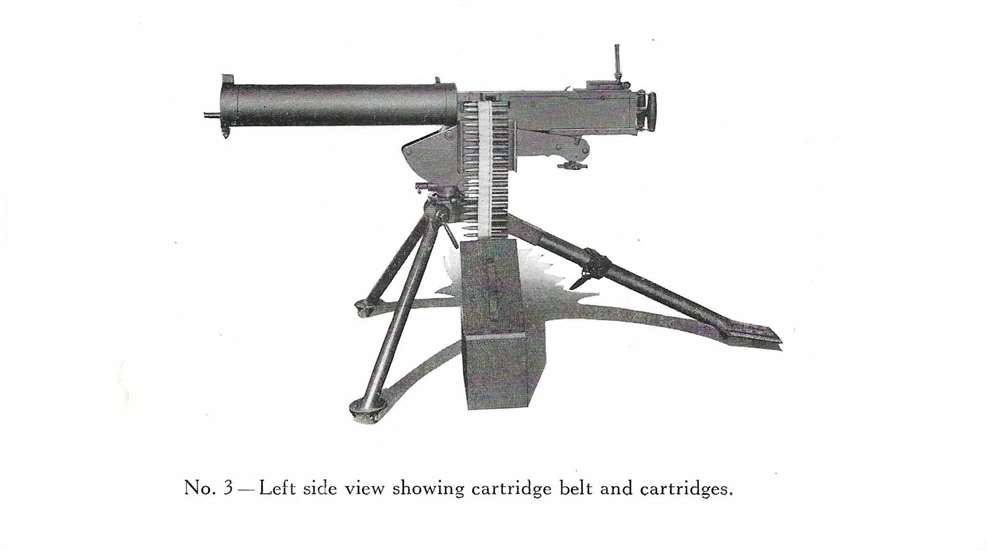
One of the most long-lived firearms in the U.S. military arsenal is the M2 .50-cal. Browning Machine Gun, which has been in service for nearly 100 years. It's one of the most recognizable military firearms on Earth, but while the M2 Browning continues to operate, it couldn't have existed without extensive trials and development. Along that development path, Colt stepped out with its commercial Model 1924 Automatic Machine Gun, which was sold to nations throughout the '20s, '30s and into the early years of World War II. In the American Rifleman Tech Files, past editors have preserved an original handbook detailing the components and operation of the Colt Model 1924.
 The manual details the gun's capability and necessary maintenance procedures to newly minted owners flipping open the booklet for the first time. "The Colt Automatic Machine Gun, Model 1924, cal. 50, is a water jacketed, recoil operated machine gun of the heavy class type, fed from a belt holding 100 rounds of ammunition arranged in horizontal layers in a feed box attached to the tripod. It is capable of sustained fire, and is particularly suited for direct, indirect, overhead, and barrage fire for anti-aircraft and tank service, being of larger caliber than the Caliber .30, with consequent increased charge and projectile, a feature accomplished without a proportionate increase in the weight of the gun."
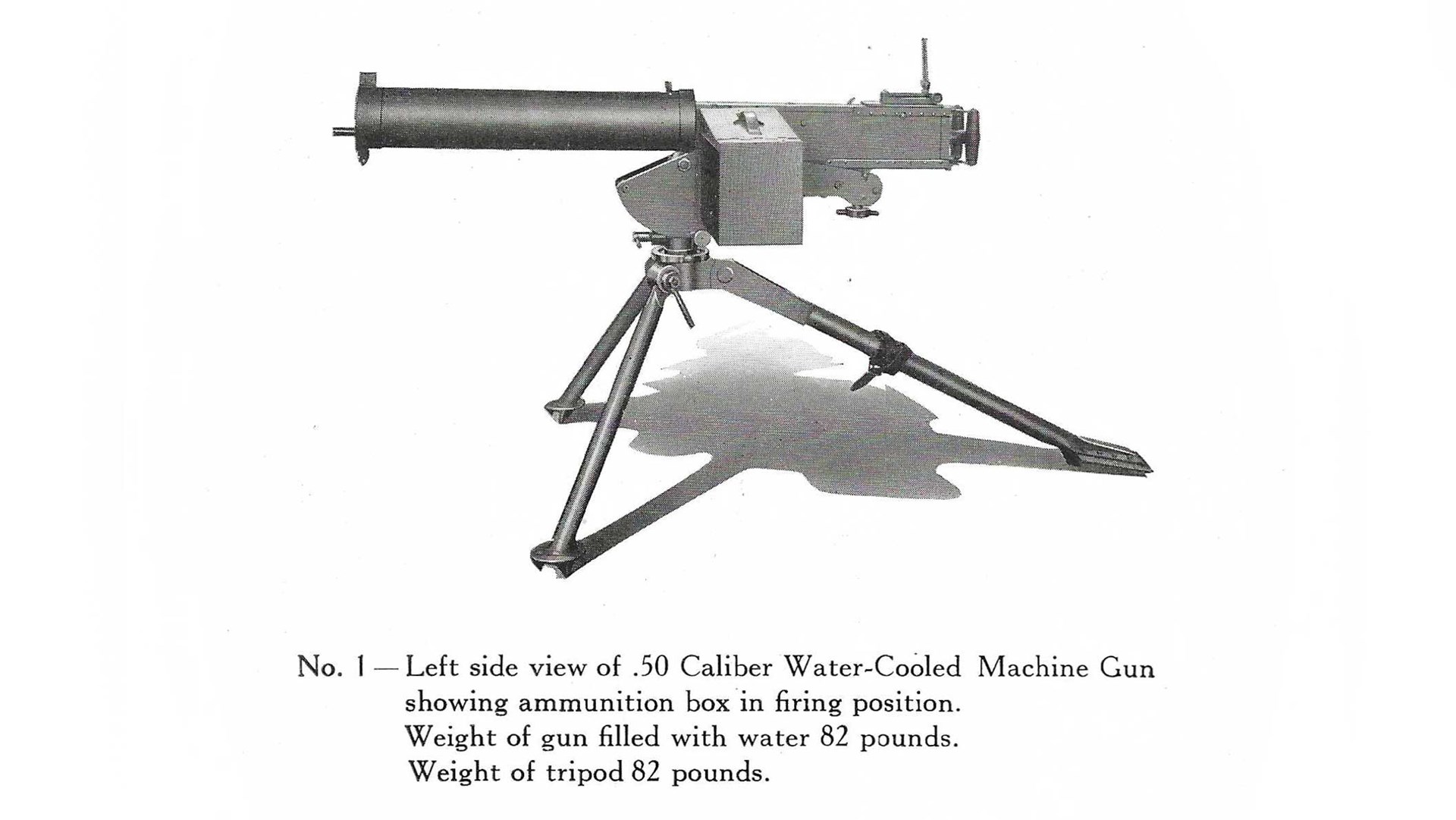 While the increase may have not been proportionate, as the M1917 Browning of the World War I era weighed just over 100 lbs. loaded with water and ammunition, there's no question that it still wasn't substantial. Together with the tripod and a full jacket containing two gallons of water, the gun weighed more than 180 lbs. Colt also extolled the virtues of this commercial design to other prospective buyers in its handbook.
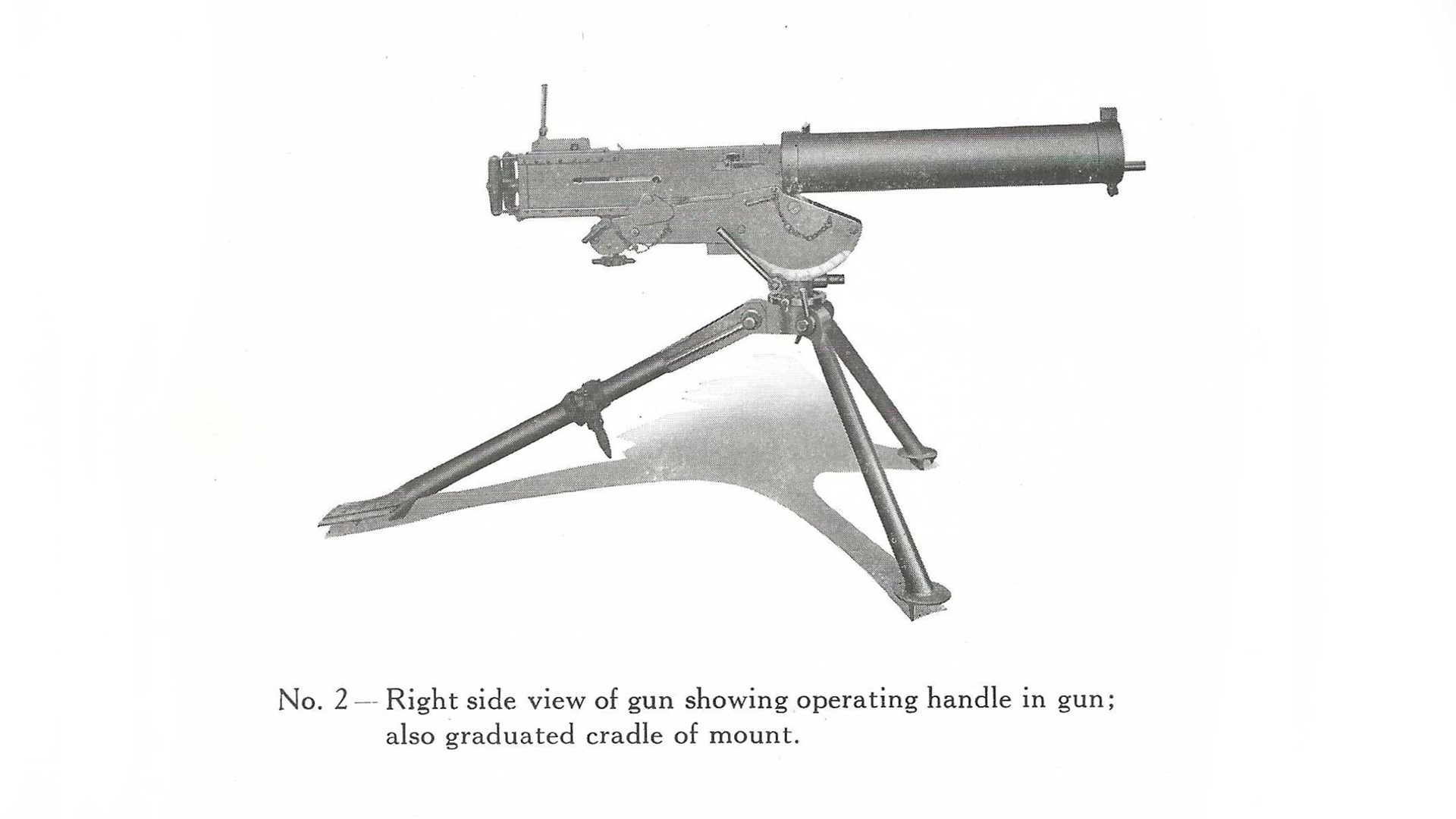
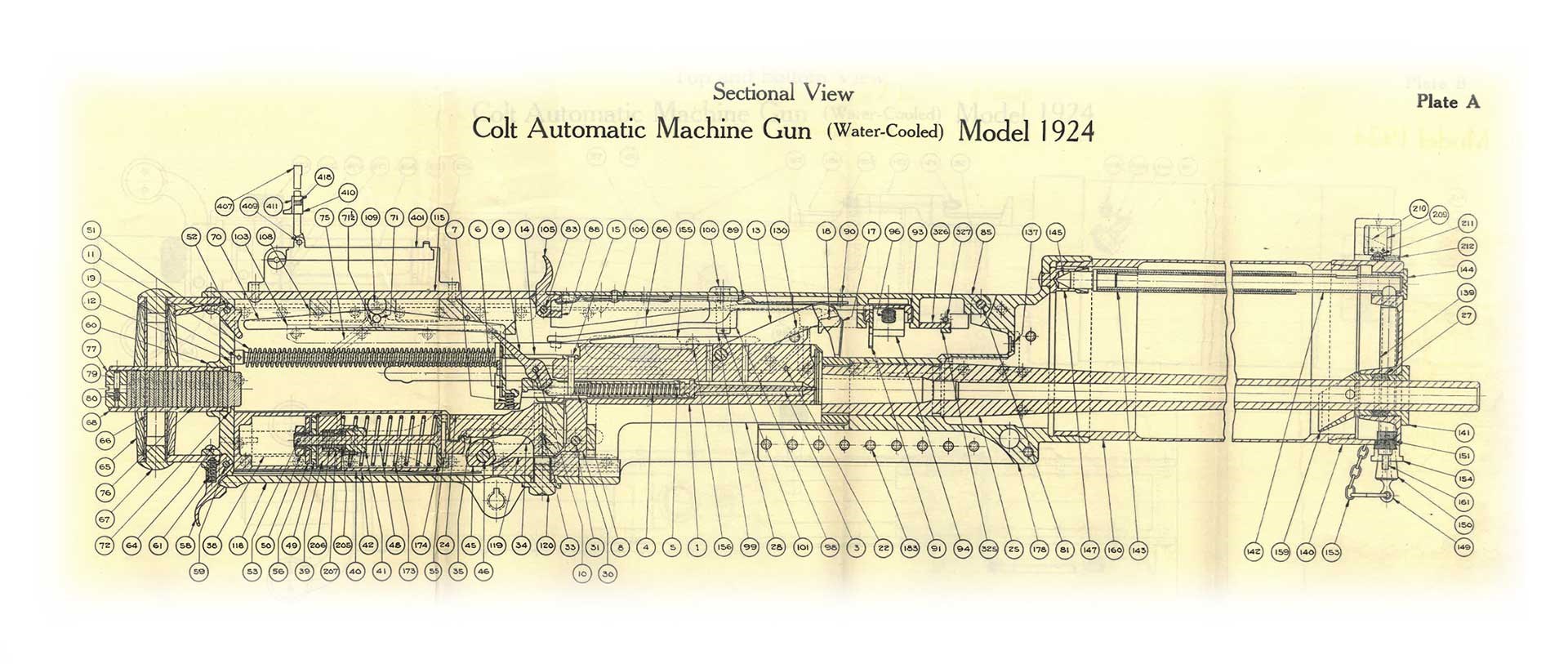 "The gun is composed of only about forty main parts which can be disassembled and assembled in the field with great ease and rapidity. It is superior to all other machine guns of its type in that it is composed of fewer and more durable parts; has less vibration by reason of its reciprocating action and combines light weight with greater durability. On its mount it possesses a wide angle of depression and elevation; swings in a complete arc and can be shot from the prone position. Can be fired up to 500 shots without replenishing water in water jacket, and the operator is not hampered with the necessity of gas or spring adjustments. This gun was adopted by the U.S. Government as the result of a long series of tests during 1921-1922."
 Again, as with so many marketing statements of the time period, there may have been kernels of truth, but it wasn't wholly accurate. While the U.S. military had requested the earliest versions of what later became the M1921 Browning and was sold as the Colt Model 1924, in the early 1920s, things were still very much in the experimental stage. It wouldn't be until the mid-1930s that the military officially began using what had been officially adopted as the M2 Browning.
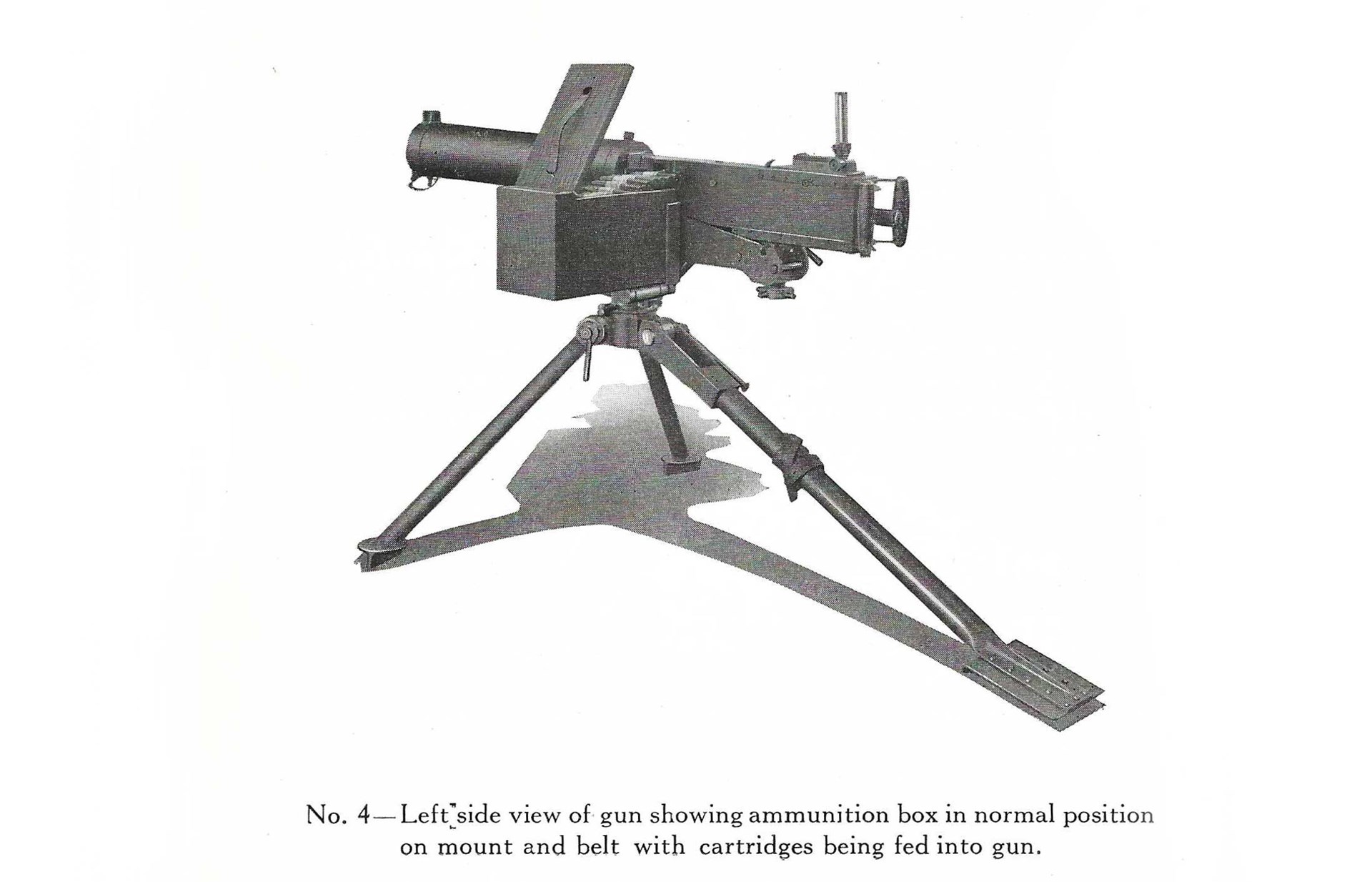 Additionally, headspace did require adjustment, but according to the manual, that could be performed easily without tools. One especially alarming note in the manual will strike modern-day readers, as Colt instructs users to "pack the barrel" in order to prevent water from escaping at the front and rear of the jacket, where the barrel entered and exited. The material of choice for packing? Asbestos.
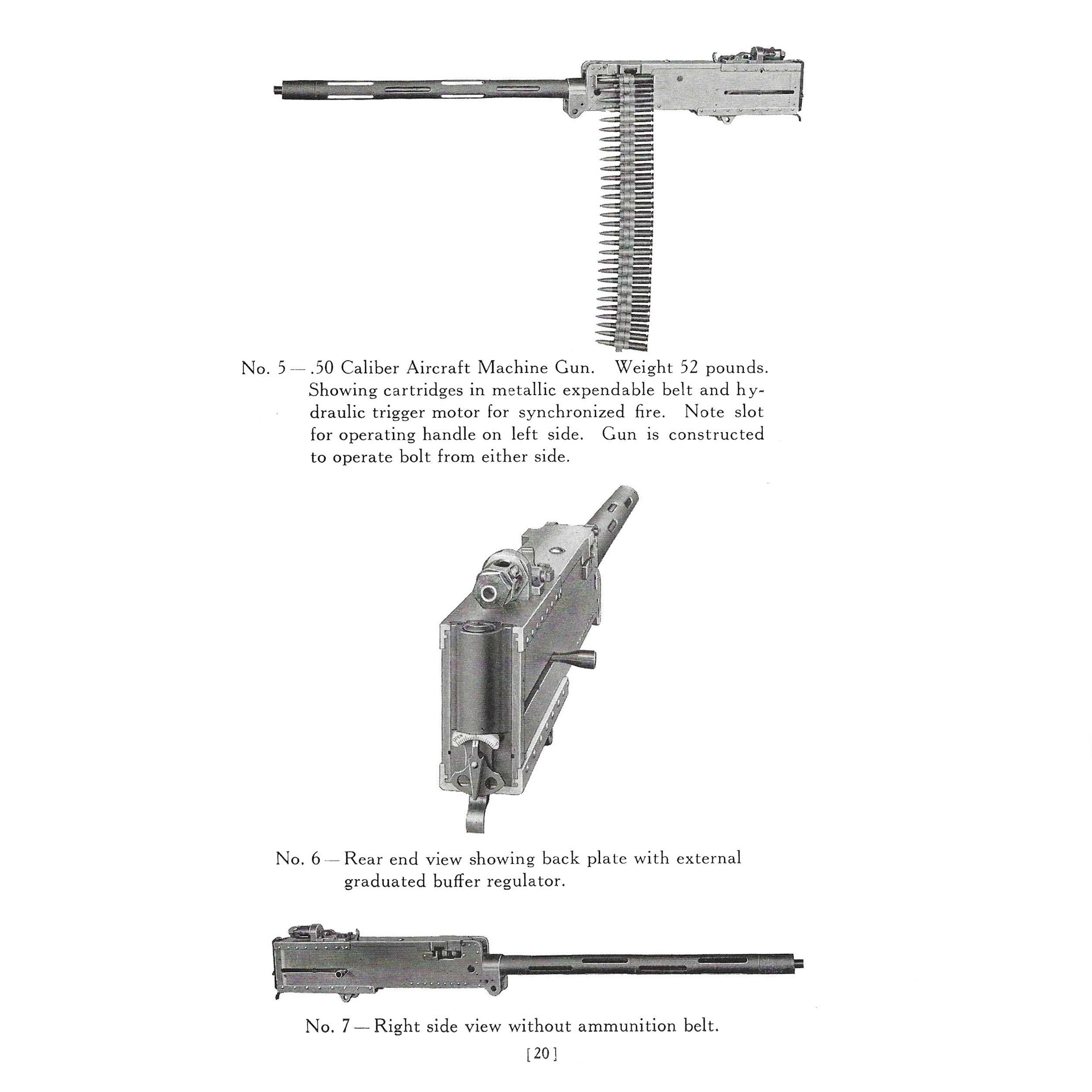 In addition to the water-cooled model, Colt also sold an air-cooled version of its Model 1924 as an "Aircraft Machine Gun." Instead of a heavy, water-filled jacket, the aircraft model's barrel was surrounded by a perforated tube that allowed air to circulate, thereby cooling the barrel. In the 1930s, Colt would change the name of these guns, calling the water-cooled model the MG52 and the air-cooled model the MG53, but the design remained the same. At the outset of World War II, Colt would dedicate all of its production capability to U.S. military needs, and that was the end of the line for the Model 1924.
Most Popular