Among the most notable military longarms of the 18th and 19th century was the French military musket, commonly called the "Charleville." These flintlocks saw service throughout the wars of the mid-18th century and armed French troops during the Napoleonic Wars, culminating in the June 1815 Battle of Waterloo. Watch our "American Rifleman Television" I Have This Old Gun segment above to see the details of the iconic French Charleville musket.
"Most people, when they think of a muzzleloading musket of the 19th century, they think of the British Brown Bess," American Rifleman Field Editor Garry James said. "However, the French produced some superb, superb military longarms, two good examples being the Models 1763 and the 1766, which were widely used by the Americans in the American Revolution, as well as the Model 1777, which were carried by the French that were sent over to assist the Americans during the Revolution."
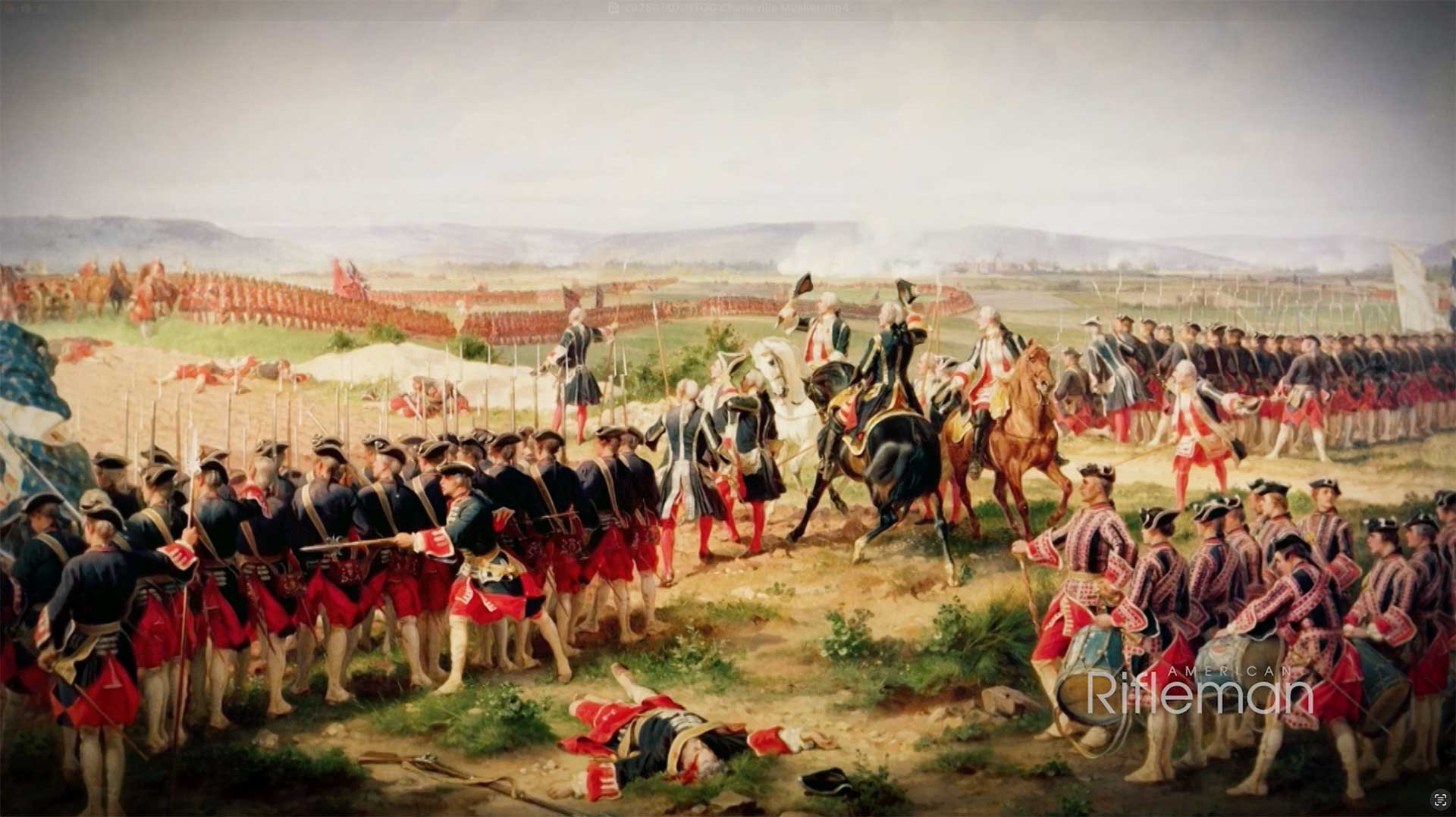
Typical of other military muskets of the time, the French Charleville was a large, flintlock musket weighing about 10 lbs. and having a .69-cal. smooth bore that could be more easily loaded than the contemporary rifles of the time. A section of the full-length walnut stock was cut back just behind the muzzle to accommodate a triangular socket bayonet.
"So the Charleville musket was a standard infantry long arm of the French military from 1717 until shortly after the Battle of Waterloo in 1815," NRA Museum Director Philip Schreier said. 'The total number made was about 7 million, with 2 million of that 7 million having been what they call "Year Nine Correction" guns, the 1777 model corrected in the year 1800 or Year Nine, that was basically made under the direction of the first council of Napoleon Bonaparte."
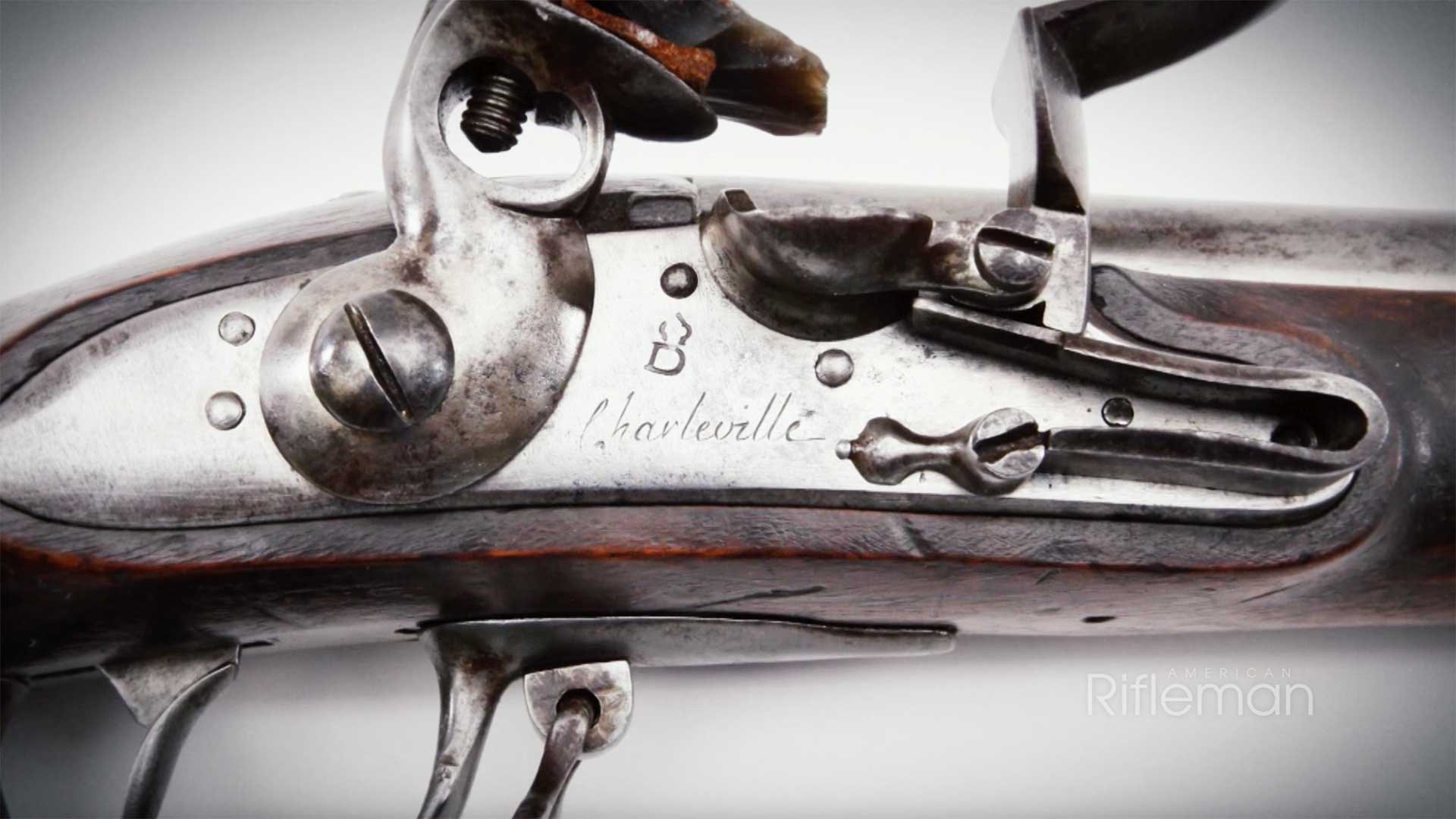
Year Nine Correction guns, known in French as "corrige an IX," had a redesigned flash pan where the pan itself was shifted slightly forward, providing greater protection for the soldier firing it, as the geometry of the flash pan ensured that much of the priming flash was directed more forward and upward. The cock was simplified for ease of manufacture, and several springs were removed or repositioned to make the musket more durable for military service.
"We call them 'Charlevilles' because that's where a lot of early French muskets were made, but they weren't made just at Charleville," American Rifleman Executive Editor Evan Brune said. "These were made at French arsenals at Maubeuge and Mutzig and St. Etienne and Tulle. And so when we say 'Charleville,' we're describing an entire class of arms made at a range of manufactories across France. But the name 'Charleville' stuck because of our experience with these guns in the American Revolution."
With the Model 1777 musket, French arms manufacturing began shifting to what became known as the "systeme Gribeauval," named after French artillery officer Jean-Baptiste Vaquette de Gribeauval, who pioneered manufacturing techniques that produced standardize parts for artillery. Further work by French gunsmith Honoré Blanc applied this system of manufacture to small arms, which allowed for improved manufacturing speed and ease of repair.
"It's interesting in that it was manufactured to such close tolerances that it was one of the first, if not the first, military longarm that actually enjoyed the ability to have parts interchanged one to the other," James said. "A very, very, very fine gun."
To watch complete segments of past episodes of American Rifleman TV, go to americanrifleman.org/videos/artv. For all-new episodes of ARTV, tune in Wednesday nights to Outdoor Channel 8:30 p.m. and 11:30 p.m. EST.