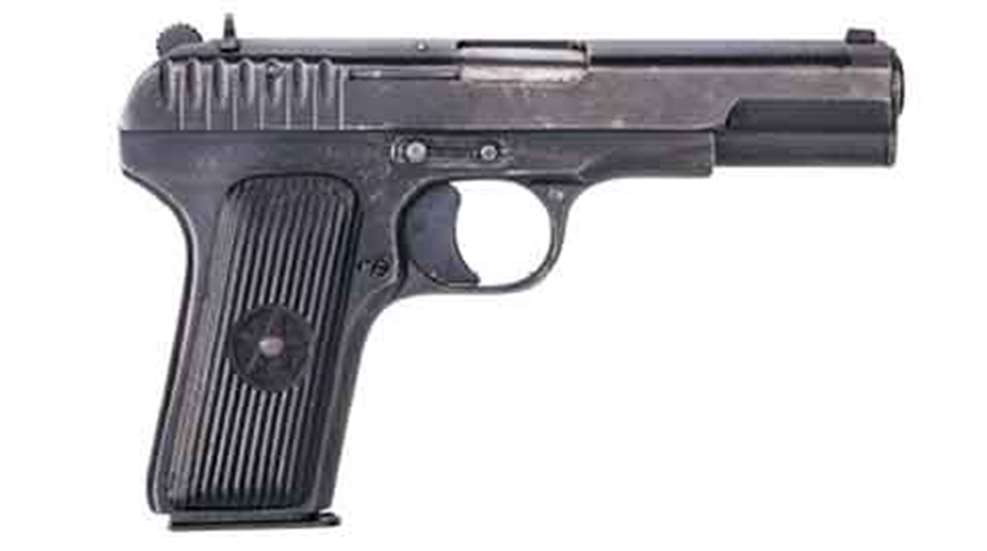
The Tokarev Tulski pistol, or TT, reflects the military culture for which it was created: simple, robust, reliable and—at times—crude. Yet that is not to say that the Tokarev was not an excellent service pistol for its day, and it was the Soviet Union’s standard sidearm fornearly two decades. It was the USSR’s first successful indigenous semi-automatic pistol 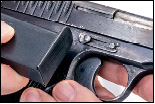 design and was a bridge between the Nagant Model 1895 revolver and the Makarov pistol adopted in 1952.
Working at Tula Arsenal, noted Soviet arms designer Federov V. Tokarev created a recoil-operated pistol employing the John M. Browning pivoting barrel link, much like an M1911. A barrel bushing akin to that of the Government Model was included, as were an under-barrel recoil spring, guide and plug. Too, like an M1911, the locking lugs were cut into the barrel, and they locked into recesses in the slide’s underside. The slide and overall appearance of the gun recall another Browning design, the FN Model 1903, albeit with a somewhat stubbier grip frame.
Tokarev departed sharply from Browning principles by including a self-contained hammer and sear assembly that was easily removed after slide removal. The feed lips for the eight-round-capacity detachable-box magazine are actually part of the hammer mechanismhousing. Speaking of the hammer, its half-cock notch is the gun’s only “safety,” and its 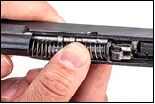 spur is rounded and grooved. On surplus guns, in particular the Polish TT-33s produced at Fabryka Broni Radom, the importer actually added a manual safety to make it eligible for importation into the United States.
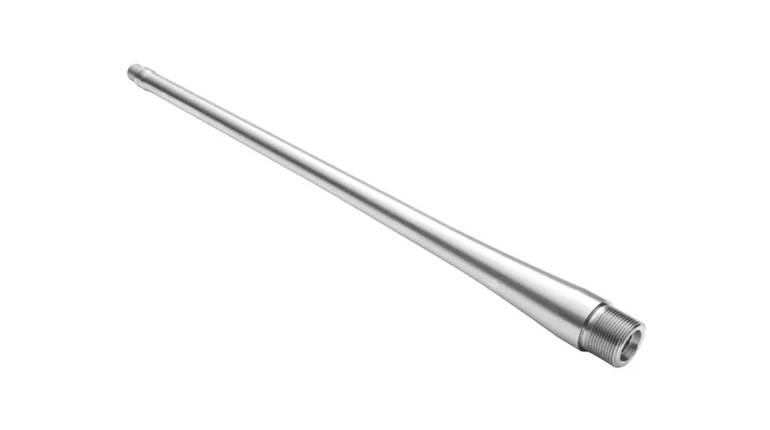
The pistol’s cartridge, also adopted in 1930, was the bottle-necked 7.62x25 mm, or 7.62 Tokarev, which originally produced a muzzle velocity of 1380 f.p.s. with an 85-gr. bullet from the gun’s49⁄16" barrel.
As with many Soviet small arms, the design was widely copied and produced in satellite nations. Eastern European makers include Fegyver es Gazkeszuelekgyara (FEG) in Hungary, Cugir in Romania, F.B. Radom in Poland (indeed a step down from the VIS 35) and Zastava in Yugoslavia. Variants were made in China starting with the Type 51, as well 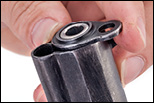 as in North Korea as the Type 68. An export version in 9 mm Luger, the Tokagypt 58, was produced under contract by FEG for the Egyptians in the late 1950s.
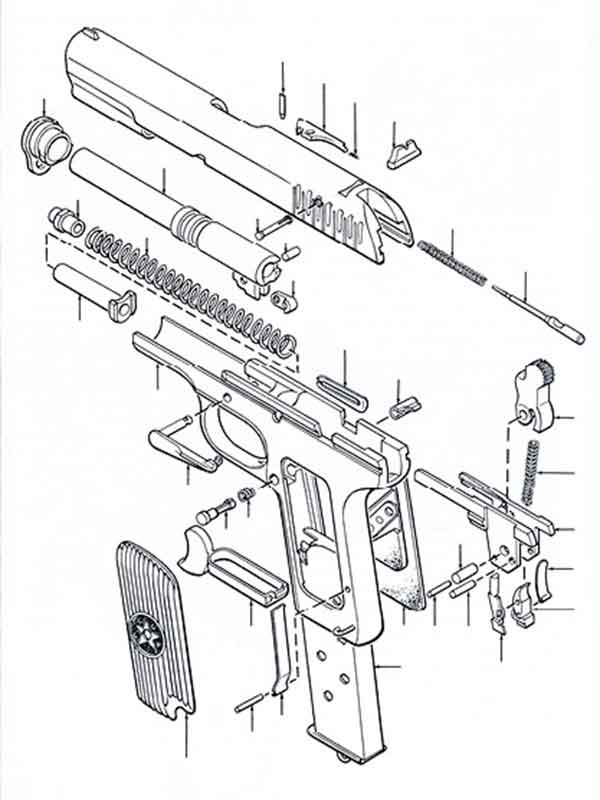
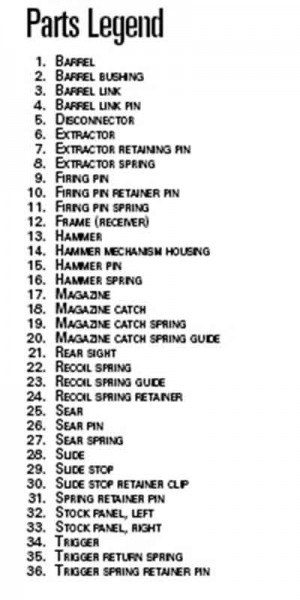
Disassembly InstructionsDepress the magazine catch (18) on the frame’s (12) left, and remove the magazine (17). Retract the slide (28), and inspect the chamber to ensure there is no cartridge present. Using the back edge of the bottom plate of the magazine as a tool, pull back hard on theslide stop retainer clip (30) until it releases (Fig. 1). On some guns, the clip will be tight and a brass punch or screwdriver blade may be required to free it and grant access to the slide stop. Push the slide stop (29) through the frame from right to left and remove it. 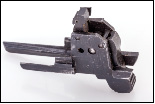
Draw the slide off the front of the frame slowly. As soon as the recoil spring (22) is exposed, hold it up against the barrel to prevent it from bending out of the slide (Fig. 2). While holding the recoil spring in place, grasp the recoil spring guide (23) and push it toward the muzzle, while lifting it free of the barrel lug.
The barrel bushing (2) can now be turned 180 degrees and then lifted free of the slide (Fig. 3). The barrel (1) can then be pulled out of the front of the slide. This method of field stripping is much simpler than the process usually recommended for the take down of similar Browning-type pistols.
The stock panels (32 & 33), which can be quite fragile, are fixed with a latch arrangement. Hold the frame with the right hand, and insert a flat-bladed screwdriver into the magazine well to push the T-shaped retainer to the rear of the frame. There is a notch in its base for the screwdriver tip that allows the left-hand stock panel to be lifted off the frame. With theleft panel off, it is much easier to simply slide the right panel’s retainer out of engagement with the frame and lift the panel off. Attempting to pry the panels off from the outside will likely result in damage to their edges.
The complete hammer assembly (Fig. 4), including the magazine feed lips and hammer (13) may now be lifted up and out of the frame. Further disassembly of the hammer group is not recommended. If it must be undertaken, start with the hammer spring retainer pin (15) which is under spring tension. After it is drifted out, the other pins may be removed easily. To reassemble, replace all the parts except the hammer spring (16). Using a screwdriver or punch, depress the spring deep enough to allow the hammer pin to hold it. Then tap the pin all the way through.
The firing pin and the magazine catch are retained by split pins. These split pins (10) and (20) can be removed with the aid of a tool with a wedge-shaped cutout. It will force the pin’s legs to close together so that it may be pushed out easily. If an attempt is made to drive the pins out with a flat-end punch, they may be broken or badly deformed. Reassembly is in reverse order.
Most Popular