The lure of the little gun is stronger than ever. The ranks of new CCW permit holders are growing steadily, and few choose a big gun for daily carry. Although weight and size invariably accompany a gun that is the best possible choice for defensive use, most people simply won’t make a habit of carrying a heavy, bulky gun.
It is obvious that smaller and lighter handguns may be a compromise of a sort, but they nonetheless place respectable power into more of the right hands. In this article we’ll look at the characteristics and performance of nine different guns that represent a new trend toward the lightest, smallest pistols chambered for the century-old .380 ACP cartridge. Most are new to the market, and all are examples of modern gunmakers responding to consumer demand.
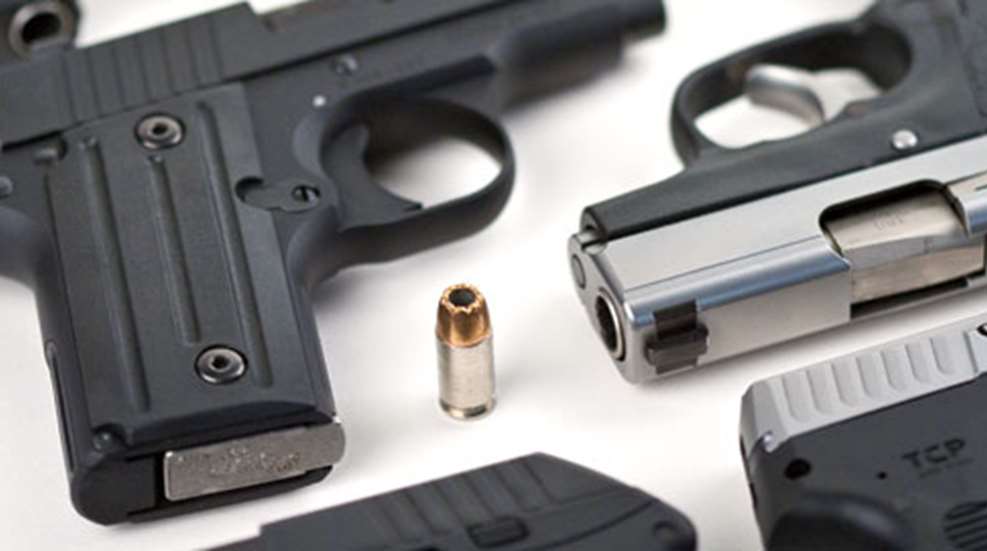
But first let's look at the .380 ACP cartridge. Also known as the 9 mm Corto, 9 mm Kurz and 9x17 mm in Europe, the .380 was first used in an American pistol: the Pocket Model Colt of 1908. It is a short 9 mm round using bullets of 0.355 inches in diameter and 80 to 110 grains in weight at approximately 900 fps from the muzzle. In the United States, the cartridge has a long-standing association with some pretty classy semi-automatics from Colt, Remington and others. Many quality .380 pistols came from Europe in the first half of the century, either by import or in the duffle bags of G.I.s returning from our two European wars. After World War II, many other pistols came to America from Spain, Italy, Germany, Austria and France.
American ammunition companies load the .380 ACP with a variety of bullet types. Recoil of the .380 ACP is bearable for almost all CCW holders, and most guns for which it is chambered are easy to carry. For most of the lifetime of the .380, the guns that used it were simple blowback designs in which a combination of slide weight and recoil spring tension held the breech closed until the bullet left the muzzle and pressure dropped.
In the nine pistols reviewed here only two use this system, which requires a fairly heavy slide. The other seven are recoil-operated guns using some form of tilting barrel lockup. In short, these .380s use an operating system that is also found on similar pistols chambered in 9 mm Luger, .40 S&W and other cartridges. In this way, the .380 pistol manufacturer can reduce its weight and bulk. Several in the lineup are very compact pistols that weigh less than 10 ounces. This effectively fills the bill for shooters who demand light weight, compact dimensions and overall shootability in their CCW gun. If they can accept the limitations of the ammunition, it is an appealing concept.
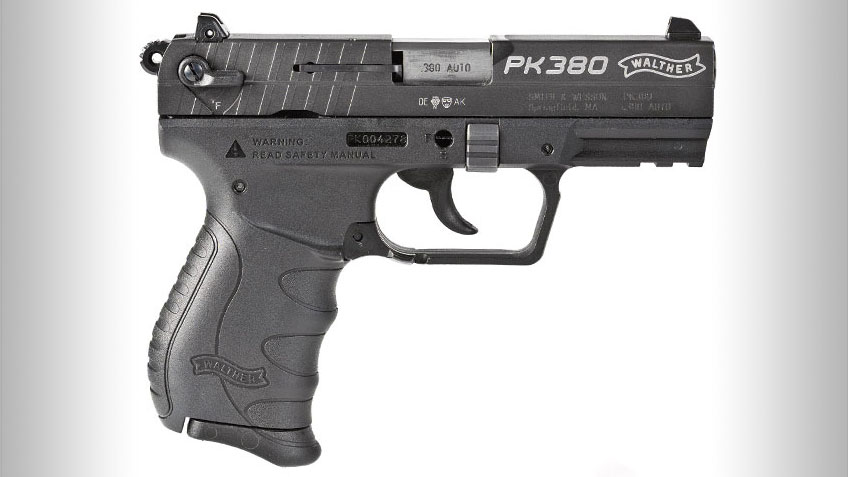
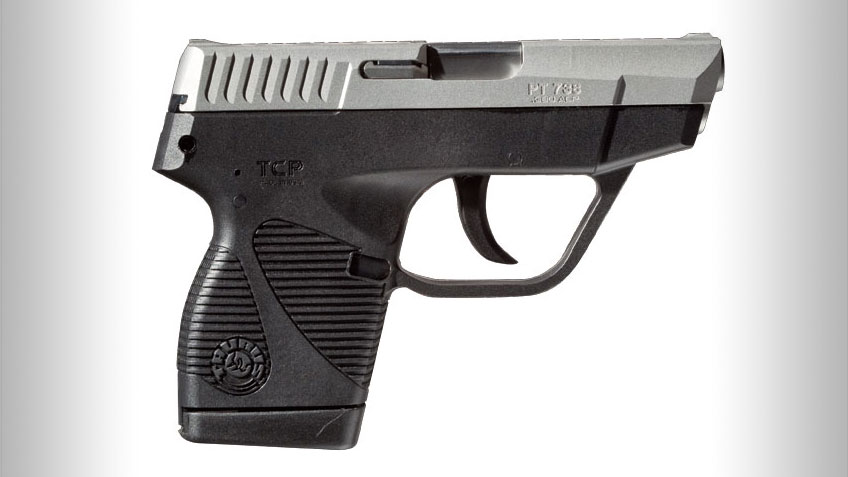
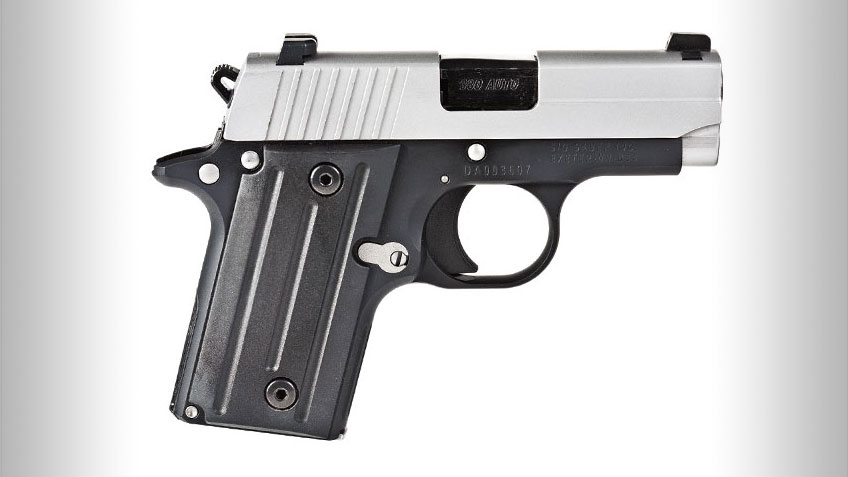
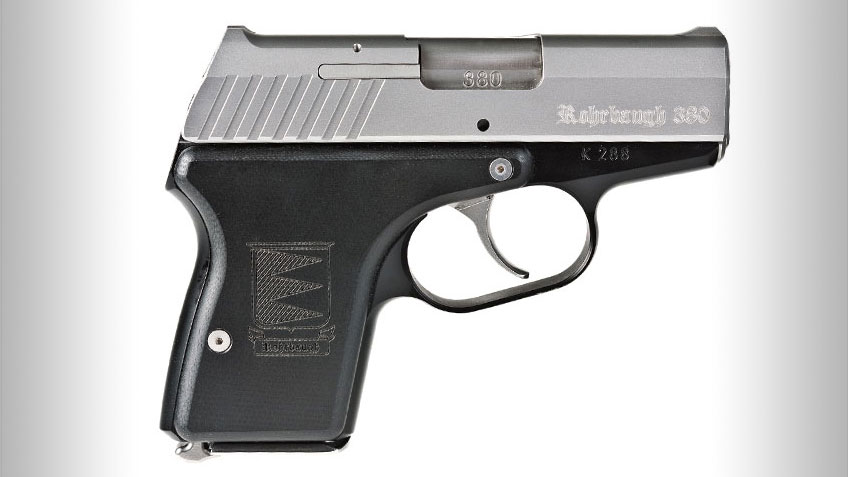
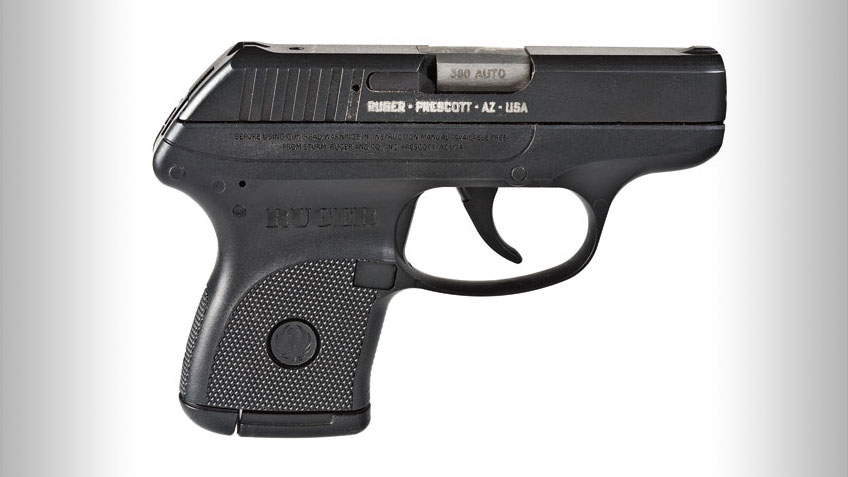
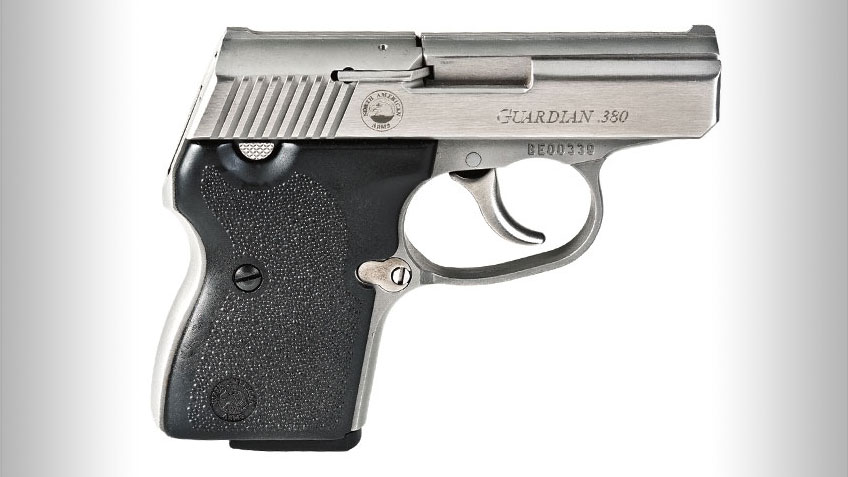
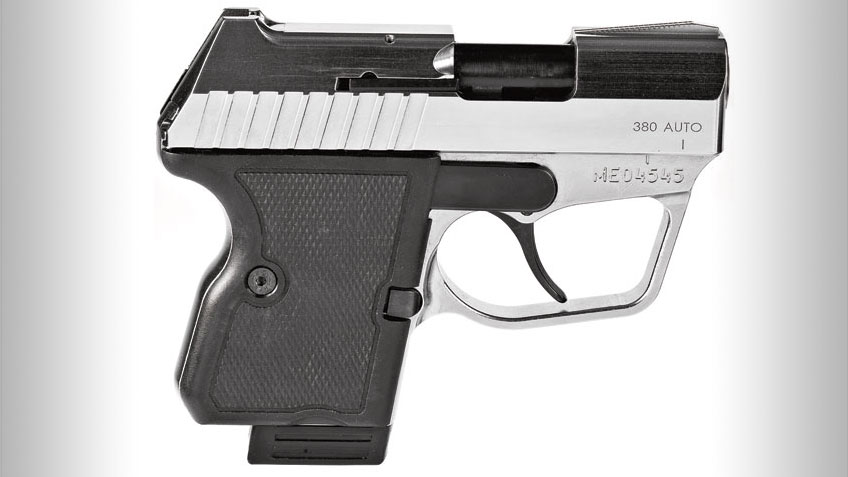
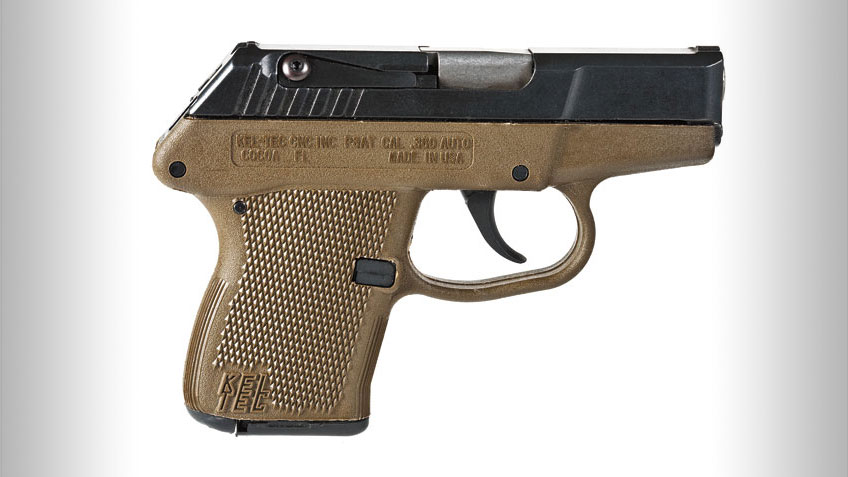
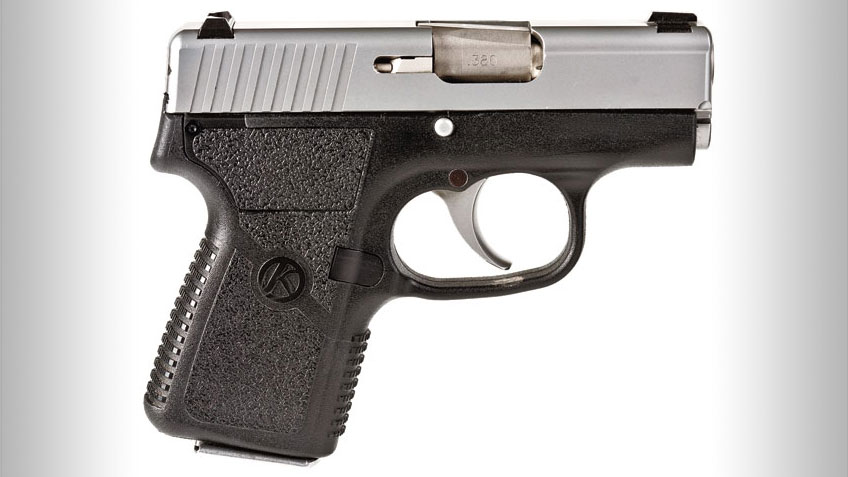
The guns are—in alphabetical order—the Kahr P380, Kel-Tec P3AT, Magnum Research Micro, North American Arms Guardian, Rohrbaugh R380, Ruger LCP, SIG Sauer P238, Taurus 738 TCP and Walther PK380. There is a great deal of variety, with prices running from a low of $318 to a high of $1,150. Weights range from a low of 8.30 ounces to a high of 19.72 ounces. Following is a description of each gun in capsule form.
Shooting the Guns
Each pistol tested got an equal shot in the evaluation process. I fired the American Rifleman protocol of five consecutive, five-shot groups, plus a half-dozen or so magazines of informal shooting. That’s roughly 100 rounds per gun. These guns are intended for sudden crisis encounters at very close range. For that reason, I would not be too concerned about the performance of the guns at 25 yards. When I report that the average group size is more than 6 inches, that means the gun doesn’t compare very well to, say, a S&W Performance Center M1911. It is apples and oranges. I can tell you they will all cluster seven rounds into a group the size of your hand at 5 yards.
I am concerned about the number of cycling malfunctions, most commonly failures to feed and chamber. With one exception, every gun experienced these problems. Even here, we have to put matters in context. Kahr Arms, for example, includes the same manual with each of its pistols, regardless of size or chambering. That manual tells the buyer that he or she needs to run at least 200 rounds through the pistol before pressing it into service. That is coldly realistic advice that all of the other manufacturers would be well-advised to emulate.
With most of the guns, the greater number of glitches came when they were new out of the box. As the shooting wore on, the frequency of malfunctions declined. I would also suggest that when breaking in your chosen .380, you should make sure the gun is well-lubricated, perhaps even over-lubricated. Shoot until malfunctions stop.
This diverse lineup of .380 ACP pistols provides many choices to the defensive handgunner who wants a light, small, shootable handgun at a conservative price.
Gallery
Most Popular