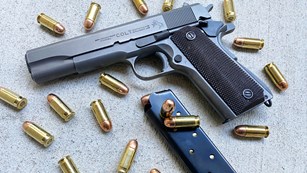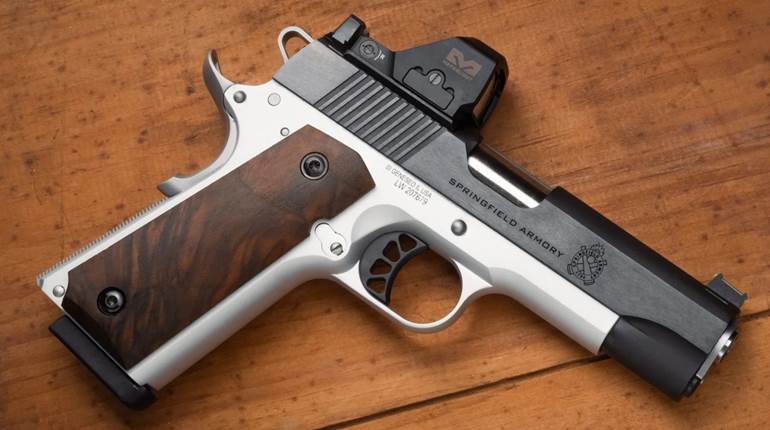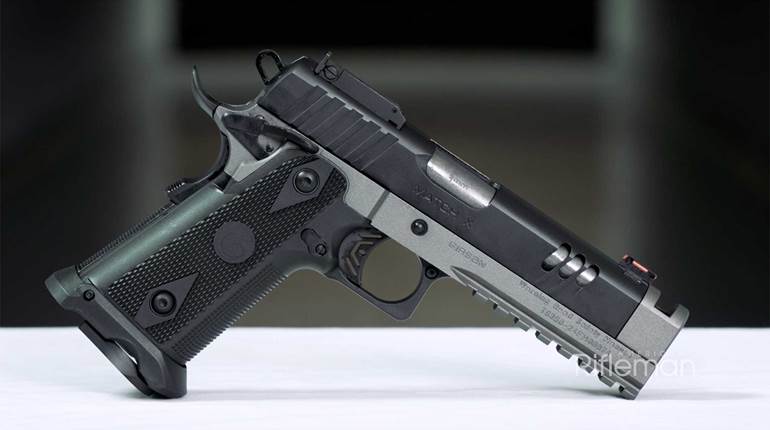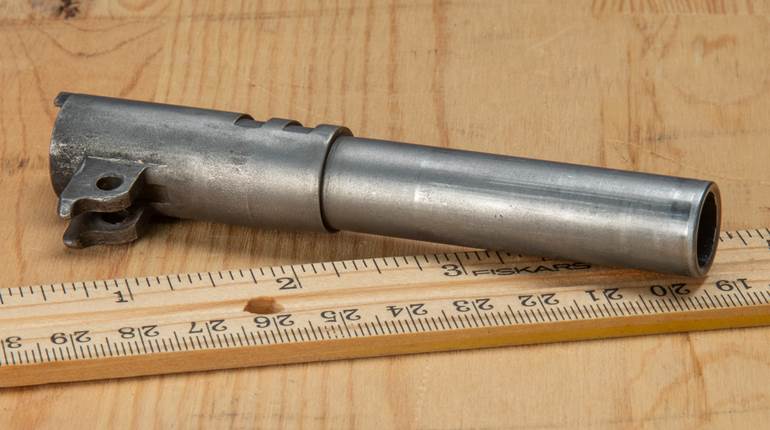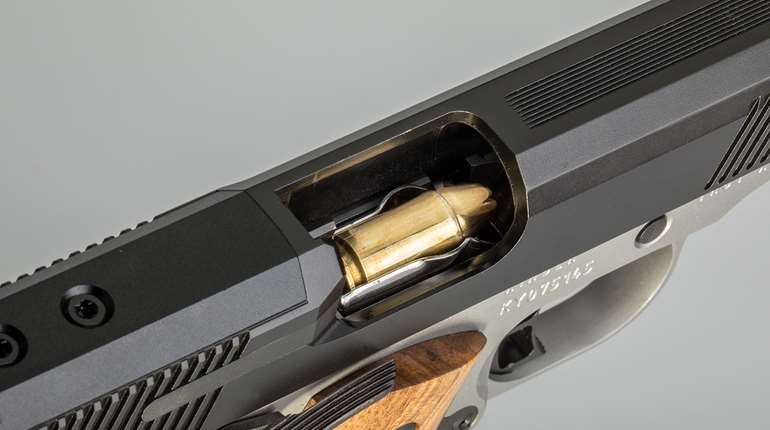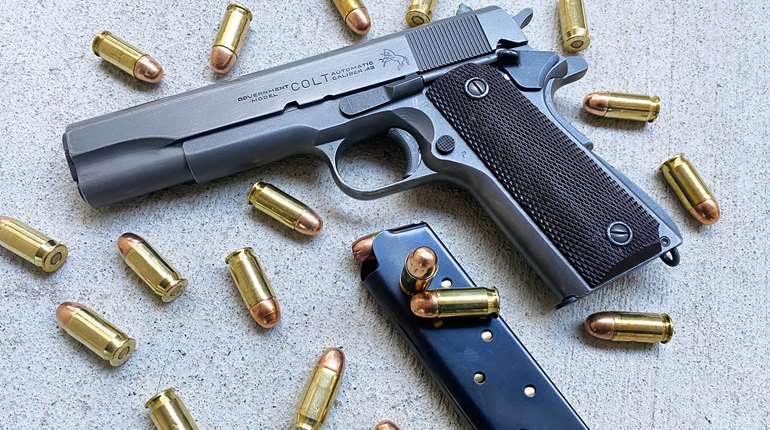
With the announcement that Sturm, Ruger & Co. will be introducing an M1911 pistol at the upcoming NRA Annual Meetings in Pittsburgh, the American handgun industry is fully homogenized.
No longer is a Ruger a Ruger, a Colt a Colt, a Smith a Smith, each with unique, proprietary features. In general, many of the products from the big manufacturers are now so indistinguishable that you might as well close your eyes over a gun shop counter, spin in a circle and point. Whatever your finger lands on, you can be assured that it will be pretty much the same gun as the one next to it, albeit with a different logo.
With Ruger’s new SR1911, the venerable .45 ACP pistol, Model Of 1911, is now manufactured by every major manufacturer. Everyone now makes a Glock derivative of some sort or another—an inexpensive, plastic 9 mm. When Kel-Tec dared to do something innovative—a very small, lightweight, plastic .380 ACP pocket pistol—everyone immediately introduced a “me too” model.
Imitation has replaced innovation in the big handgun companies. It used to be that every company had its signature products, guns so trademarked to their maker that they could be spotted across a room. The vent ribbed barrel and royal blue of a Colt Python. The distinctive profile of a Smith & Wesson Model 29, immortalized by Detective Harry Callahan. The Luger-esque shape of a Ruger Mk I .22 LR, easily distinguished from a Colt Woodsman or a S&W Model 41.
The reason for this commoditization of handguns is found in Market Economics 101. A handgun is a mature product in a stable market. It’s not an iPhone 4 with millions of new consumers. It’s a lawnmower. The demand curve flattened out, oh, about 30 years ago. Compared to cell phones, no new technology is forcing consumers to buy a new handgun.
Because the handgun demand curve is so flat, manufacturers can’t grow their sales with break-out new models that prompt new consumers to buy. The only way to grow sales in a flat market is to take market share away from a competitor.
Consider the M1911, the best case in point. The exact number is impossible to know because of the vagaries of ATF data (which is based on caliber, not model type), however, reliable estimates suggest there are between 120,000 and at most 180,000 M1911s sold annually.
If you’re the CEO of Ruger, you look at the M1911 and see a potential to sell X-percent of that number. Without a Government Model, you sell zero into that category; with it, you do.
Who will buy a Ruger SR1911? Someone who is looking for an M1911 anyway but now is attracted to a combination of three things (in order): price, brand, features.
Ruger’s SR1911 is going at with a suggested retail of $799 which is in keeping with Ruger’s value proposition that comes with everything the New Hampshire company makes. How many will they sell? I predict something in the 15,000 range per year, which is 15,000 fewer M1911s that some competitor won’t sell.
Most Popular