You’ve probably heard the term “safe queen,” but for those who aren’t quite sure what it means, simply put, it refers to a firearm so pristine, valuable, historically significant or emotionally important to its owner, it seems unthinkable to shoot it. Thus, these cherished gems end up being permanently sequestered away in gun safes or comparably secure environments, never to see the light of day, or at best, to be reverently taken out on occasion and briefly admired before being carefully put back into the fortified safety of their sheltered environment.
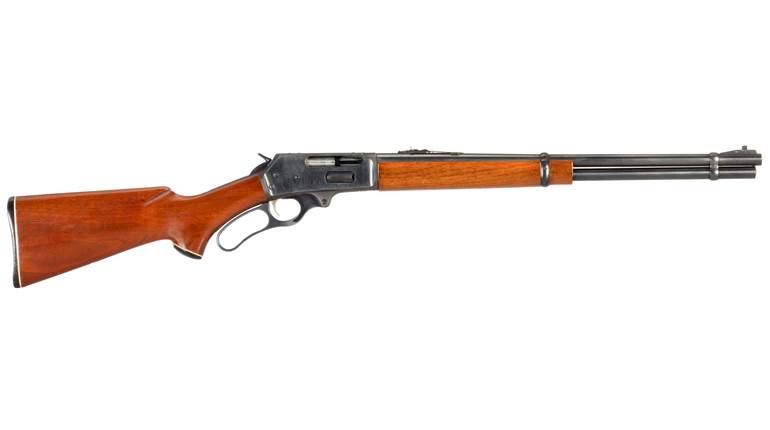
I think I can safely say that, in most cases, this was not the intent of such firearms by their manufacturers, or even by their original owners. I seriously doubt that the American Northwestern hunter of the early 1900s thought that his 14-inch-barreled Winchester Model 92 would someday become a coveted collectable, too valuable to shoot. No, he simply special-ordered his Winchester Trapper because he wanted a fast-shooting, easy-to-carry lever-action that was just a tad more compact and lightweight than the standard 20-inch-barreled carbine. Likewise, that 1955 first-year-production Colt Python workhorse may have long ago been put into retirement once the owner realized its value had increased dramatically.
Thus, coveted firearms become safe queens, tucked away into the shadows of obscurity, which not only does an injustice to the design and craftsmanship of the guns themselves (which are no longer allowed to demonstrate the very attributes that made them so valuable in the first place), but just as importantly, deprives their owners from the additional enjoyment they could have—over and above the obvious pride of possession—of pulling the trigger, hearing the shot, feeling the recoil, smelling the smoke and seeing where the bullet hit.
Shooting these guns allows their owners to reap the full potential of their cherished firearms, and—in the case of vintage guns especially—of experiencing what the original owners must have felt when firing that very same gun, which is as close to time travel as we’re likely to get. Without shooting it, how would I have known that my original 1860 Army shoots high and to the left (unlike many of today’s replicas of the same gun, which do not feature the progressive rifling and chamfered chamberings of the originals)?
Yes, I’m talking about actually shooting those collectables. As I typed that last sentence, I could almost hear shouts of “Blasphemy! Heresy!” or worse. But, I’m not talking about shooting a mint, in-the-box collectable firearm, for putting even a single bullet down a pristine bore would instantly and dramatically decrease its value. Nor am I referring to a vintage gun in which there are potential safety issues. Rather, I am talking about an otherwise-sequestered safe queen that is in mechanically sound shooting condition, but for one reason or another has not been brought out “to strut its stuff” and permitted to show what it can do, whether at the range or in the field. Thus, it becomes an opportunity lost, but one that is easily redeemed, and almost always with gratifying results.
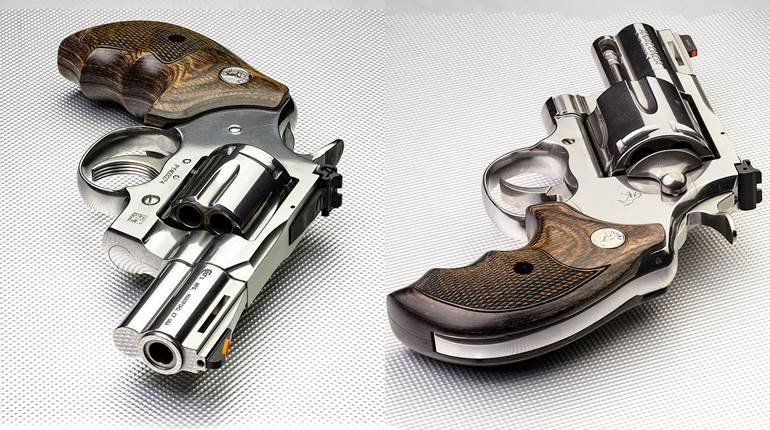
For example, for an invitational Double Action Only 250 Self Defense Pistol course at Gunsite Academy a few years ago, I was mulling over which of my double-action revolvers to subject to this grueling course, during which I would be putting approximately 500 rounds through my gun over the week-long session. Looking at the handguns in my safe, my gaze fell upon an S&W-logo-stamped presentation case that I knew held a factory machine-engraved Smith & Wesson Model 29 with a 4-inch barrel I had purchased as an investment when it first came out in 2007. At the time, the gun was a limited edition (it has since been reintroduced as part of Smith & Wesson’s Classic Line). In addition to the Model 29’s decorative machine engraving and distinctively checkered stocks, I had the company’s Performance Center enhance the gun further by giving it an action job. I then dutifully oiled it, placed it in its case and tucked it away in my safe, and there it had remained for years.
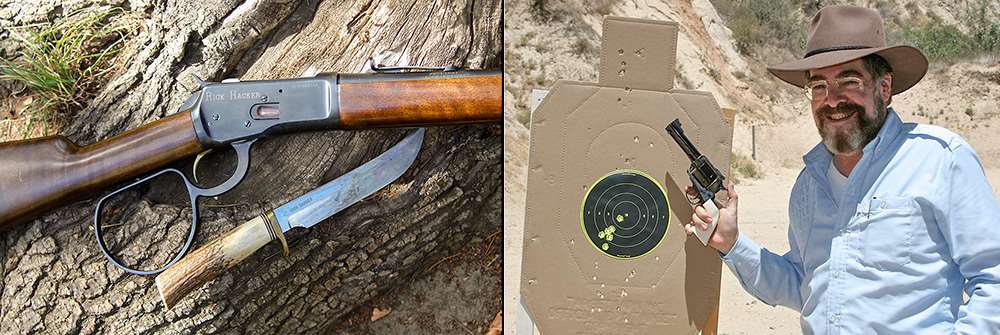
I picked up the Smith and cycled the butter-smooth action a few times. That’s when I realized: this is the gun I should be taking to Gunsite. Not only will it physically hold up to the rigors of range time, but also it will definitely stand out amongst the other revolvers being brought to the course. Plus, when loaded with .44 Spl. instead of wrist-pounding .44 Mag., the hefty revolver with its easy-to-see sights might even improve my shooting—and it did. Plus, as anticipated, it garnered a fair share of oohs and aahs from my fellow shooters.
During that same shooting experience, however, we were all equally impressed with another collectible that came to the firing line: Bobby Tyler of Tyler Gun Works in Friona, Texas, had brought his authentic Smith & Wesson Registered Magnum.
“I decided to run the course at Gunsite Academy with a Registered Magnum because it’s one of the most remarkable revolvers ever built,” said Tyler. “Crafted in the 1930s, these firearms were tuned to perfection at a time when craftsmanship was prioritized over cost. Using such a historically significant and finely made revolver elevated the entire experience. Running the course with that level of precision and elegance made it truly unforgettable.”
Indeed, taking a safe queen shooting adds another level of memories to the experience, sometimes over and above the cost of the gun. For example, one of my prized hunting rifles is a Griffin & Howe 1903 Springfield that, according to the company’s re-stamped No. 110 serial number, was built sometime during the early 1930s. Typical of Griffin and Howe’s sporterized bolt actions from that pre-Winchester Model 70 period, it had not only been rebuilt from a war-surplus Springfield action, but also had been given rust-blue furniture, a jeweled bolt and stocked in finely figured, hand-rubbed French Circassian walnut embellished with 22 lpi hand-checkering and a buffalo horn tip, then fitted with a Hawkins recoil pad and topped with a gold-accented, three-leaf express sight. Another intriguing aspect of this rifle was the original owner’s gold-filled “CSC “initials engraved on the floorplate. I’ve often wondered who that person was, for when I purchased this rifle, it was sporting a vintage Lyman 2X Alaskan scope and had already gone through multiple owners. Thus, its original history was lost.
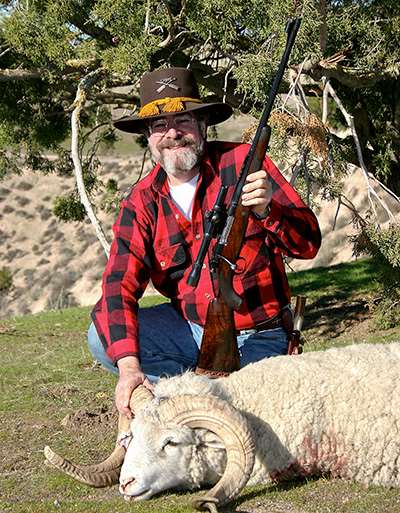
Nonetheless, Griffin & Howe rifles were built to be used, so, shortly after acquiring this elegant example of early 20th-century American gunsmithing, I took it on a sheep hunt on the Carrizo Plain of central California. It is impossible to hunt with a rifle like this and not be aware that you are carrying something special. When the time came, the Griffin & Howe shouldered perfectly, balanced instantly and the trigger broke at a crisp 3 pounds, dropping a full-curl Rambouillet-Navajo ram.
“You’ll never see another ram out here with horns like that,” my guide enthused, and he was right. The taxidermist took my deposit and my trophy ram, neither of which I have seen again. Although over the years I have been unable to track either down, I still have my Griffin & Howe to bring back memories of that great hunt.
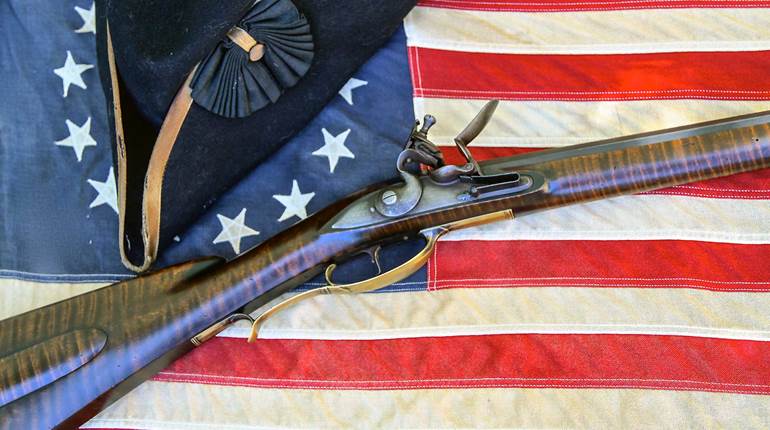
Unlike my Griffin & Howe, however, many safe queens are not especially valuable in a monetary sense. As an example, one of my most cherished firearms is a New Dixie Squirrel Rifle, a .40-caliber, muzzleloading Tennessee-style long rifle that Turner Kirkland produced in Belgium from 1955 through 1981 for his Dixie Gun Works catalog. It wasn’t expensive even back then, originally listing for $79.50, but in the early 1970s, that was all I could (barely) afford. Thus, it became the first gun I bought shortly after getting married.
Later, when my fortunes increased slightly, I had the rifle upgraded with double-set triggers and brass “hunter’s stars” inlays. With 55 grains of FFG black powder and a .395-inch, patched round ball, that rifle proved to be extremely accurate (not only on squirrels; I actually won a few matches with it). Today, however, flipping through Dixie’s current catalog and surfing the internet, one can buy excellent, new-reproduction Kentucky-styled rifles for far less—adjusted for inflation—than I originally paid for my used New Dixie Squirrel Rifle. Yet, I wouldn’t dream of selling that maple-stocked muzzleloader with its blued octagon barrel and my crudely filed-down sights; it holds too many fond memories. So, although it resides in my safe, I still take it out occasionally to “make smoke,” thus reliving those early years.
By the same token, the .22 rifle you taught your son or daughter to shoot years ago is sentimentally priceless, and no doubt is still ready to punch out a few empty tin cans, yet it doesn’t leave the confines of the safe for a casual plinking session with the grandkids. And then there are the new-in-the-box guns that are put away and never shot, because, as one friend told me after I admired his new Henry Big Boy Brass Rifle, “It’s just too pretty to shoot.” I suspect Henry Repeating Arms CEO and founder Anthony Imperato might dispute that statement; I have often thought that some firearms should come with dents and dings from the factory, just so purchasers wouldn’t have to worry about being the first to cause such traumatic mishaps.
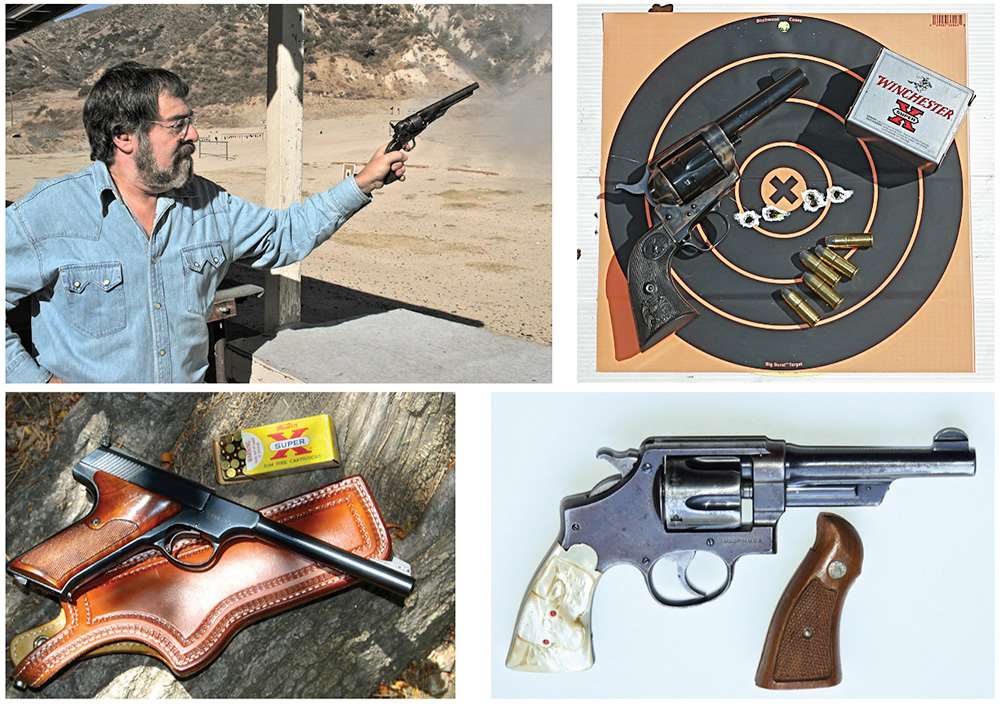
Not that I condone cavalier treatment of prized firearms today, but that doesn’t mean they can’t be shot. The primary rule is to take precautions: The first step is to ensure the gun is safe to shoot. Vintage guns especially should be checked by a gunsmith familiar with their particular functions (lever-action, single-shot, flintlock, etc.). Headspacing can be a problem with some older cartridge guns. Next—and crucial to maintaining the condition and integrity of your prized possession—is to protect the exterior finish and internal mechanisms. This can be accomplished with a light, hand-rubbed coating of linseed oil, when appropriate, and keeping the action sufficiently oiled to ensure proper functioning may be needed, as stored guns tend to dry out over time.
Carrying the gun in a padded case is an easy protective fix when taking it to the range. Out in the field, it becomes more challenging. I once took my 12-gauge, 1902-era L.C. Smith No. 3E, with its color-case-hardened, hand-engraved lockplates, on a duck hunt because its twin deeply blued Nitro steel barrels were choked full and full, which promised more hits on birds that might not be totally fooled by the decoys. This turned out to be a bad move, as the overcast morning became stormy—good for duck hunting but bad for my Elsie, which still performed admirably, but was subjected to a flurry of rain squalls. After returning home and thoroughly wiping it down, I took the shotgun to my gunsmith to make sure the action hadn’t been subjected to undetected moisture. Returning the shotgun to me, he said “Those locks are hand-fitted to the stock so precisely that I wouldn’t want to remove them again, which could damage the surrounding wood.” Needless to say, my L.C. Smith is now a fair-weather smoothbore.
Additionally, whenever I shoot my Smith & Wesson Hand Ejector Third Model .44 Spl., which letters as having been sent to Wolf & Klar in Ft. Worth, Texas, in 1928, I temporarily replace the easily cracked carved steerhead pearl grips that came with the gun with period-correct walnut grips purchased on eBay. Thus, I can enjoy shooting my collectable revolver while preserving its integrity and value. When it comes to carrying my Colt Woodsman Third Series Target Model or post-war “fat barrel” Colt .38 Super in the field, I use lined holsters to protect the pristine bluing on these guns. I also have a suede-lined holster for my Kimber Pro CDP II, al-though it makes for a tighter fit and can sometimes trap minute particles of grit—not something you want rubbing against polished steel.
So, unless it’s an absolutely mint collectable or of irreplaceable value, there’s no reason to keep your safe queen locked away. By taking a few commonsense precautions combined with a little extra care, the pride of ownership mixed with the enjoyment of shooting a prized possession can give you the best of both worlds.
Most Popular