At the conclusion of the American Civil War, the U.S. military developed a new kind of rifle that could accept a self-contained metallic cartridge. Eventually, this spawned an entire line of breechloading firearms collectively known as "Trapdoor Springfields" that armed American troops from the 1860s until the turn of the 20th century. Of all the designs, one of the most refined and popular was the Model 1884 Trapdoor Springfield. Watch our "American Rifleman Television: I Have This Old Gun" segment above to see the details of the '84 Trapdoor.
"There were various systems. The British had the Snider conversion for the excellent Enfield rifle. The French had a system called a Tabatiere," NRA Media Editorial Director Mark Keefe said. "Erskine S. Allin's design was very clever, and that is the breech would be sectioned off and then, a block would be put in and it would hinge towards the front. You'd hit the release and push it forward. It would hinge forward, extract a case if it's in there. Then you can put another one in, close it, cock the hammer and fire. That's your Trapdoor Springfield."
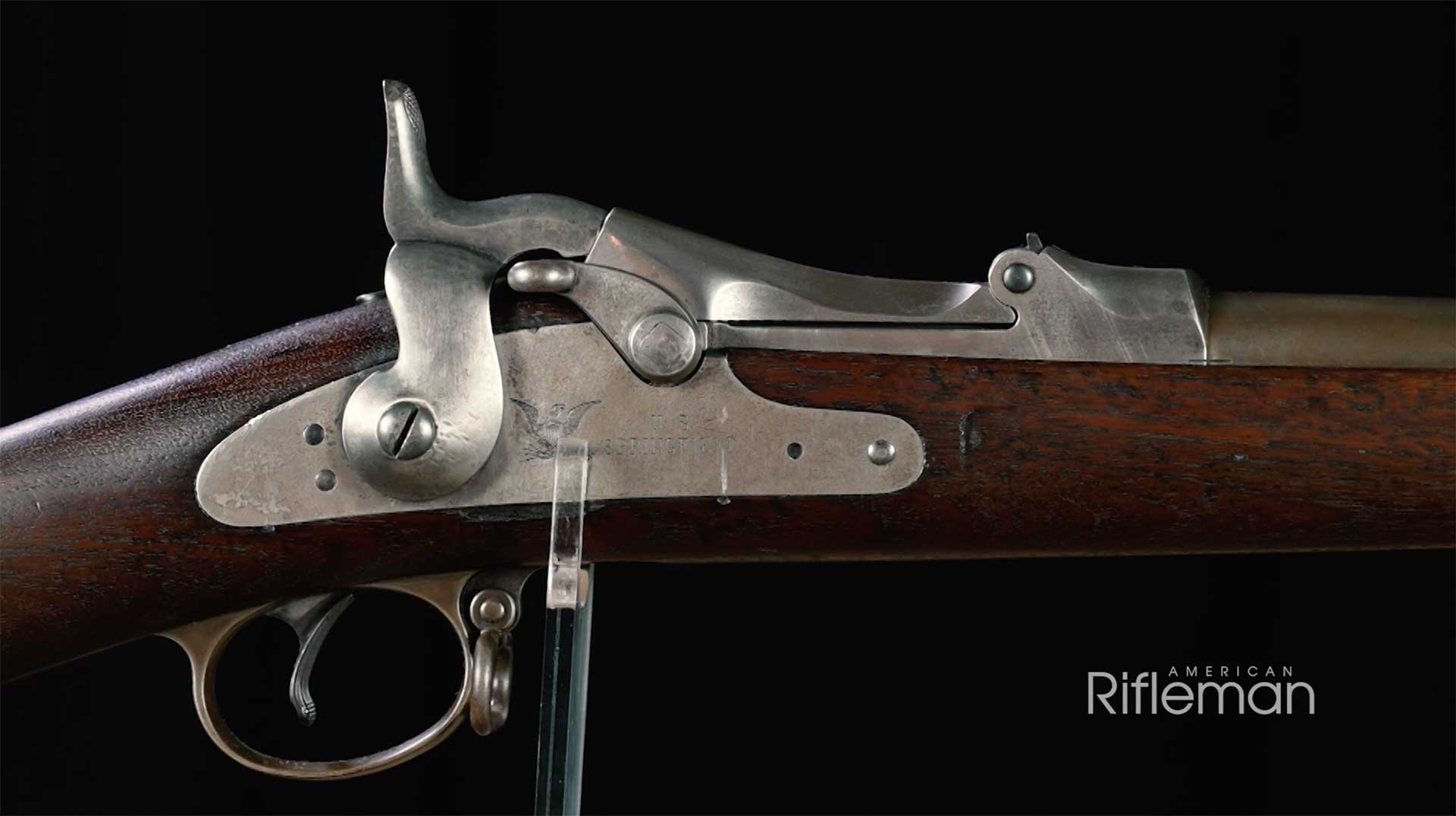
Early Trapdoor Springfields were designed to make use of large-caliber, rimfire-primed cartridges, but by the early 1870s, a new centerfire service cartridge had been developed that would remain a standard: the .45-70 Government. To chamber this new round, the U.S. military developed a line of rifles and carbines built on a refined receiver design: the Model 1873 Trapdoor. But a decade later, this design needed some refinement.
"The reason that they decided to make the 1884 Springfield was that, in the late 1870s, there had been some trialing and some experimentation, and some design changes made to the original 1873. And those were enough that the U.S. Ordnance Department decided that, you know, we really should designate these as being separate from the original ‘73 Springfield," American Rifleman Executive Editor Evan Brune said. "Now, the receiver design is pretty much identical. The only thing that really separates the 1884 Springfield receiver and the ‘73 Springfield receiver are the markings themselves. Otherwise, they're virtually the same."
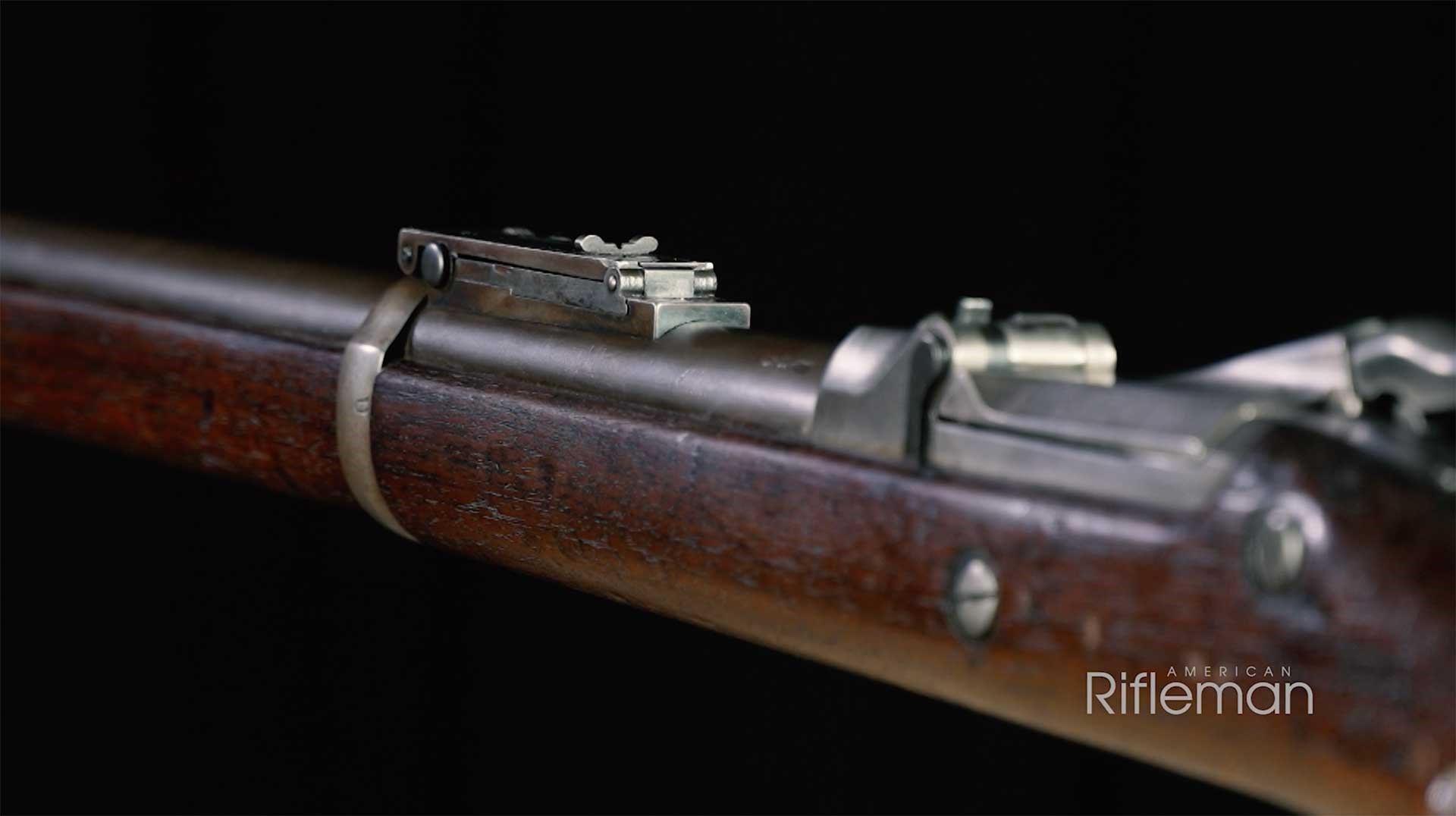
But the biggest reason for the redesignation of the design was the addition of an entirely new, fully adjustable rear sight. Developed by Lt. Col. Adalbert Buffington, the sight would henceforth become known to collectors and shooters alike as the Buffington rear sight. This sighting arrangement became so popular with the military that it served as the basis for the rear sight on later U.S. service rifles, like the Krag-Jorgensen rifle and the Model 1903 Springfield.
Production of the Model 1884 Trapdoor Springfield ended by 1893, but the guns continued to serve through the 1890s and would see use in the closing stages of the Indian Wars, as well as the Spanish-American War.
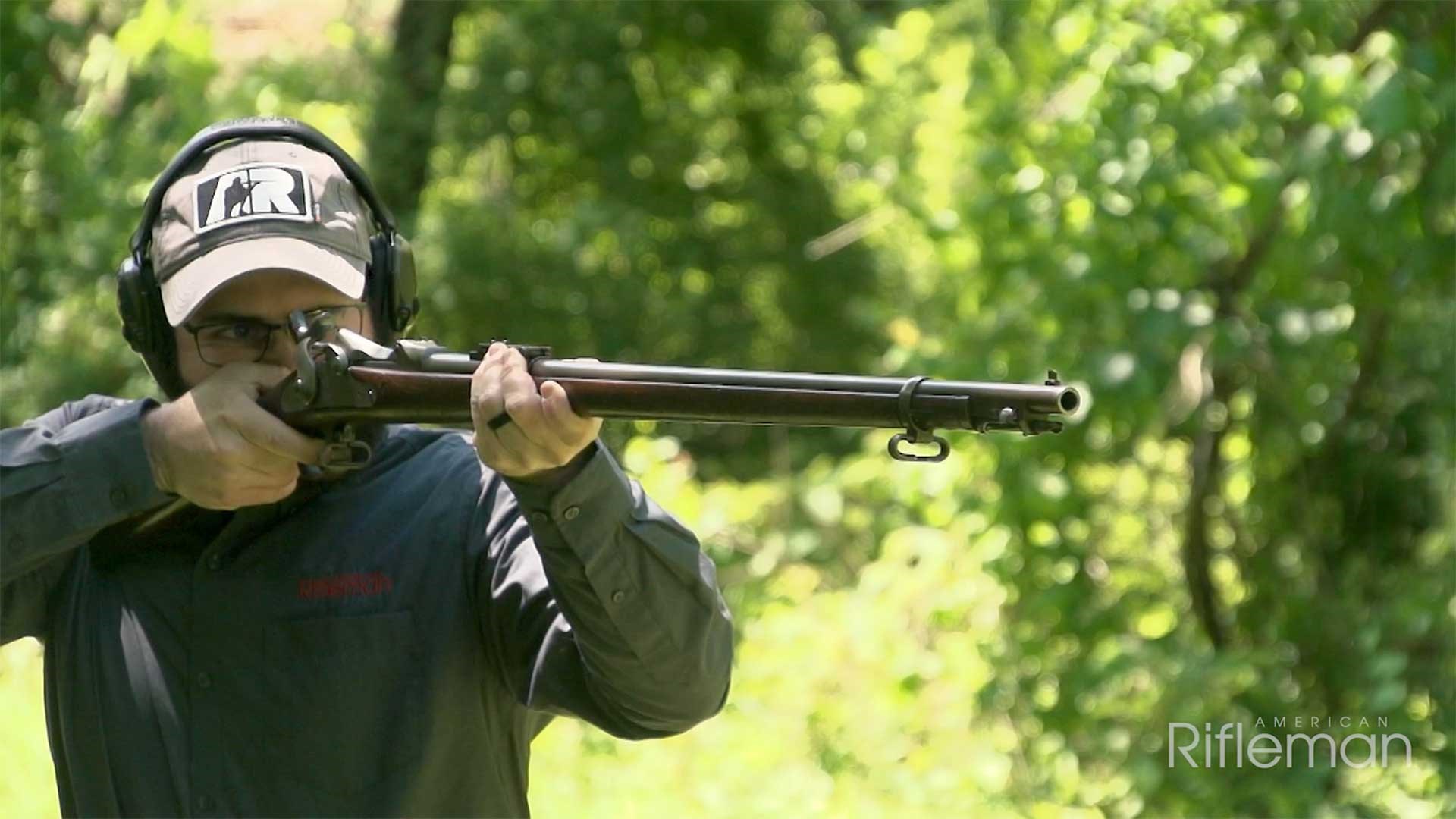
"All of the Trapdoor Springfields were nice guns," American Rifleman Field Editor Garry James said. "They were good guns. They were effective guns. They were accurate guns and reliable guns. And the 1884 is probably the best of the batch, just because of its sophisticated sighting arrangement."
To watch complete segments of past episodes of American Rifleman TV, go to americanrifleman.org/videos/artv. For all-new episodes of ARTV, tune in Wednesday nights to Outdoor Channel 8:30 p.m. and 11:30 p.m. EST.