by
Support NRA American Rifleman
DONATE
** When you buy products through the links on our site, we may earn a commission that supports NRA's mission to protect, preserve and defend the Second Amendment. **
In the dark days following the British Expeditionary Force's evacuation from Dunkirk in 1940—75 years ago this week from May 27 to June 4—Great Britain was a nation virtually disarmed. And not just by the need to abandon equipment on France's beaches to save British "Tommies" to fight another day, but by the policies of its own government. The days of devotion to civilian marksmanship, "volunteer rifle clubs" and the idea that there should be "a rifle in every cottage," as proposed by the Prime Minister Marquis of Salisbury in 1900, had given way to restrictive gun control laws that required subjects to demonstrate "good reason" to merely obtain a handgun or rifle. So with Hitler's legions poised to cross the English Channel, the British people were defended by an ill-equipped and defeated army and a "Home Guard" armed with little more than sporting shotguns and pikes.
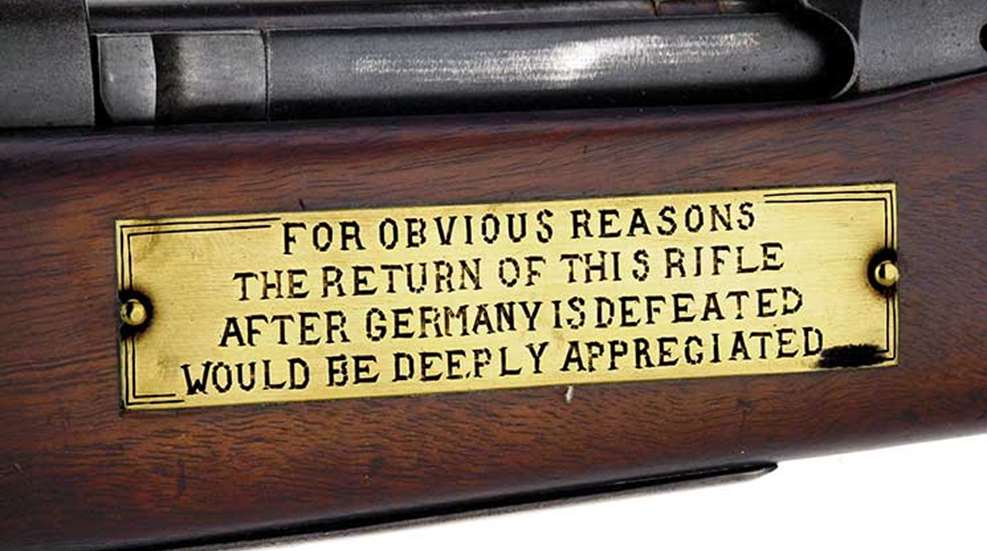
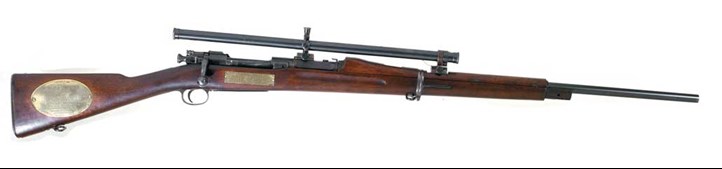
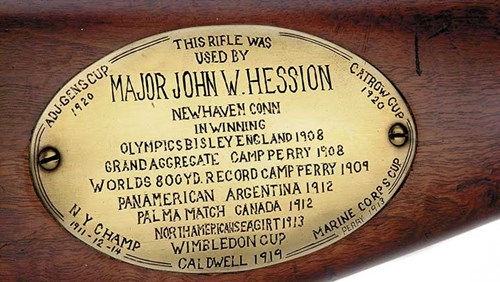
Help for the beleaguered nation came from both the American government and from the American people, the latter through the "American Committee for Defense of British Homes." In late 1940, the committee sent an urgent appeal—which, of course, appeared in American Rifleman—for Americans to send "Pistols - Rifles - Revolvers - Shotguns - Binoculars" because "British civilians, faced with the threat of invasion, desperately need arms for the defense of their homes." Thousands of arms were collected and sent to England, one of which was a .30-'06 Model 1903 target rifle owned by Major John W. Hession. One of the pre-eminent highpower rifle target shooters of his day, Hession used that rifle to win Olympic gold at Bisley Camp in England in 1908. The rifle, unlike the majority sent, was returned and can now be viewed in the National Sporting Arms Museum at Bass pro in Springfield, Mo., and you can read about it here.
The U.S. Government responded to Britain’s peril as well with passage of the Lend-Lease Act in March 1941. Almost immediately, quantities of "U.S. Rifle, Cal. .30, M1," Model 1917 Enfields, Browning Automatic Rifles and Browning water-cooled machine guns were on their way across the Atlantic. The "British Garands" have an interesting history but the importance of arming the British at that time is made clear by the fact that the rapidly growing U.S. Army itself did not have sufficient numbers of the then-new M1 Garands. Winston Churchill wrote in Their Finest Hour: "When the ships from America approached our shores with their priceless arms, special trains were waiting in all ports to receive their cargoes. The Home Guard in every county, in every village, sat up through the night to receive them. ... By the end of July we were an armed nation ... ."
Now, sadly, Britain is again a disarmed nation, where even Olympic athletes wanting to represent their country cannot own a handgun and where an act of self-defense can land a subject in jail. As with virtually all rifles and handguns, those likely few remaining guns sent to England in its time of desperate need have been confiscated and destroyed. Despite the very near enslavement of England being so close a mere three-quarters of a century ago, the lesson of the false promises of gun control and personal disarmament were not learned.
Help for the beleaguered nation came from both the American government and from the American people, the latter through the "American Committee for Defense of British Homes." In late 1940, the committee sent an urgent appeal—which, of course, appeared in American Rifleman—for Americans to send "Pistols - Rifles - Revolvers - Shotguns - Binoculars" because "British civilians, faced with the threat of invasion, desperately need arms for the defense of their homes." Thousands of arms were collected and sent to England, one of which was a .30-'06 Model 1903 target rifle owned by Major John W. Hession. One of the pre-eminent highpower rifle target shooters of his day, Hession used that rifle to win Olympic gold at Bisley Camp in England in 1908. The rifle, unlike the majority sent, was returned and can now be viewed in the National Sporting Arms Museum at Bass pro in Springfield, Mo., and you can read about it here.
The U.S. Government responded to Britain’s peril as well with passage of the Lend-Lease Act in March 1941. Almost immediately, quantities of "U.S. Rifle, Cal. .30, M1," Model 1917 Enfields, Browning Automatic Rifles and Browning water-cooled machine guns were on their way across the Atlantic. The "British Garands" have an interesting history but the importance of arming the British at that time is made clear by the fact that the rapidly growing U.S. Army itself did not have sufficient numbers of the then-new M1 Garands. Winston Churchill wrote in Their Finest Hour: "When the ships from America approached our shores with their priceless arms, special trains were waiting in all ports to receive their cargoes. The Home Guard in every county, in every village, sat up through the night to receive them. ... By the end of July we were an armed nation ... ."
Now, sadly, Britain is again a disarmed nation, where even Olympic athletes wanting to represent their country cannot own a handgun and where an act of self-defense can land a subject in jail. As with virtually all rifles and handguns, those likely few remaining guns sent to England in its time of desperate need have been confiscated and destroyed. Despite the very near enslavement of England being so close a mere three-quarters of a century ago, the lesson of the false promises of gun control and personal disarmament were not learned.
Most Popular