Federal Ammunition announced the launch of its all-new cartridge, the 7 mm Backcountry, ahead of SHOT Show 2025. The new cartridge makes use of an all-new, patented Peak Alloy case technology that enables it to run at higher pressures than nearly all of today's standard rifle ammunition. This means that muzzle velocities for Federal's 7 mm Backcountry loads are significantly higher out of shorter barrels than legacy cartridges. American Rifleman had a chance to get on the range with a box of rounds, and we explain the concept behind the new cartridge in the video above.
"We’ve launched a lot of innovative product at Federal in the last several years, and view the 7 mm Backcountry and Peak Alloy case technology as the biggest step," Federal Ammunition CEO Jason Vanderbrink told American Rifleman. "More like a leap, going to an entirely new case material. Almost in the same realm as going from blackpowder to smokeless. This changes the centerfire rifle industry, [and that’s] not marketing spin."
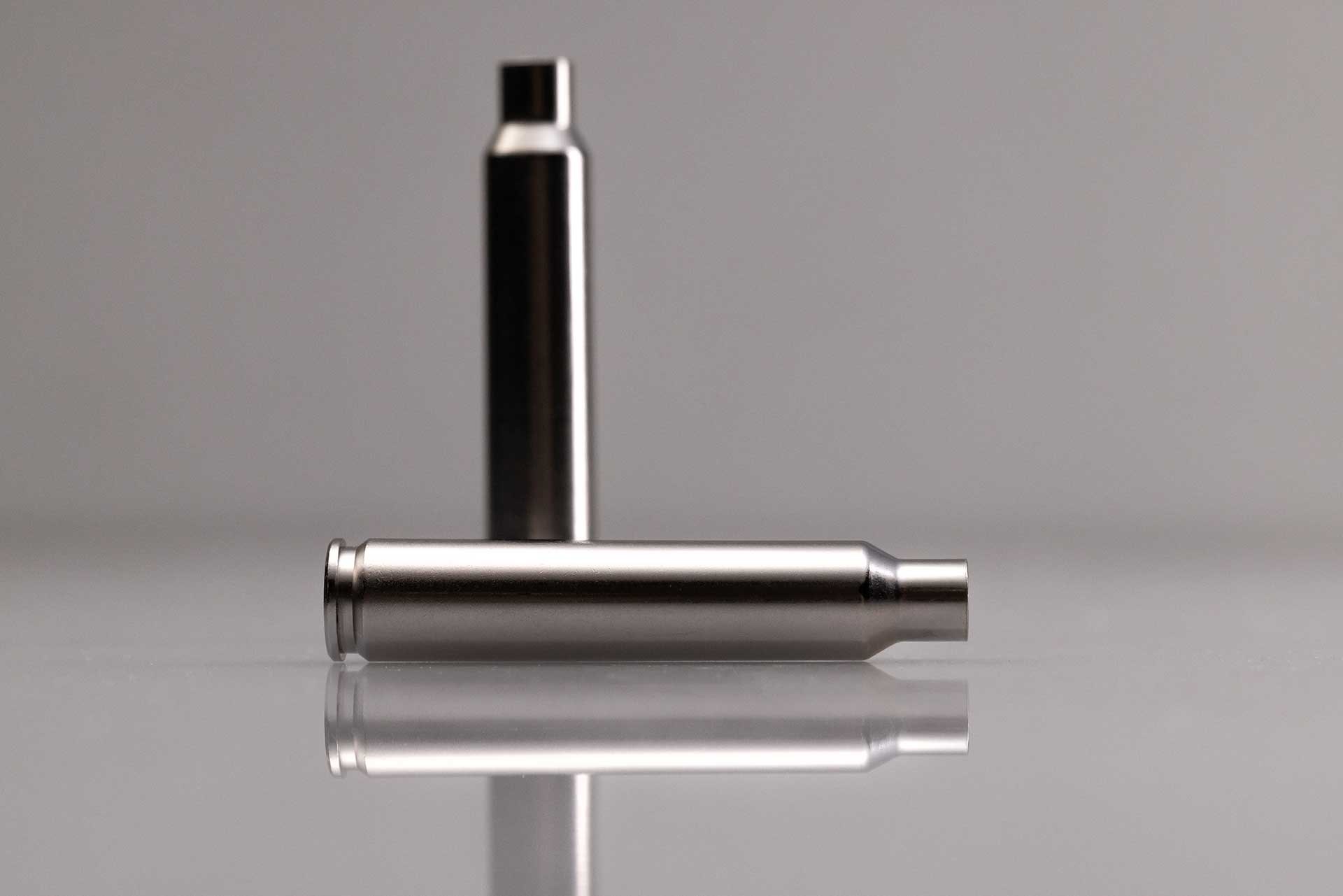 At the heart of the Federal 7 mm Backcountry is a patented cartridge case design Federal calls its "Peak Alloy" case, which forms part of the pressure-containment vessel for the cartridge's 80,000 p.s.i. operating pressure. Image courtesy of Federal Ammunition.
For an upcoming feature article on the new Federal 7mm Backcountry, Editor Emeritus John Zent asked Federal engineers about the details of this new cartridge and its alloy case design:
What is the new cartridge’s purpose?
Federal engineers set out to create a cartridge that would optimize performance in lightweight hunting rifles with 20" barrels, making suppressors more practical. The resulting trajectories and terminal energy are consistent with the new breed of long-range cartridges built to take advantage of today’s aerodynamic, heavy-for-caliber bullets producing high ballistic coefficients. The superior performance is progressive in respect to barrel length, and, as such, is comparable, if not superior to, any widely available factory load across the long-range category. Early results spanning a wide range of hunting conditions confirm that the 7 mm Backcountry is a superb stopper of all North American big game, save larger bears.
Is this development related to military ammunition?
The new cartridge’s patented Peak Alloy case utilizes a high-strength steel alloy similar to that used in nuclear reactors and safes. It is stronger than brass, but unlike previous steel cases, is ductile enough to seal chambers and prevent gases from leaking into actions. Doing so maximizes cartridge efficiency and reduces fouling, while safely handling higher chamber pressures that enable 3,000 f.p.s. muzzle velocity from 20" barrels. The heightened pressure/velocity is the result of the propellant.
Federal lead project engineer Jake Burns said, “In line with our performance goal, we select a powder for the particular load configuration that produces the elevated pressure in SAAMI-standard testing. You wouldn’t necessarily use the same powder to get nominal pressures like you would from a brass case. Put simply, it produces a different pressure curve.” He added that it’s an “existing commercial-grade powder used in other cartridges, but not one the reloader can buy off the shelf.” The U.S. military is researching the technology, and while a related military application is entirely possible, 7 mm Backcountry is being produced solely for the civilian market.
Will the higher pressure or the steel case damage my rifle?
Federal says no: “Rigorous testing has shown that, when used properly in modern firearms, 7 mm Backcountry causes no excessive wear beyond that caused by legacy ammunition. This includes the barrel/throat and extractors.”
How about shooting 7 mm Backcountry in a longer barrel?
According to Burns, “From 24" barrels we average around 3,150 f.p.s. muzzle velocity, perhaps a bit more, which met our expectations. But since the loading is optimized for 20" barrels, it might do even better with a load configuration optimized for more barrel length.”
Does the higher pressure and velocity increase recoil?
The 7 mm Backcountry’s “calculated recoil impulse … is comparable to cartridges including 7 mm Rem. Mag., 7 mm PRC and .300 Win. Mag.,” notes Federal. “It provides increased muzzle velocity without a proportionate increase in felt recoil.”
Will a new bolt-action template be introduced to go with the new cartridge?
The 7 mm Backcountry was purposely scaled to fit and function in standard-length bolt-actions. Though developed to help manage higher pressures, the case walls are no thicker than those in legacy brass cases. At an overall length of 3.340", it equals or is very close to the likes of the .30-’06 Sprg., 7 mm Rem. Mag., .300 Win. Mag. and other big-game favorites. Its 0.472" case-head diameter also mirrors the .30-’06 Sprg. and clones, and thus will facilitate greater magazine capacity than magnums or fat-bodied case designs in many rifles. The new cartridge will not function in nominal short-actions sized for .308 Win.-class ammunition.
How much will it cost?
Retail pricing should be within 5 to 10 percent of top-shelf loads from Federal and its competitors.
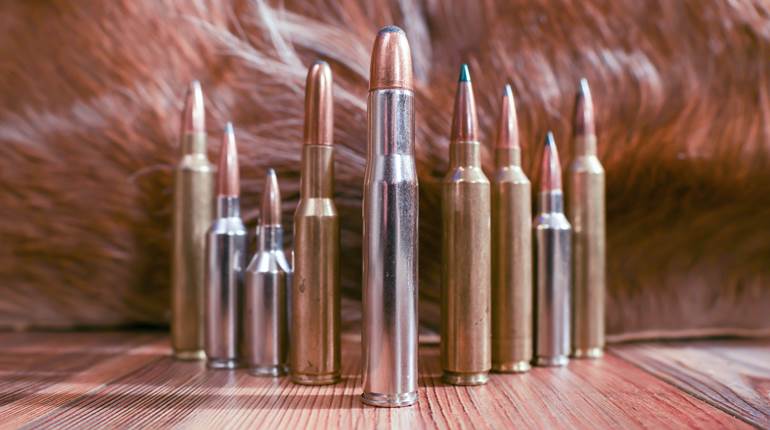
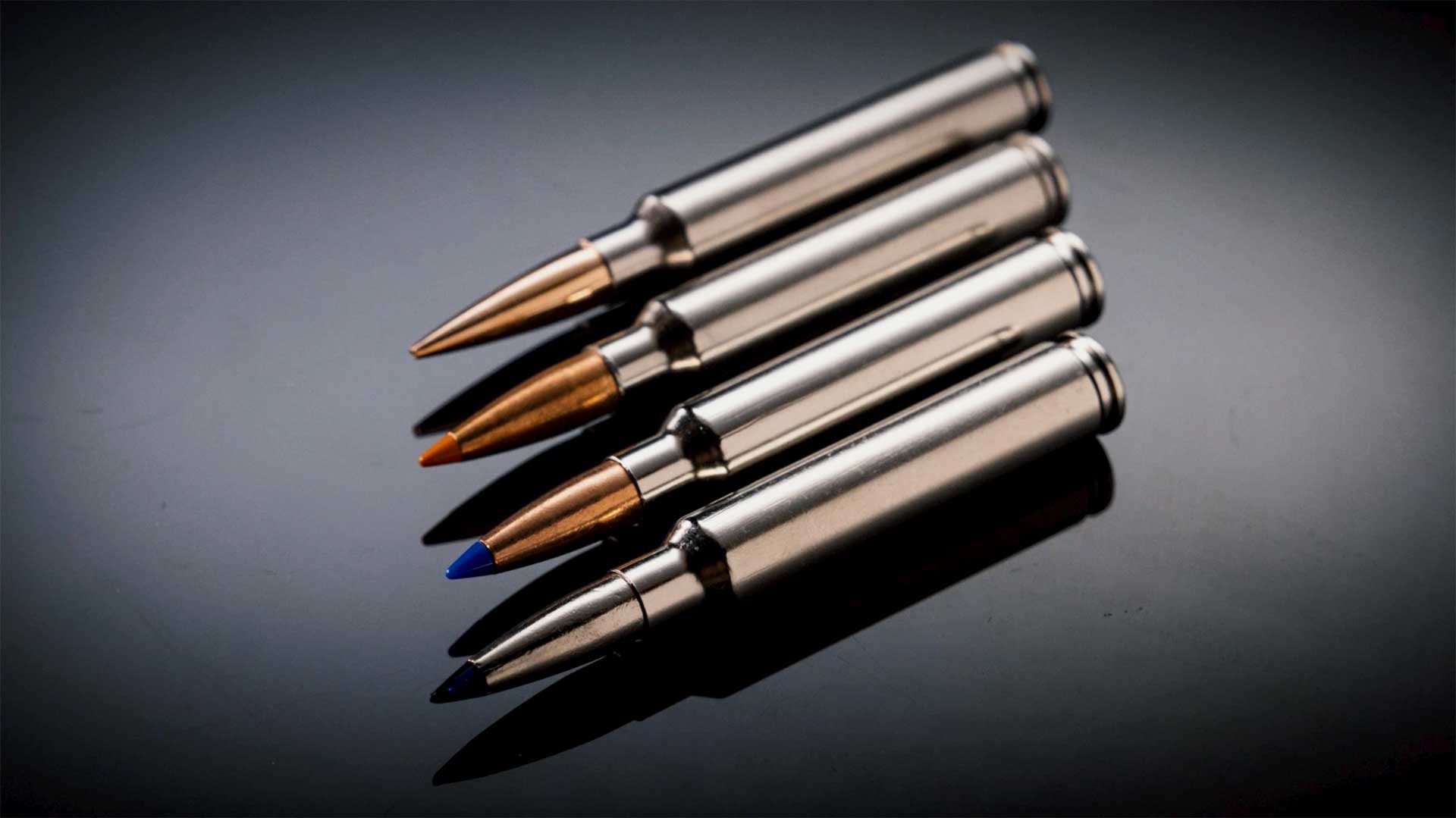 Federal's 7 mm Backcountry will be available in several loads at launch, including a 195-grain Berger Elite Hunter (top), 175-grain Fusion Tipped, 170- and 175-grain Terminal Ascent and a 168-grain Barnes LRX.
For more details on the Federal 7 mm Backcountry and available loads, visit Federal Ammunition's website here.