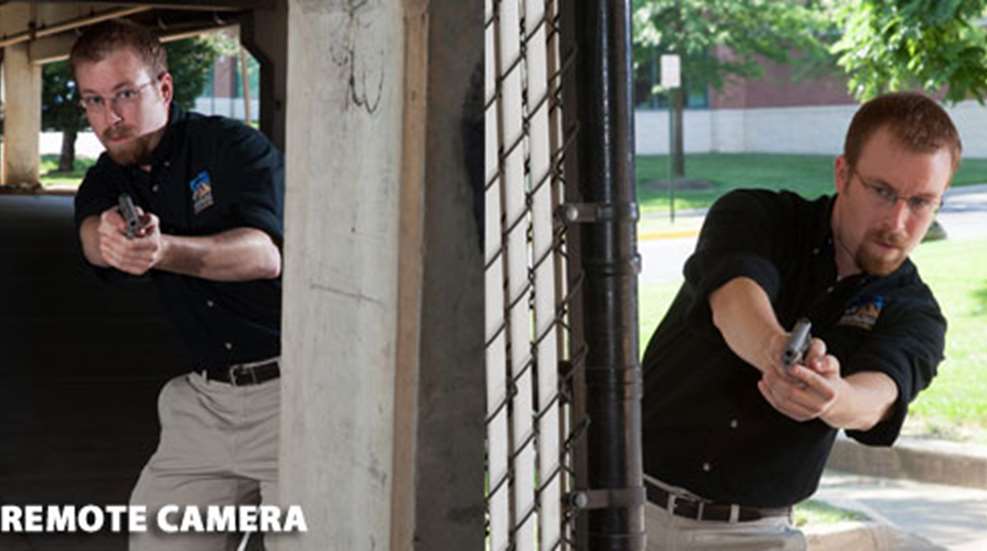
For the defensive shooter there is a distinct difference between concealment and cover. Concealment is anything that will help you hide, but does not stop bullets. Examples that quickly come to mind are bushes, shrubbery and shadows. An alert citizen, who sees potential trouble while it is still a ways away, might step behind concealment so that he or she is not seen while observing and making a determination about the potential threat.
In many cases, when you realize a threat is near, the best move is to exit the scene as quickly as possible. By using concealment effectively, you may get away from the threat without being seen and without the bad guys knowing exactly where you went. If they don't know where you are, or where you went, it's pretty difficult to get an effective shot at you.
Cover, on the other hand, is anything that can be expected to stop bullets. You should be continually aware of the objects around that can serve as cover. In fact, if you go about your life in an alert fashion, you realize that you are rarely very far from effective cover.
Once you observe an actual threat, your first thought should be about how to get away from it. If this proves impossible, you should move to the nearest cover, make use of it and get ready to fight. Spotting potential cover should be a continuous part of being in Condition Yellow and an integral part of Condition Orange and Red. The ability to quickly identify cover and make use of it greatly increases a person's ability to survive a deadly attack.
However, it is important to realize that there are many kinds of cover. Some cover, like brick walls, large trees and the front end of automobiles, will stop just about any bullet that a criminal is likely to throw your way. Other cover, such as furniture, interior walls and large home appliances, may only stop bullets from weaker cartridges. It is critically important to know the difference.
Upon being seen taking cover, the crooks will likely expect you to rise up over the top of your cover to return fire. This can be a real mistake. It might make a whole lot more sense to go prone and lean out around the side of cover when engaging your attackers.
Finally, you should survey your home, work place and anywhere else that you spend time to determine the available concealment and cover. This is far better than waiting until guns start going off to try to find a safe place. When faced with a violent attack, it is important to stack the odds in your favor as much as you possibly can. Making use of effective concealment and cover is an effective way to accomplish this goal.
Most Popular