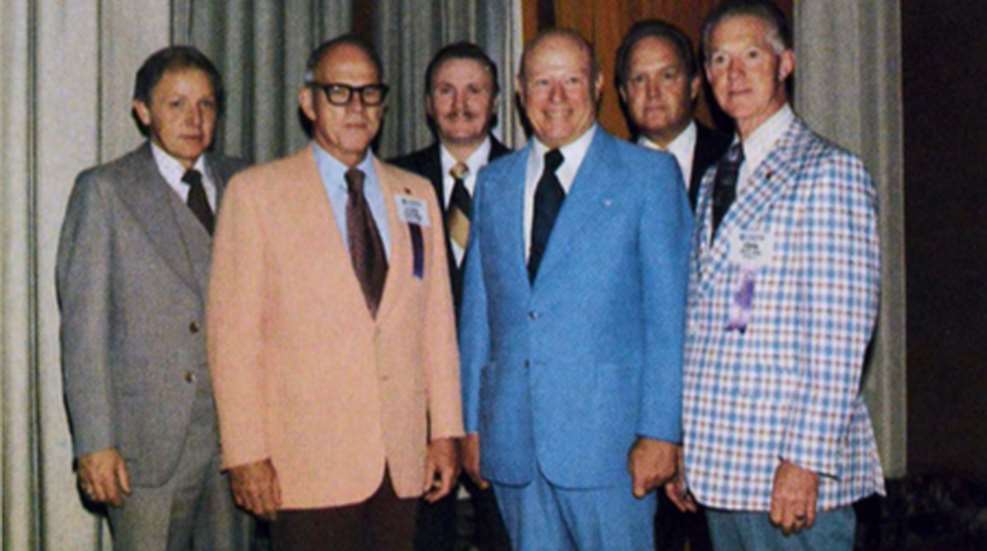
Images courtesy American Rifleman, July 1977
Cincinnati, May 1977. The National Rifle Association had come to town with its Annual Meetings and Exhibits, America’s largest gathering and celebration for gun owners and shooters. But there would be a marked difference from previous Annual Meetings, because at this event, a leadership battle would take place in the convention hall. Over the course of the weekend, and especially in one all-night session, NRA members would change the course of their organization’s—and their nation’s—history. 
The NRA was at a crossroads. The showdown occurred one year after the founding of NRA’s Institute for Legislative Action, formed to secure gun owners’ civil rights first and foremost. Opposing factions had very different ideas about NRA’s goals and operations. Should the Association focus on shooting competition and environmentalism to gain media approval, or should it prioritize political advocacy for gun-owners’ rights in the face of a rising tide of anti-gun fervor? The leadership of the time proposed to move the Association’s headquarters from the Washington, D.C. area to Colorado, much to the chagrin of most members. 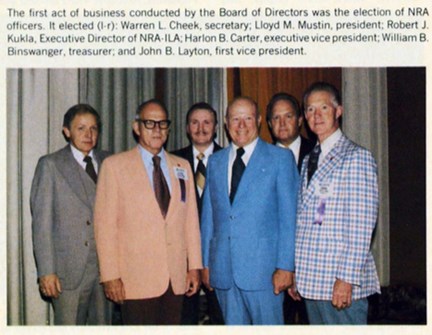
But approximately 1,100 voting Members who journeyed to Cincinnati were having none of that. In a marathon Annual Meeting of Members starting at 7:30 p.m., an ad hoc group calling itself the “Federation for NRA” and influential members of NRA’s Board of Directors ousted the “Old Guard” executives and installed a new slate of leaders who vowed to aggressively defend Second Amendment rights and be more responsive to the needs of the members.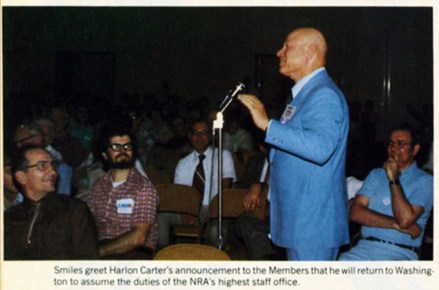
Not until the wee hours of the following morning did former NRA President Irvine Porter adjourn the members’ meeting. Harlon B. Carter, who had only recently retired as the first head of the Institute for Legislative Action, took the helm as executive vice president and told the members: “You, the membership, are entitled to have an NRA that is responsive to your wishes. That is right, that is what you have demanded, and that’s the way it’s going to be. You cannot be denied, my beloved friends.“ Pointing to the Board members, Carter added, “You are the NRA, not I, not these gentlemen here: You are all we have.” 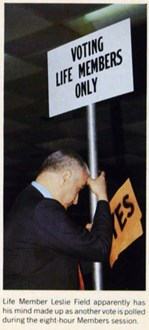
The crowd went wild, giving Carter a rousing ovation, confident their voice would start being heard and that “the NRA” would live up to the higher standard of “your NRA,” an Association where Members would assume a more participatory role in steering the organization thanks to such measures as nominating candidates for director by petition and placing non-directors on the Nominating Committee.
Within months of the meeting, newly installed Executive Vice-President Carter made it clear that the NRA would dig in its heels and remain “where the action is,” in Washington, D.C. That commitment expressed the new focus of the present-day NRA and was a clear demonstration of the power of grass-roots activism.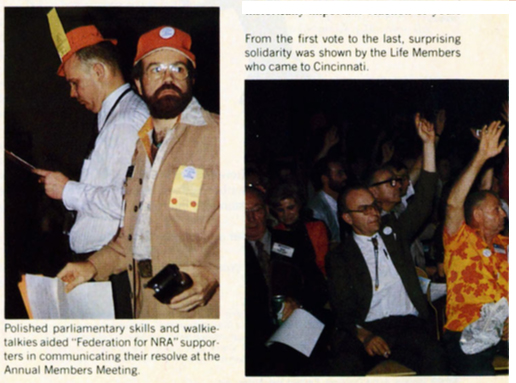
The Cincinnati meeting established a blueprint for the future, one that united gun owners and all who truly believe in the civil liberties guaranteed by the U.S. Constitution. Driven by that clear objective, the NRA has never flinched in its successful efforts to preserve our right to keep and bear arms.
We have been tested time and time again. Our political enemies have ramped up their assault on our freedoms to include the most vicious personal attacks imaginable, aimed at our officers, board members, staff and members. They no longer try to conceal their true agenda of total disarmament of the American people. In fact, they are so focused on this, and so confident in their victory, they will stop at nothing to attain their goal.
Our enemies are getting smarter and richer, but the NRA has fought this battle before. We know our enemies don’t have what we have—the hearts and minds of patriots who recognize that what is at stake is bigger than any of us. And we know that ultimately, victory can’t be bought—it can only be earned by winning the support of our fellow Americans.
Most Popular