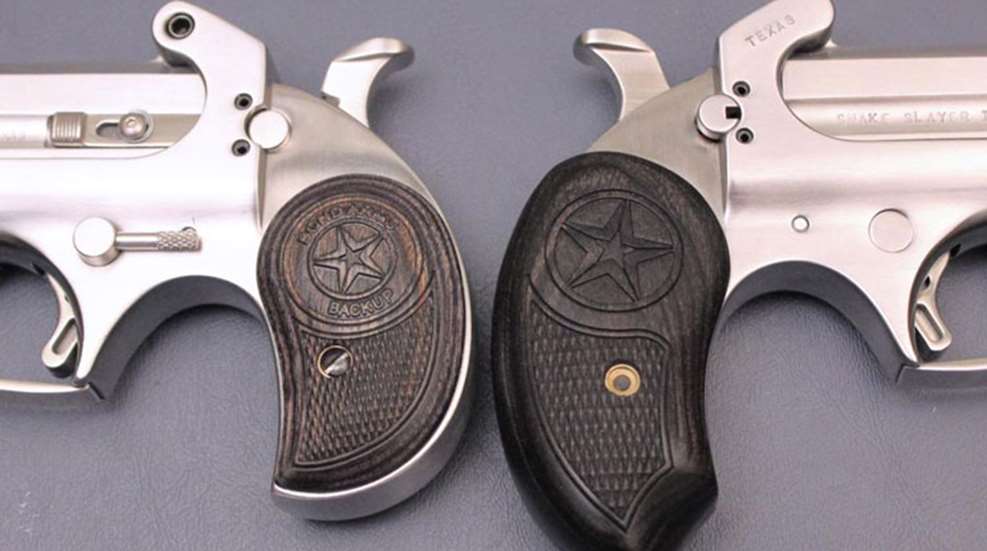
In a previous piece titled 7 Reasons Why Pocket Pistols May Not Be For You, I touched briefly on some of the challenges associated with choosing a small handgun for concealed carry. But just like any other defensive platform, there are ways to work with or around pocket pistol features in order to make the most of their advantages. Here are a few tips to keep in mind:
1. Adjust the grip shape. 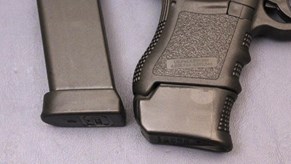
Sub-compact handguns can be tough little beasts to shoot when the grips are too short or narrow for your particular hand shape. Sometimes it can seem like the gun is trying to jump straight up into the air out of your control or feel like it's going to pound your hand to a pulp. It's amazing what a seemingly minor change in grip size or shape can do to change the shooting experience. For small semi-autos, try adding an extended base plate to the magazine to give your little finger somewhere to rest. If you need to thicken the grip a bit or improve grip purchase, slip on a rubber grip sleeve like the Tuff 1 or Hogue Handall. For handguns with removable grips, like double-action revolvers, trade out the factory grips for another model that fits you better.
2. Upgrade the sights. 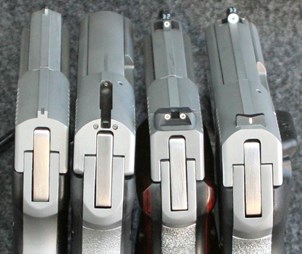
It's not unusual to find pocket pistols with simple fixed sights that are ruggedly affixed to the gun but not necessarily easy to work with. The good news is that many makes and models are available with factory sights that can be removed and replaced with larger fiber optic or glow-in-the-dark night sights. Some companies offer sighting upgrades that are installed at the factory. The North American Arms Guardian pistols shown here feature different factory configurations including the standard fixed sights (left), Gutter Snipe, Novak, or XS night sight systems. Another useful option for improving the view down range is the addition of a laser sight. Options include rail-mounted modules and laser grips.
3. Try different kinds of ammunition to manage recoil. 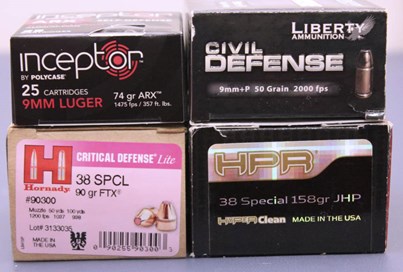
The rule of thumb for selecting a defensive handgun caliber is to shoot the largest caliber you can manage. However, how much felt recoil a particular handgun produces will increase or decrease depending on the ammunition selected. For those who feel the need to pack full-throttle ammunition in their pocket pistols, please feel free to do so. Just make sure to practice with it until your shot placement is consistently on target. For those who are looking to tame the bucking of their pocket broncos, take a look at reduced recoil ammunition. Generally speaking, ammunition with heavier bullets and higher velocities kick harder than loads with lighter bullets and lower velocities. Many ammunition companies offer defensive pistol ammunition options designed specifically to produce low levels of muzzle flash and felt recoil when fired from small handguns. They usually say “low recoil” right on the box. Other loads will require testing on your part to determine if it's a good fit for you.
4. Use sneaky holsters. 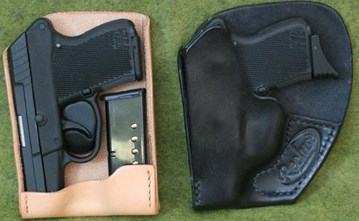
Make the most of a sub-compact pistol's small size by using holster systems especially designed to change its outline when pocketed or hide it in plain sight. Recluse Holsters cover the grip of small semi-autos to keep them from printing in pants pockets. Sneaky Pete belt holsters look like smart phone belt pouches while the Tuff Products TUFF iTuck conceals an in-the-waistband holster behind a cell phone pouch.
5. Think outside the pocket. 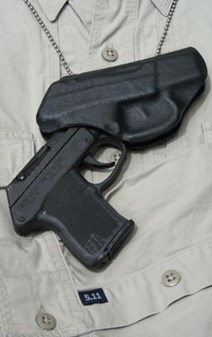
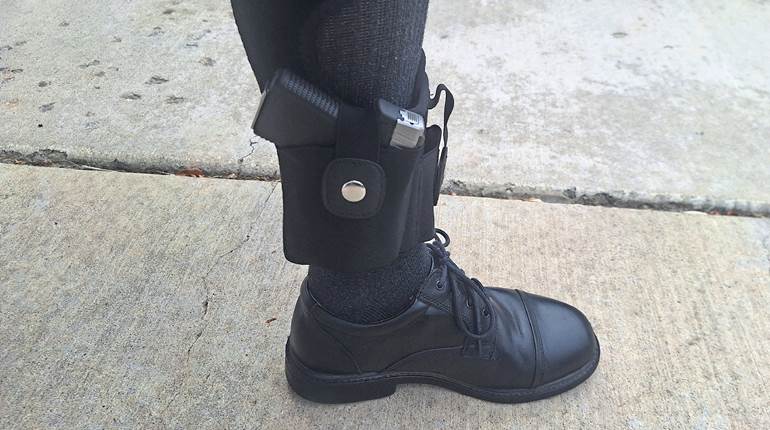
Describing sub-compact pistols and revolvers as “pocket guns” is a quick and easy way to identify a whole class of concealed carry handgun. But if the idea of sticking a little gun into a jeans pocket just isn't your style, try using other holster systems to move the gun to another location on your body. If you spend more time sitting and driving than walking around, then an ankle holster might be a better option. Pocket pistols are much easier to conceal in shoulder, belt, and in-the-waistband holsters than their larger cousins. Some guns are small enough to carry on a neck chain or in a bra holster.
6. Clean it like you mean it.
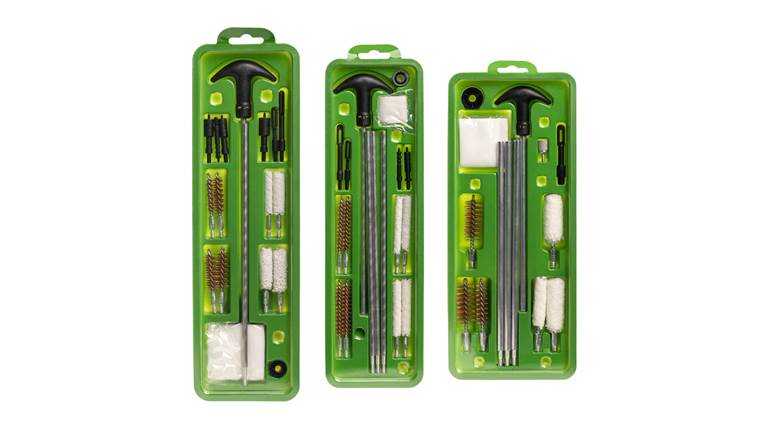
Pocket pistols, especially semi-automatics, have something of a reputation for jamming. Besides the obvious problems of ammunition malfunctions and guns that are poorly made, two other factors can cause little guns to run unreliably. One is limp-wristing, which means not holding the gun firmly enough during recoil (see points 1 and 3). The other is insufficient maintenance. 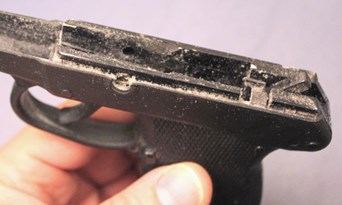 It's amazing how quickly the action of a little gun carried in a pocket, purse or ankle holster will fill up with dust and lint. The lubricants tend to run off or dry up quickly too. Take the time to check and clean pocket pistols on a regular basis. If you live in a particularly hot and humid part of the country, regular cleaning will help to prevent rust and corrosion as well.
7. Keep working at it. 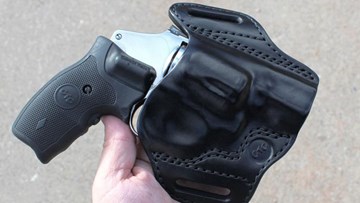
Too often I hear of folks who buy a pocket pistol, shoot it once, and then give up because it was a negative experience. Just because a journey begins unexpectedly or ends in a different location than planned doesn’t mean it has to be a bad trip. Give it a little more time. Try some of the tips listed here before trading it in for something else. With a few changes it may turn out to be just the perfect fit for your needs.
For those who are still looking for a pocket pistol, my advice is to take your time and do your homework. Rent various models at the gun range or try a friend’s handgun before you buy. You may start out the process of searching for a concealment gun with the idea of buying a pocket .380 ACP semi-auto only to find that you are much happier with a .38 Spl. J-Frame in a belt holster. Pocket pistols can take more work to master but if you will carry it regularly instead of going unarmed, then it’s well worth the investment.
Most Popular