by
Support NRA American Rifleman
DONATE
** When you buy products through the links on our site, we may earn a commission that supports NRA's mission to protect, preserve and defend the Second Amendment. **
The Model 1919 Browning, an air-cooled, upgraded version of the water-cooled Model 1917, was the prime machine gun in use by all U.S. Military forces during World War II. Used alongside the Garand, the 1911 and the BAR, it saw service in more than 20 countries and could be chambered in 10 different cartridges, including .30-06 Springfield and 7.62 NATO.
"When it comes to machine guns, really, no gun has a track record like the Browning Model 1919," American Rifleman Editor-in-Chief Mark Keefe said. "Developed in the 1920s, it saw service through World War II and was used by the infantry, on tanks and in aircraft."
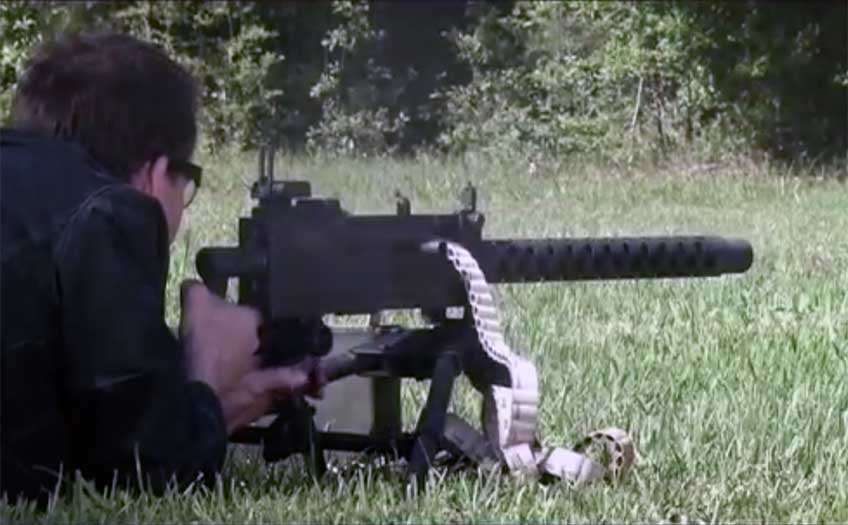
The M1919 Browning, with a rich service history in its own right, derives much of its mechanical design and operating principles from the earlier M1917 Browning, which served in the U.S. Military in the waning months of World War I. Unlike many contemporary machine guns that made use of Hiram Maxim's toggle-lock design, Browning's machine gun used a sliding-block mechanism that eliminated weight and complexity while still being robust and reliable.
"The enduring thing about the Browning machine guns, the 1917 and the 1919, is that they always work!" said Firearm Historian Michael Parker. "John Browning's design philosophy was to make the parts big and robust. His own personal testing regimen was so rigid, the standards that he set for himself were so high, that the guns easily surpassed the most demanding Army tests."
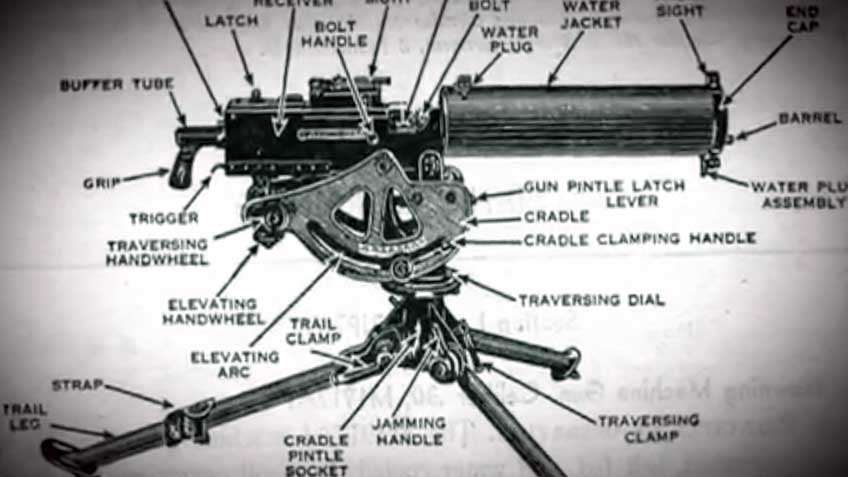
As the U.S Army ramped up its small-arms complement for World War I, it sought submissions for a machine gun. A May 1917 test at Springfield Armory arranged by John Browning saw an example of his M1917 design fire 39,500 rounds before experiencing any parts breakage. A later production model underwent another rigorous test, firing more than 21,000 rounds in a continuous burst that lasted 48 minutes and 12 seconds.
"The Browning 1919 is really an upgraded version of the Browning 1917 that was water-cooled, but the 1919 was an air-cooled gun," said NRA Museums Senior Curator Philip Schreier. "It's the gun we see that's mounted on the front of the tanks and on the back of jeeps. This is the machine gun we see the infantry using as a squad automatic weapon throughout the Second World War, Korea and Vietnam.
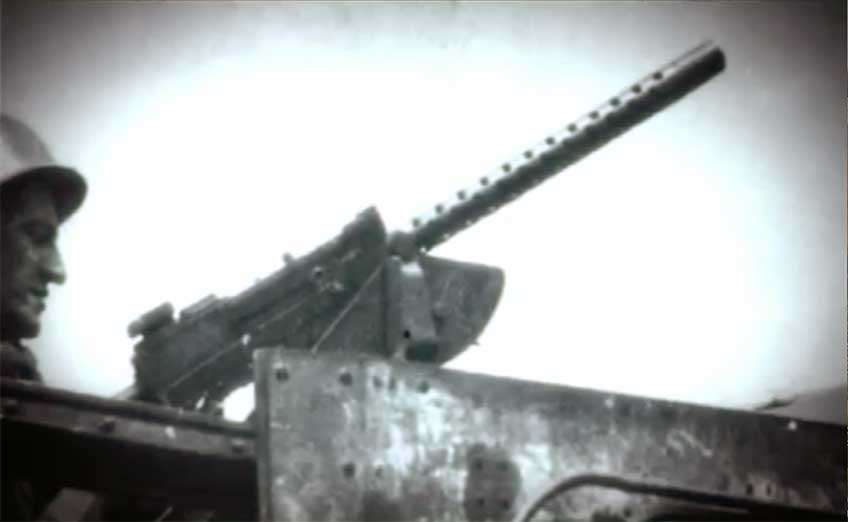
The changing nature of warfare in the early 20th century forced the U.S. Military to modify the gun to fit many different roles. While the M1917 Browning was lighter than its WWI contemporaries, weighing in at 47 pounds as compared to the German MG-08, which weighed 137 pounds in its earliest configurations, the gun still wasn't light enough to serve in the dynamic, movement-based maneuvers that emerged in the 1920s and later.
"The first of the 1919s was developed as a tank gun and moving on from there, there was co-development of the M2, the larger .50 Browning Machine Gun cartridge," Keefe said. "It wasn't until 1927 that they settled on what would become the 1919A4 machine gun. Infantry doctrine at the time no longer called for the sustained barrage fire role. The advent of widespread use of vehicles would change the role of the machine gun."
Early variants of the M1919 focused on lightening the design to enable it to be more easily carried by infantry. The M1919A1 had a lightened barrel, bipod and sights added to the design, making the gun more usable in an infantry role rather than a tank-mounted role. An even shorter, lighter arrangement emerged in the inter-war period as the M1919A2, featuring an 18" barrel and a unique tripod mount designed for service with cavalry units. An A3 variant also improved upon the A2 model with features designed for infantry units before advancing to the M1919A4, the design most commonly seen.
"This belt-fed, full-automatic machine gun weighed 31 pounds, not exactly a light weapon by any means," Philip Schreier said. "It was manufactured primarily in .30-'06, but it also saw service in over 30 countries, which produced the gun in 7.62 NATO, .303 British and about 10 different cartridges altogether."
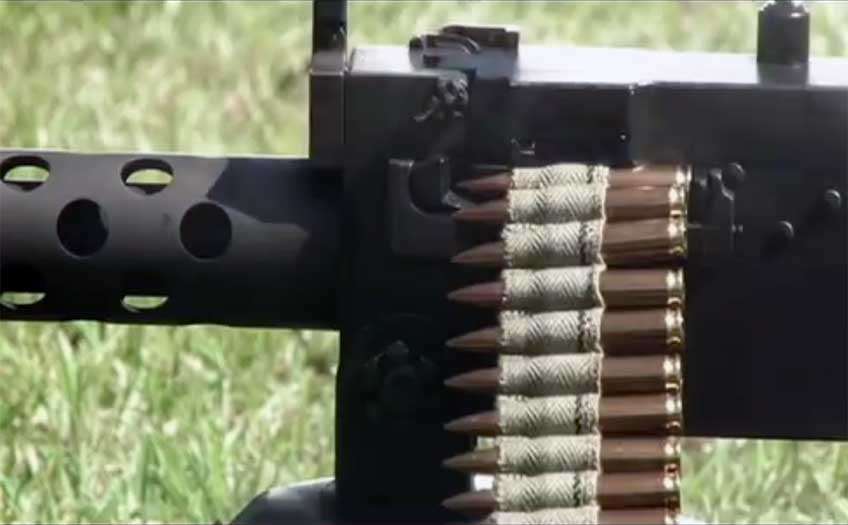
Final design elements for the M1919A4 were completed in 1936, ensuring that the machine gun was ready for mass production when the U.S. entered World War II. The relatively simple design of the M1919A4 Browning allowed companies with no firearm-building experience to manufacture the guns for the war effort. In particular, the Saginaw Steering Gear division of General Motors produced many M1919 machine guns for the U.S. Military during World War II. In all, nearly 500,000 M1919 Browning machine guns were produced.
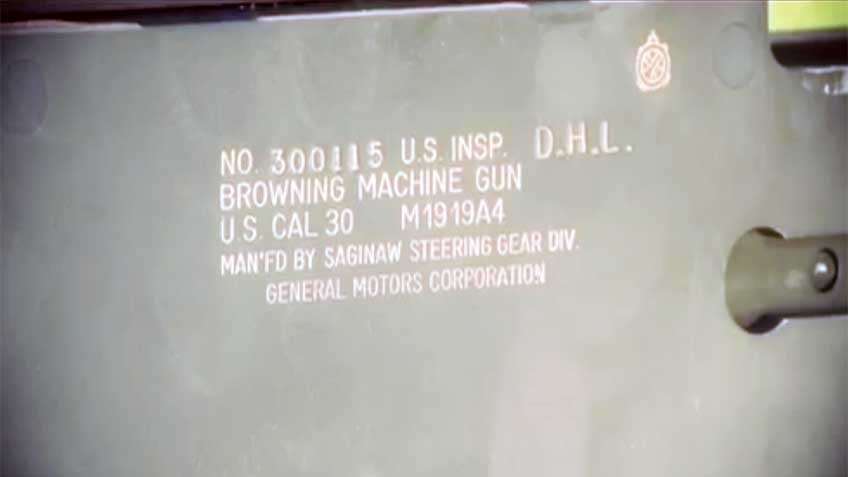
"I think one thing that often gets overlooked about the 1919 is that you had a machine gun that was adaptable, because the 1919 undergoes evolution," said American Rifleman Field Editor Martin K.A. Morgan. "It starts off as the 1919A4 we see being used so significantly throughout the Second World War and then, in late 1943, you see the development of the 1919A6, and this is the version of the M1919 that has a lighter barrel, a buttstock and a bipod."
"This is the version of the M1919 that can be carried by an individual, brought into combat by one person, by one operator," Morgan said. "I think it's fascinating that John Browning can design a firearm that can undergo these changes, that can adapt to new calibers, to new environments, because that's exactly what the M1919 did. The M1919 soldiered on through the 20th century."
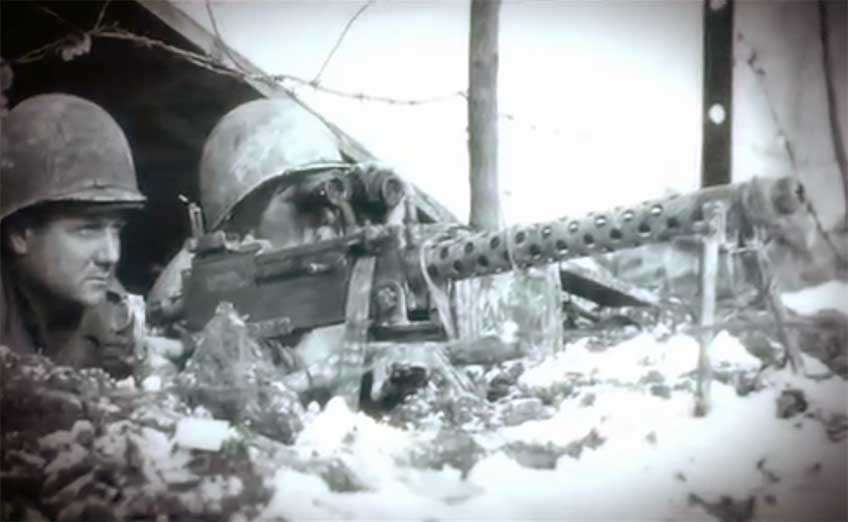
Despite its impressive service and battle-proven reliability, the military's experience in World War II highlighted the need for something different. In particular, infantry units noticed a gap between several firearms designed for support-fire roles. The Browning Automatic Rifle was portable, but its 20-round magazines and fixed barrel meant it couldn't provide sustained fire.
The M1919 could provide sustained fire, but it was heavier than the BAR and couldn't be moved and deployed as easily and quickly. The M1919A6 served as a wartime stopgap, but post-war development centered upon finding a solution that filled both needs. The result was the M60 machine gun, adopted in 1957.
Even with the adoption of the M60, the M1919 Browning continued to serve as a support weapon in many roles. The U.S. Navy converted many guns to 7.62 NATO, and many countries deployed the M1919 until the end of the 20th century.
"You know, the Browning was kind of like an army mule. It was it was utterly reliable, it could carry any load that you could put on and it always worked," Parker said. "John Browning got it pretty much right the first time."