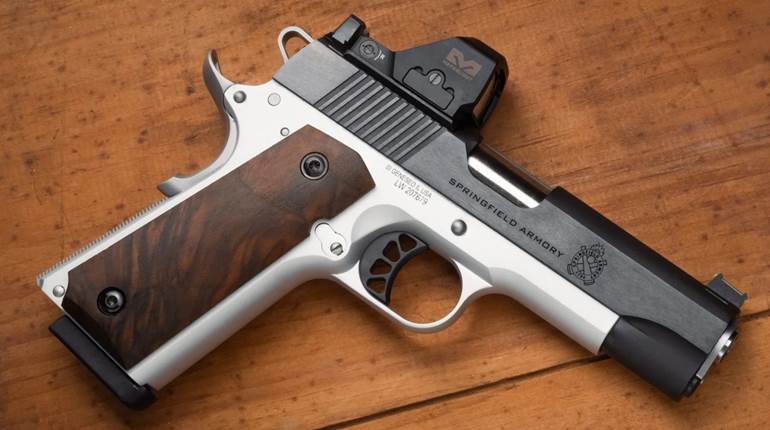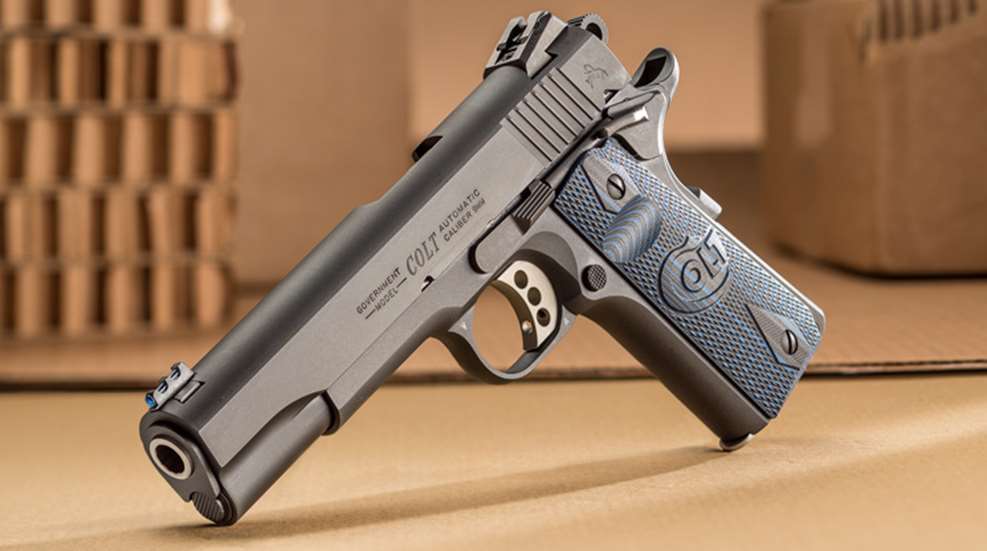
It just keeps going and going. Every time I think that demand for the M1911 pistol has started to bottom out, I find out I'm wrong. The pistol invented by John Moses Browning, rendered into a production gun by engineers and machinists at Colt and adopted by the United States Army in 1911 is the most enduring American handgun of all time.
It has been in continuous production for 115 years. It went from the standard sidearm of the U.S. military to a darling of Camp Perry competitors, to a gun that even Colt thought no one really wanted anymore. Boy, was that prediction wrong. Thankfully, Colt stuck with the M1911. By 1991—six years after being replaced by the M9--the only companies making production M1911s were AMT, Auto Ordnance, Colt, Coonan, Detonics, Omega, Para Ordnance, Safari Arms and, most notably, Springfield Armory. Save for Colt and Springfield, they were mostly oddities (double-stacks, left-handed guns and unconventional chamberings) based on the M1911 that helped to keep the design alive. Thankfully, small and custom makers, too, continued to stick with M1911, developing new and better parts.
Today, it is a service pistol again, thanks to the U.S. Marine Corps adoption of the .45 ACP M45 CQB pistol (albeit in very small numbers used by elite Marine Operators). And there were more variations of the gun introduced by the firearm industry this year than in recent memory.
The M1911 is the gun upon which the modern Kimber Mfg. is built. The gun is made by big names including Remington, Ruger, Smith & Wesson, SIG Sauer and Springfield Armory. Custom and semi-custom makers are out there, too, such as Les Baer, Nighthawk, Republic Forge and Wilson Combat. Frankly, there are too many to list on the production and custom side. You get the picture. In reviewing the guns we previewed in the April issue of American Rifleman, an inordinate number of them were M1911s. Again.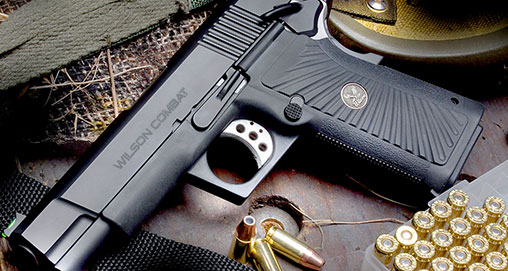
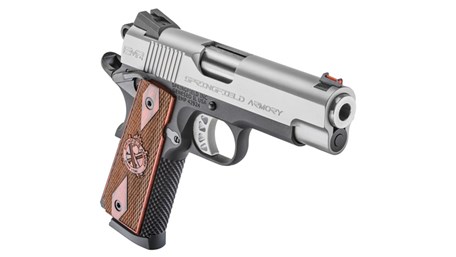
There is the Springfield EMP4, a 9 mm with the shorter-than-standard frame due to the shorter cartridge overall length of the 9 mm. The M1911 is being offered in a single-stack polymer-frame by EAA, and Colt is reinforcing success with its Competition and Lightweight Commander. Again, on the smaller side you have the Browning Black Label Pro 1911-380, which is one of the best pistols for small-handed users I have seen. 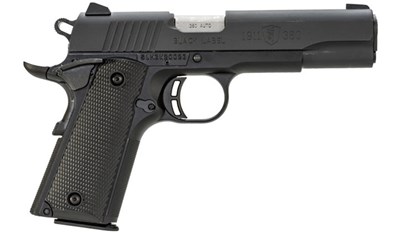
Sure, there are plenty of .380 ACP guns in the Colt Mustang class, including guns from SIG Sauer and Kimber, but this little Browning has a little more barrel and a little more grip frame. It is and 80 percent-sized rendition not designed principally for concealment. It is designed for shooting. And the low recoil impulse—and low muzzle energy—of the .380 ACP cartridge makes it a fun and easy gun to shoot.
And now Armscor (which makes a lot, and I mean a lot, of M1911s) is making a version of the gun in .22 WMR. They cracked the code that befuddled the AMT Automag II; it seems to work well. The little .22 WMR cartridge appeals to many due to its almost complete lack of recoil. Guns such as the Kel-Tec PMR-30 and Ruger LCR have demonstrated that not only is it fun and inexpensive to shoot, regardless of what experts tell the shooting public, there are some that think the .22 WMR is the right choice for them for personal protection.
Improvements in bullet design have rendered the 9 mm Luger a far more viable handgun cartridge for personal protection as well as law-enforcement use. The FBI is going back to 9 mm, and a lot of other agencies are following suit.
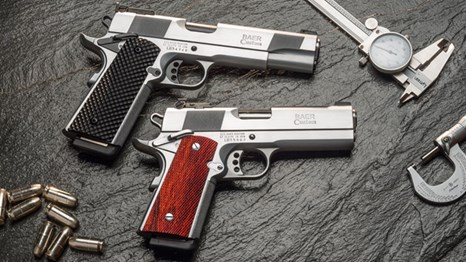
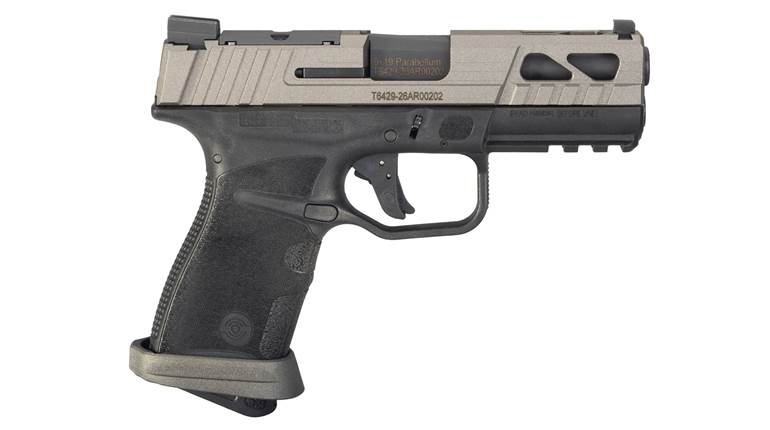
The M911 is not immune to market trends. For decades the .45 ACP cartridge and the M1911 were inextricably linked. Not so much anymore. I stopped by Les Baer Custom booth at the recent SHOT Show and his shiny new pistol for 2016 was in 9 mm. Those new Colts I just mentioned? Also available in 9 mm. You can have an M1911 in just about any handgun chambering these days, starting with the humble .22 Long Rifle.
While I am certain that most M1911s, regardless of maker, will continue to be .45 ACPs, the hotshot round for “old slabsides” appears to no longer be the .38 Super. It is now the cartridge invented by Georg Luger and marketed by Deutsche Waffen und Munitionsfabriken as the 9 mm Parabellum. In 1902. Who knew?
Frankly, if you are a major maker of handguns in the United States today, the lack of a M1911 in your catalog makes you conspicuous. And why not make them? Everyone else does.
Most Popular