** When you buy products through the links on our site, we may earn a commission that supports NRA's mission to protect, preserve and defend the Second Amendment. **
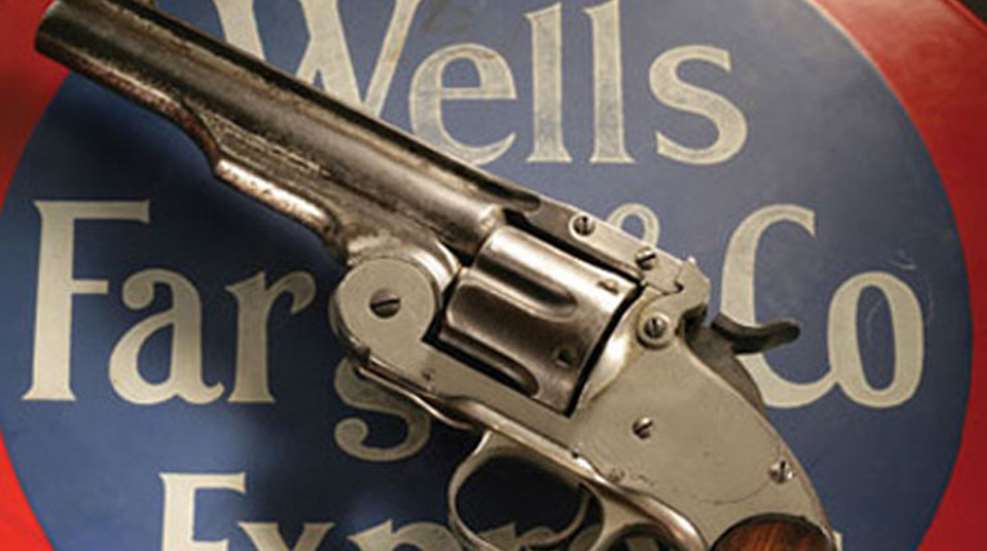
I have to raise a point regarding the early Smith & Wesson top-break revolvers. These were the first really powerful handguns the old line maker offered, but some of them are currently popular enough to be replicated for re-enactors and other shooting purposes. Smith & Wesson began revolver production in the Civil War era with the Number 1 and 1½ series of rimfire revolvers. These were so-called tip-ups, where the hinge for opening the action was on the top front corner of the frame. A slightly larger gun followed with the same general layout—the Number 2 series. But by the time that 1870 rolled around, it was obvious that a big-bore gun would be a far better seller.
S&W came up with the Number 3 series of revolvers. They proved to be sound products, used for everything from big game hunting through Indian fighting to international competition. By the time they were discontinued, the maker had produced five distinctly different variations of the Number 3 series. In order, they were the #3 American, #3 Russian, #3 Schofield, #3 New Model and #3 Double Action. Within each of the five variations or “families,” there were many detail changes. All of this happened right in the middle of the western frontier era and a complete description would make a great book.
In modern times, three of the five have been replicated with modern steels and springs—Russian, Schofield and New Model. I remain amazed that this ever happened, but I have recently fired very nice copies of these historic firearms, most of them from Uberti in Italy. The most popular replica is by far the Schofield, a variant originally designed by an Army officer of frontier cavalry. Because of the popularity of the #3 Schofield compared with other #3 series guns, some folks are starting to refer to all S&W #3 revolvers as “Schofields.” Only Schofields should be referred to by that familiar name.
This does a considerable disservice to the grand old gun. The Schofield was named for its designer and has significant improvements. The five guns are distinctly different and deserve to be identified accurately. For a clear picture showing all five, see page 88 of the Supica & Nahas classic, Standard Catalog of Smith & Wesson.
S&W came up with the Number 3 series of revolvers. They proved to be sound products, used for everything from big game hunting through Indian fighting to international competition. By the time they were discontinued, the maker had produced five distinctly different variations of the Number 3 series. In order, they were the #3 American, #3 Russian, #3 Schofield, #3 New Model and #3 Double Action. Within each of the five variations or “families,” there were many detail changes. All of this happened right in the middle of the western frontier era and a complete description would make a great book.
In modern times, three of the five have been replicated with modern steels and springs—Russian, Schofield and New Model. I remain amazed that this ever happened, but I have recently fired very nice copies of these historic firearms, most of them from Uberti in Italy. The most popular replica is by far the Schofield, a variant originally designed by an Army officer of frontier cavalry. Because of the popularity of the #3 Schofield compared with other #3 series guns, some folks are starting to refer to all S&W #3 revolvers as “Schofields.” Only Schofields should be referred to by that familiar name.
This does a considerable disservice to the grand old gun. The Schofield was named for its designer and has significant improvements. The five guns are distinctly different and deserve to be identified accurately. For a clear picture showing all five, see page 88 of the Supica & Nahas classic, Standard Catalog of Smith & Wesson.
Most Popular