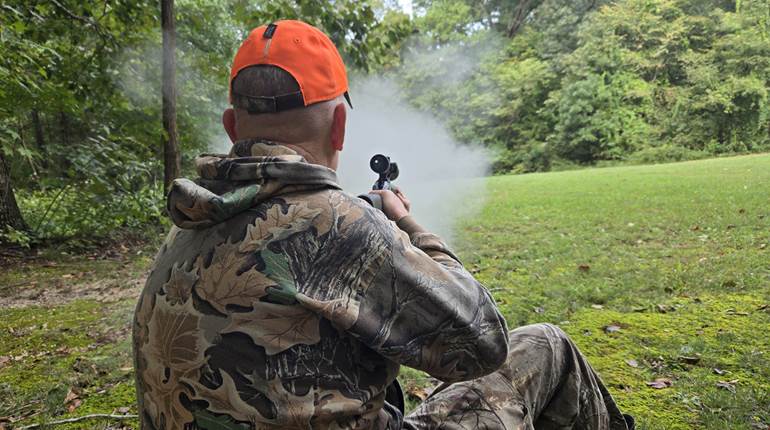
When it comes to the firearms of the American Civil War, most enthusiasts think about the rifle musket as one of the principal arms of the conflict. However, smoothbore muskets continued to see extensive service on battlefields across the nation throughout the war. At the North-South Skirmish Association, they pay homage to the men who used these muskets in conflict with its smoothbore musket skirmish. Watch our "American Rifleman Television" feature above to see the matches play out.
"The North-South Skirmish Association is America's oldest and largest Civil War-period shooting sports organization in the country," said Bruce Miller, public information officer, N-SSA. "We were incorporated in 1950, and we have just about 3,000 members in our 200 member teams, or units, as we would call them. We wear reasonably authentic uniforms, which are mandatory in our team competitions. But where we're real sticklers is the firearms. Reenactors are perhaps more concerned with uniforms and equipage. For us, it's the firearms."
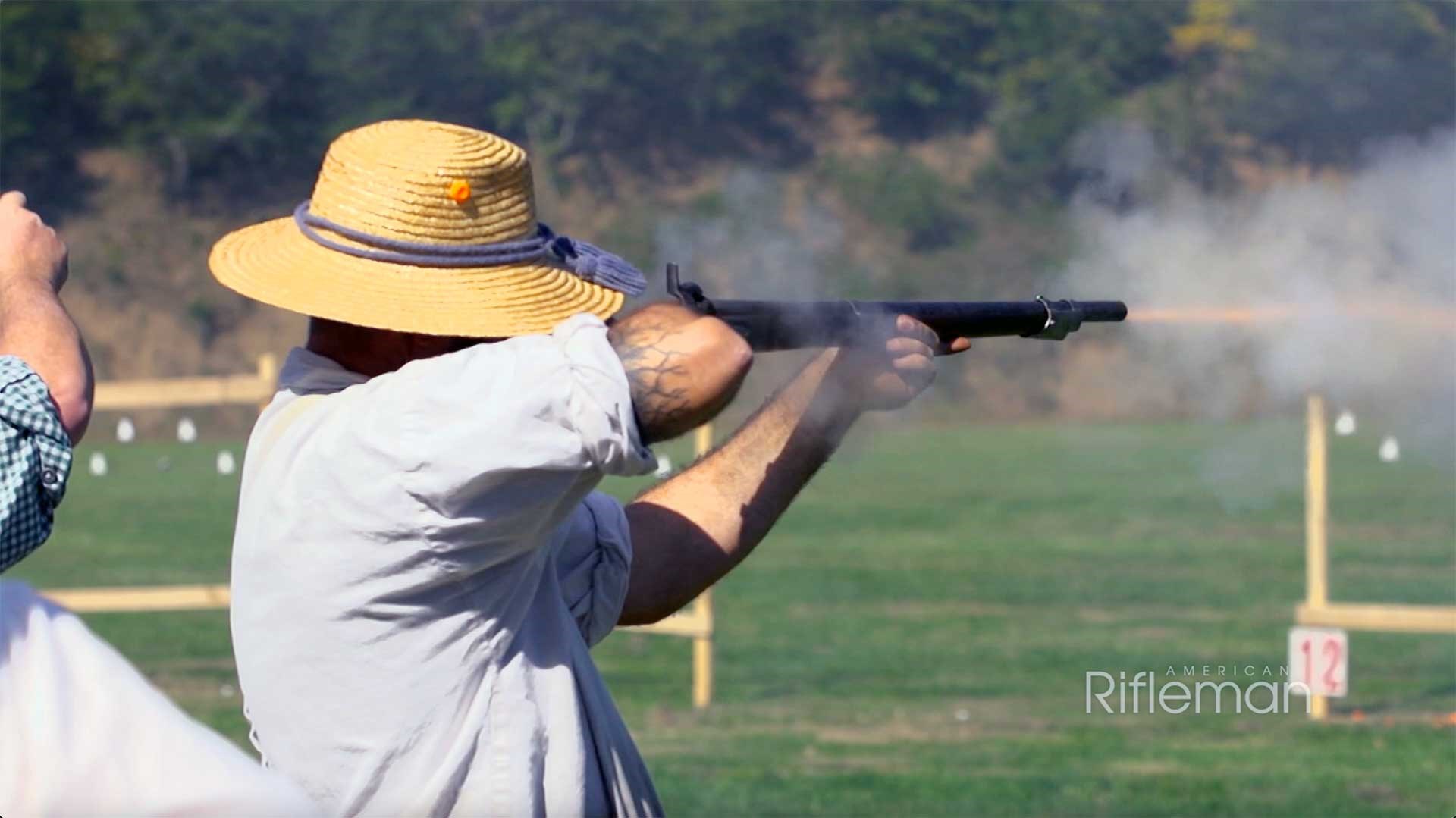
On one of the nation's longest firing lines at Fort Shenandoah, the N-SSA shoots a variety of matches, ranging from the musket match, which uses rifle muskets, to carbines, revolvers and smoothbore muskets. Twice a year, all teams from all regions of the country gather at the group's Fort Shenandoah range for the national skirmish.
"The first thing to understand is during the Civil War, the smoothbore was used with buck and ball ammunition, which was three .30-cal. small round balls and a .64-cal. round ball, okay?" said Phil Spaugy, past commander, N-SSA. "Well, for skirmishing purposes, we really couldn't load four projectiles and put paper cartridges down the bore. So we used one basically .69-cal. round ball backed by usually anywhere from 50 to some people use 80 grains of blackpowder."
Many smoothbore muskets were used during the Civil War, ranging from European-imported examples to U.S.-converted examples of old flintlock service muskets, like the Model 1816. One of the most popular at the N-SSA, though, is the Model 1842 Springfield, which was the first percussion musket adopted by the U.S. military and the first musket made by the Springfield Armory to use fully interchangeable parts.
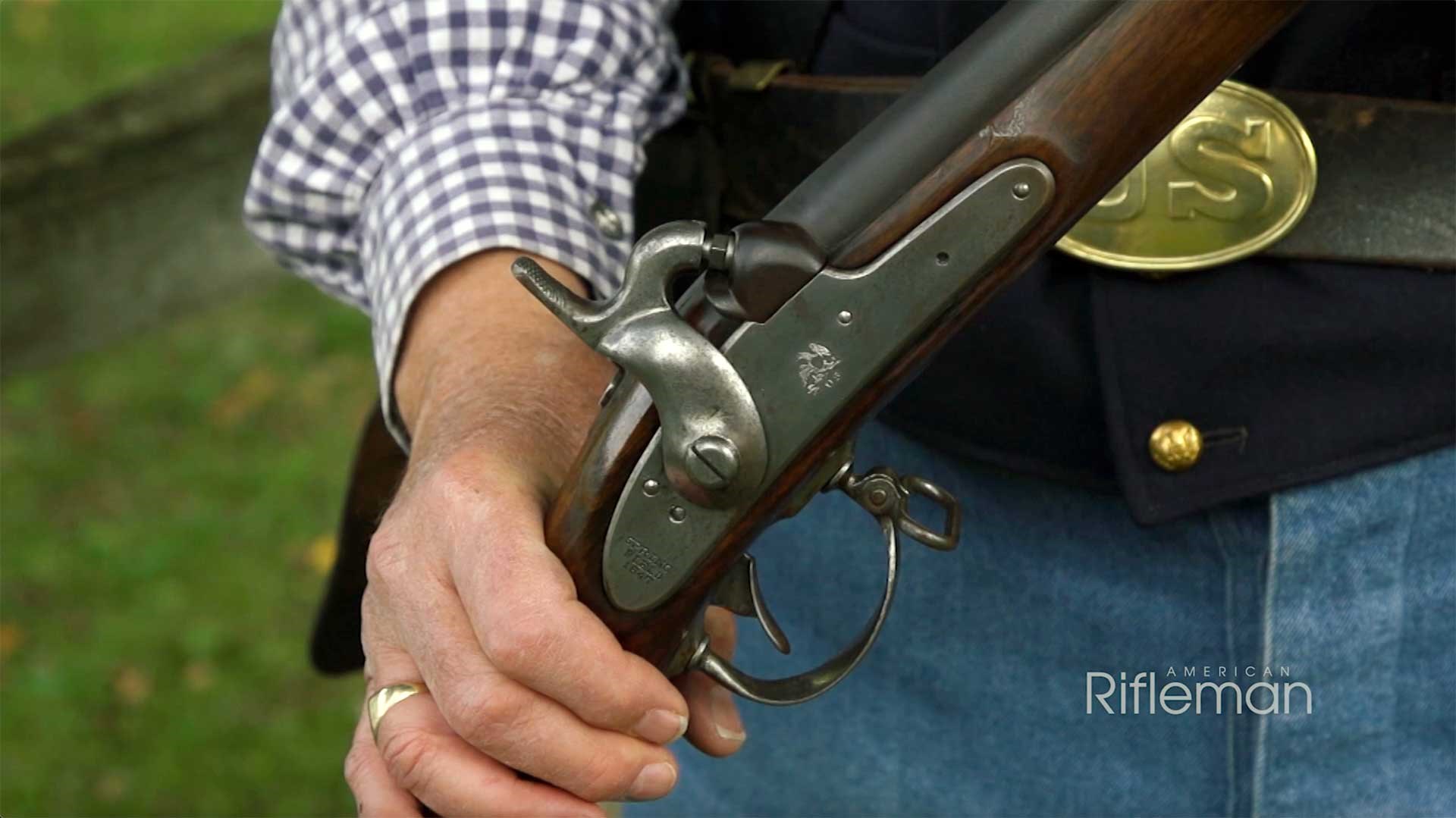
"One thing we found is that, over the years, they have become very, very accurate. I think that's one thing that we can say, skirmishers have developed a correct ball-to-bore fit and powder-load fit and the secret lube recipes they have fit," Spaugy said. "And if you guys shoot some smoothbore matches, you'll see just how quick the targets disappear."
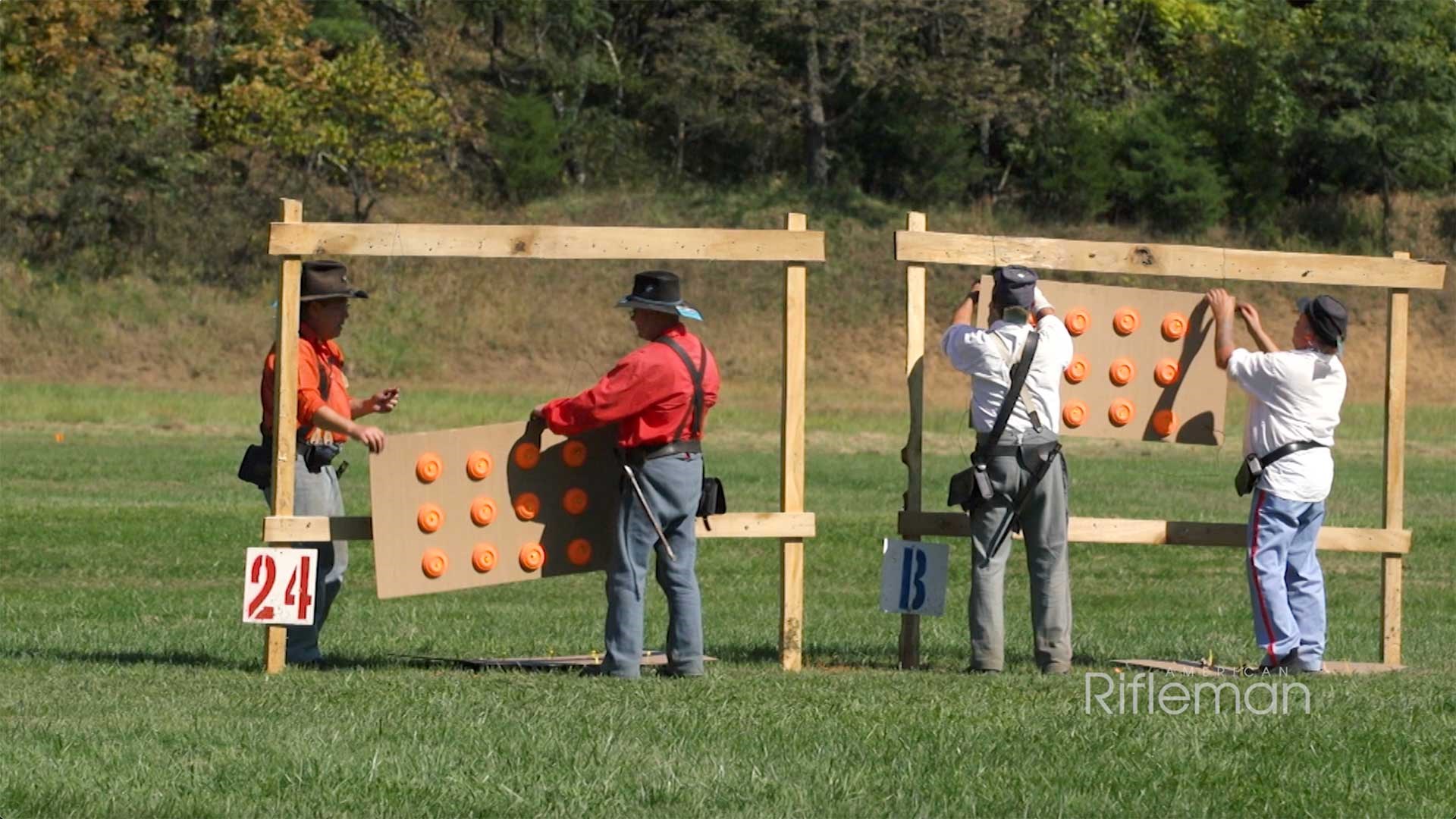
Targets range from clay pigeons to white tiles at distances of either 25 or 50 yards. All shooting is timed, and the teams that clear their targets the fastest are the winners. Four-person teams are the norm, and they're watched by a timekeeper and safety officer, ensuring that firearms are handled safely.
"Well, there's a lot of people here that know a lot about the Civil War, and there's always something to learn here," N-SSA Skirmisher Kevin Oyarzo said. "It's really a wonderful place to come, to get to see everything. And what's really interesting is when you're here for some of these competitions, you can hear about 100 teams going and all firing at the same time. And it sounds just like a war, just like a real skirmish line."
While many of the guns used by skirmishers are modern-day reproductions, many guns are original Civil War-era arms that have been well-maintained and cared for by competitors who continue using them for live-fire shoots. Through these matches, the arms and the history of the Civil War era is kept alive.
"At the North-South Skirmish Association, the smoothbore match is one of the most incredible experiences here at Fort Shenandoah," American Rifleman Executive Editor Evan Brune said. "You're standing on this massive firing line, which is one of the longest in not only the country, but in the world. And you see all of these men and women step up to the line with original smoothbore guns that could have seen service during the American Civil War. And here they're still seeing service as they hurl lead downrange as everyone battles for the top spots in the competition."
To watch complete segments of past episodes of American Rifleman TV, go to americanrifleman.org/artv. For all-new episodes of ARTV, tune in Wednesday nights to Outdoor Channel 8:30 p.m. and 11:30 p.m. EST.