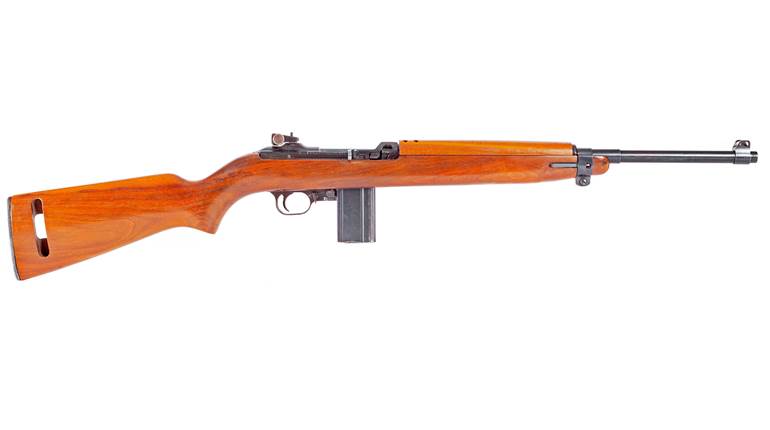
The 20th century has been called the "American Century." When America took its first step onto the world stage, it was in World War I with doughboys armed with ’03 Springfields, and when the United States became a superpower in 1945, it was through the blood, sweat and tears of a generation of GIs carrying M1 Garands. From the fragile peace of the 1930s, through the crucible of World War II, into the dark days of Cold War, the Garand was America’s Rifle.
The Garand is a symbol of everything that made America great in the 1930s, 1940s and 1950s. It’s an example of America’s manufacturing genius and industrial capacity at its apex. It was the only standard issue semi-automatic rifle issued by any of the major powers in World War II.
While infantrymen in most European armies of the day were carrying bolt-action rifles and were principally ammunition bearers for their squad’s light machine guns, the Garand ensured that American infantrymen were, first and foremost, riflemen. One eight-round en-bloc clip at a time, a generation of young Americans did nothing less than save the world.
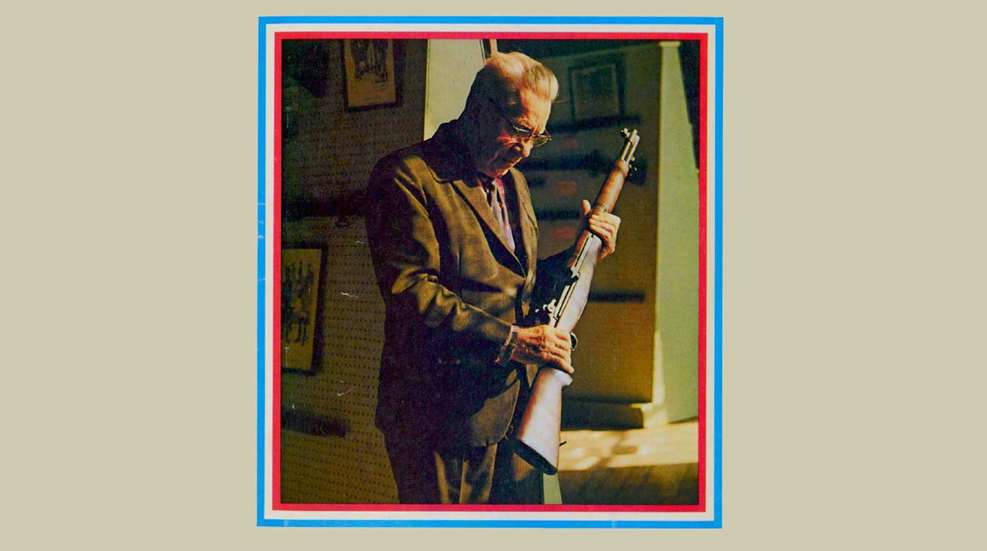
During World War II, the Garand was made at both the government’s Springfield Army and at the now-defunct Winchester Repeating Arms Co. plant in new Haven Conn. Its designer was a self-taught Canadian-born inventor who was a mere fourth grade graduate.
In the 1910s, his father worked in a shooting gallery while young John Garand, a rabbit hunter and avid marksman, worked at a micrometer plant in New York City. John had heard about the Ordnance Department’s attempts to find a reliable automatic rifle during World War I, and, not understanding what all the fuss was about, designed plans for a primer-actuated autoloader in about a week.
His efforts landed him a job first at the Bureau of Standards, and then in 1919 at the U.S. Springfield Armory as a general ordnance engineer—where he would work until his retirement in 1953. When some complained his design might be hard to manufacture, Garand ended their whining by designing the tooling and gauges required make it.
The rifle was adopted in January 1936, and a total of more than 5.4 million examples of “U.S. Rifle. Cal. .30 M1” were produced by Springfield, Winchester, Harrington & Richardson and International Harvester.
From The American Rifleman’s first report on “America’s New Rifle” in the August 1938 issue, through its use in World War II and Korea, its use as service and then match rifle at Camp Perry, articles on handloading for it, articles on shooting it, accurizing it, collecting it, all have filled the pages of the Rifleman over the decades.
Then there was the February 1978 cover showing a perfectly serviceable Garand destroyed by the government with the cover line “Your Taxes at Work.” NRA and others stepped in and put a stop to the wanton destruction of these grand old guns—a feat we repeated again in the 1990s. And as long as I am editor, the Garand will always be part of American Rifleman.
The Garand has become a part of our national culture. More than just a combat rifle, it is more popular than ever with both collectors and shooters. Groups such as the Garand Collectors Association have added volumes to what we know about these guns, and the prices–especially on rare guns like the gas traps and M1Cs–have continued to rise. A resurgence in interest in the guns of World War II has especially focused on the M1, and rightly so.
Even as the Garand was replaced as a service and then competition rifle by first the M14 and M1A and then AR-15/M16, Garands continued to bang away side-by-side in matches all across the nation with the rifles that replaced them. Today, the CMP’s Garand match is one of the most popular events at the National Matches—and growing every year.
You can still get your Garand. The Civilian Marksmanship Program does an outstanding job of making sure Garands are available and affordable to those who want them and are qualified to receive them. If you haven’t gotten your CMP Garand yet, go to odcmp.com. Shoot a Garand once, and you’ll understand.
A quote from another humble American who became one of World War II’s most famous GIs, and one of the greatest combat leaders our nation has ever produced adds to the M1s legacy.
Major Dick Winters of Easy Company, 506th parachute Infantry of the 101st Airborne Division, wrote the following in Beyond Band of Brothers: “I tried to look just like another G.I., which was why I always carried an M1 rifle. It felt good knowing that I could take care of myself in all situations.”
As a wartime poster proclaimed, “Take care of your M1, and your M1 will take of you.”