The notion of a self-contained cartridge in a firearm is more than two centuries old.
A Swiss gun maker, Jean Samuel Pauly, developed the first self-contained cartridge for a shotgun. It consisted of a metal base that had a slot similar to what you would see in a modern screw. In its center was a flash hole. The slot was filled with a priming compound made of sulfur, charcoal and potassium chlorate.
It was then sealed with paper or wax. Forward of this base was a more-or-less traditional paper cartridge containing black powder and the shot. A pin or needle in the shotgun struck the primed area and ignited the cartridge. It was an interesting beginning to what we have today.
Pauly took out a French patent on his cartridge in 1812. Problem was, potassium chlorate, especially in that mixture, tended to be a bit unstable, and lacking anything like we would consider a mechanical safety, it was considered too dangerous to be walking around with in a loaded gun.
Another idea for a cartridge—the pinfire, patented in 1835 by another Frenchman, Benjamin Houllier—bridged Pauly’s contraption and lasted through the Civil War. A few years before that bloody conflict, another Frenchman, Louis-Nicolas Flobert, came up with the first self-contained metallic cartridge, the .22 BB (Bulleted Ball) cap in 1845.
The BB cap was a parlor cartridge, designed for the popular phenomenon at the time of indoor or "parlor" shooting. It featured an 18- to 20-gr. lead round ball powered by a chlorate priming compound in the folded rim of the cartridge and had no sporting use beyond that pasttime of the gentry.
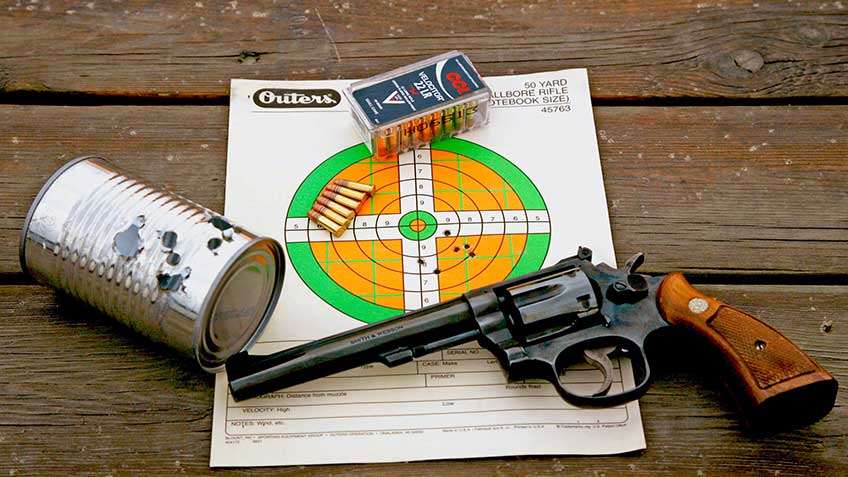
When Smith & Wesson introduced its Model 1 single-action revolver in 1857, the designers at the Massachusetts firm lengthened Flobert’s case by a third, added four grains of FFFFg black powder and crammed a 29-grain conical bullet on top of it all. Ballistics were predictably anemic, especially by modern standards, clocking in at 830 fps and 44 ft.-lbs. of energy. It was called the .22 Short, and it has enjoyed such popularity that it is loaded and sold to this day.
Though no longer considered a defensive or even a traditional target cartridge, the .22 Short is still used as a pest and small-game round. In some southern states, like Arkansas, where raccoon hunting is done at night with dogs, it is the only legal cartridge available.
Today, a high-speed hollowpoint load at 1,132 fps and 82 ft.-lbs. of energy is used for this type of hunting. Col. Jeff Cooper once opined that a high-speed .22 Short is like a supercharged Volkswagen; if you wanted more power, perhaps you should have started with something larger.
In 1871, the case was lengthened another 0.192" in order to accommodate five grains of FFFFg black powder behind that 29-grain bullet. Dubbed the .22 Long, it, too, has enjoyed a steady popularity among shooters. But it was the Stevens Arms Co. in 1887 that put everything together to produce the ultimate rimfire round.
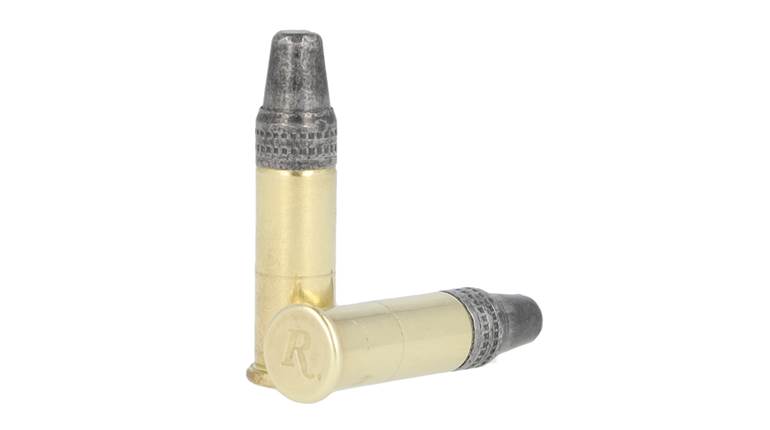
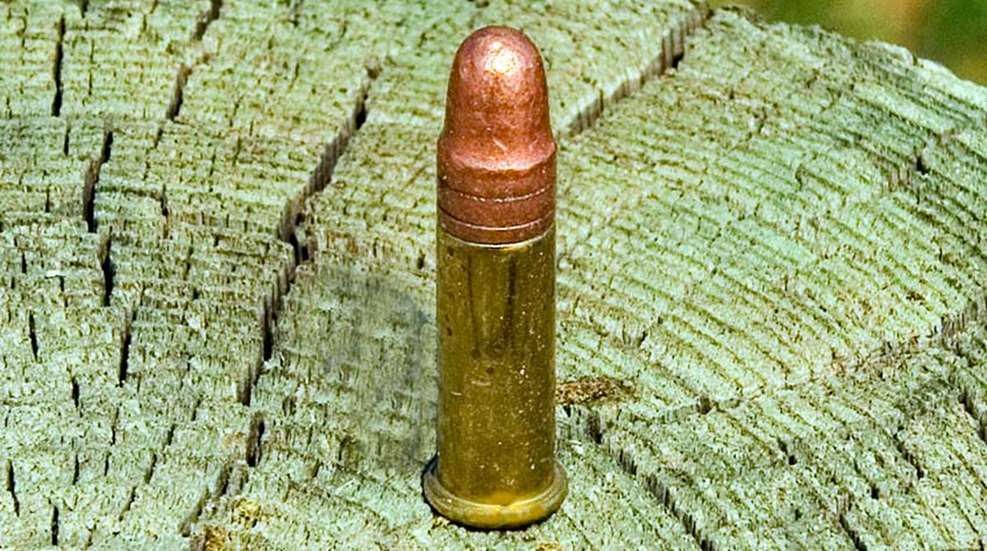
Stevens took the 40-grain bullet from the .22 Extra Long—a rabbit-trail cartridge that saw limited success at the time—and crunched it in the .22 Long case with a healthy upgrade in powder. The result is what we call the .22 Long Rifle or LR, and it remains the most popular cartridge in the world some 133 years later.
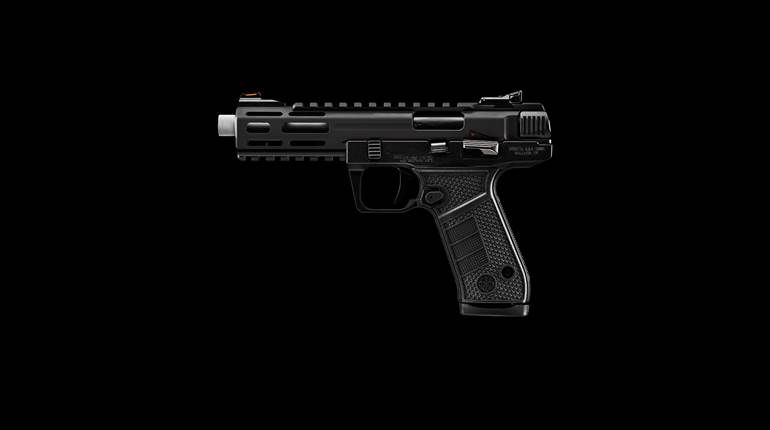
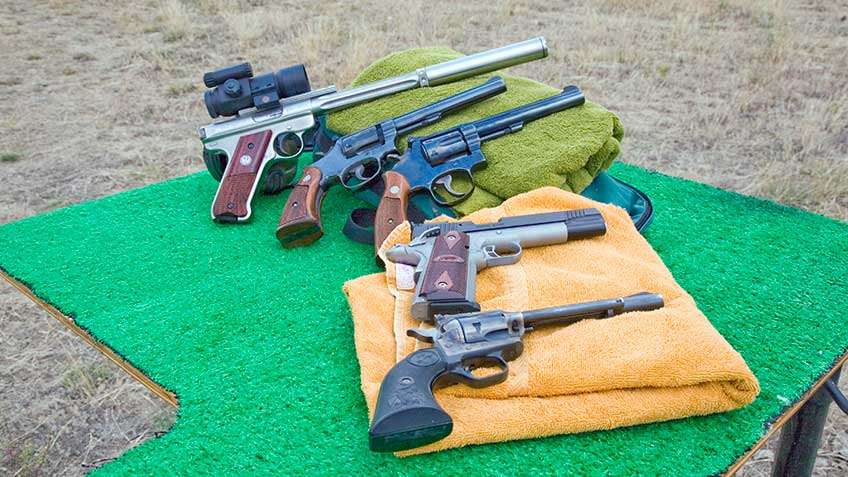
The array of firearms chambered in .22 LR boggles the mind: rifles from single shots and lever actions to semi-autos, even full-auto; plebian to patriarchal. Revolvers and semi-auto pistols—again from the fundamental to lavishly hand-fitted and engraved—are chambered in the .22 LR. They can be as basic as a trapline thumper to a sophisticated target pistol.
Originally loaded by the Union Metallic Cartridge Company with a 40-gr. bullet clocking 1,095 fps out of a rifle barrel, the .22 LR made a lot of young boys into gun enthusiasts, including me. With modern smokeless powders, high-speed ammo can kick that same bullet out at 1,200 fps. Some ammunition manufacturers lightened the bullet to 30 grains and are getting some 1,600 fps from a rifle barrel.
These hyper-velocity loads are quite popular with small game and varmint hunters. Most keep their shots to less than 100 yards—50 is more like it—but the .22 LR is capable of clean kills on smaller animals out to 150 yards if the shooter can do his or her part.
That said, these velocities are still comparatively low compared to centerfires, and while centerfire .22-cal. bullets can be fragile enough to disintegrate on impact with most anything, the .22 LR is notorious for ricocheting.
Shooters need to be aware of this and ensure the downrange area is clear of anything or anyone they don’t want to see perforated. Equally true is the distance the .22 LR bullet can travel—up to a mile in ideal conditions—so the same cautions apply.
The range of loads available in .22 LR now is stunning. It used to be about five different loads, standard velocity lead round nose, standard velocity hollowpoint; ditto for high velocity and a shotshell load of #12 dust for pest control. We still have that, but also included are light and heavy bullets, hyper-velocity ammo, copper plated bullets—both solid and hollowpoint.
There are a few standard packs that old guys like me recall from our youth. Somewhat similar in size to a 12-gauge shotshell, these 50-round packs were once like gold to boys looking for rural adventure.
But this is America, land of glut, where anything worth doing is worth doing to excess, so we now can find mega packs of 300 to 500 rounds on dealers’ shelves. I have to admit that opening a single box and grabbing what I need without having to keep track of a bunch of little boxes is pretty handy though.
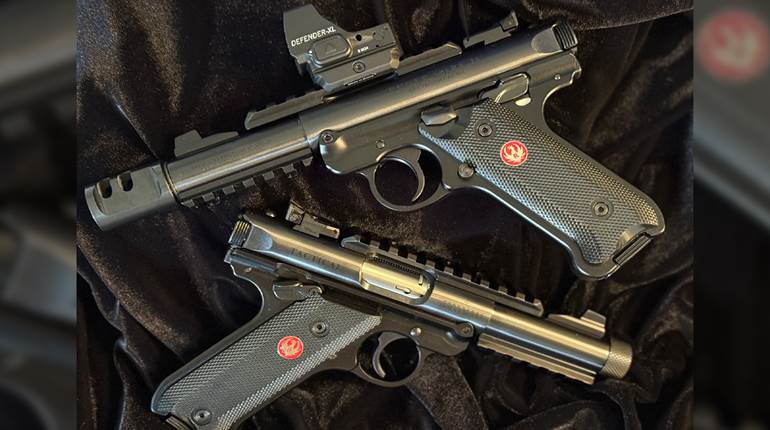
The gamut of guns chambered in .22 LR seems endless. Here in America, the Ruger 10/22 and some variation of the Mark III or Mark IV pistol have pretty much become standard. Shooters may have upgraded to something a bit more sophisticated, but this rifle and pistol is where most start their journey into firearms.
The company’s new Wrangler single-action revolver may soon garner similar status. It may be a bare-bones gun, but the two I have shot were plenty accurate for 25-yard pot shooting and plinking out to as far as you think you can hit.
The .22 LR remains the most used cartridge in the world annually. Whether plinking or discipline practice, hunting or training, more .22 LR are expended simply because it doesn’t recoil or make much noise and it is relatively cheap to shoot. I’d say it will be around for some time to come.