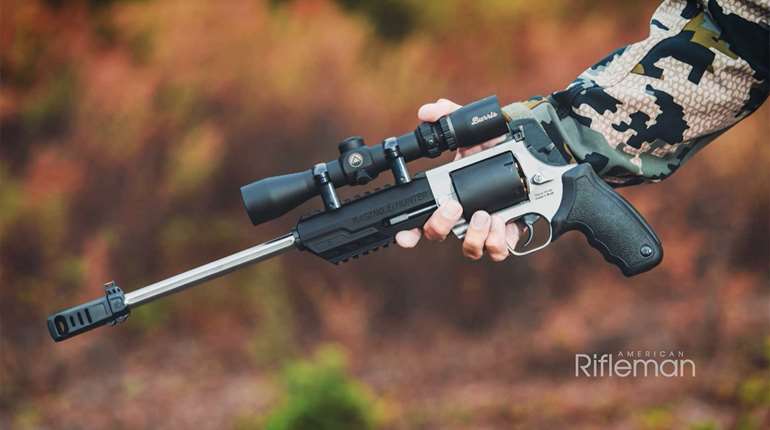
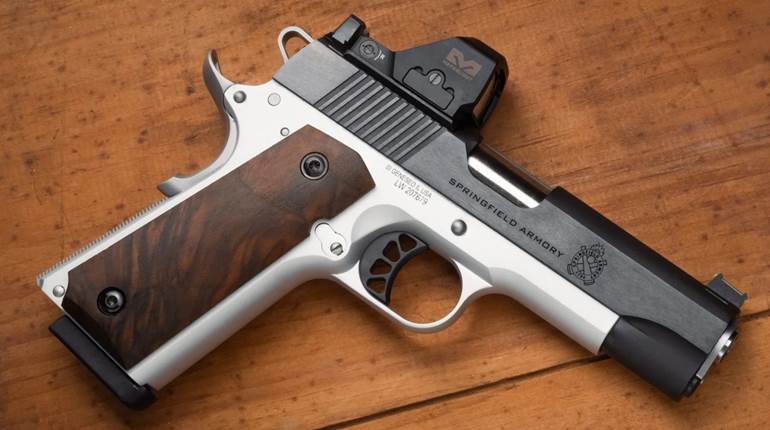
The Chiappa Rhino has been in production for 16 years now, introduced to the American market at the 2010 SHOT Show. The Italian-designed-and-manufactured revolver was groundbreaking then and remains unique today; it’s the only current revolver with the barrel mounted at the bottom of the frame, firing from the chamber at the 6-o’clock position of the cylinder.
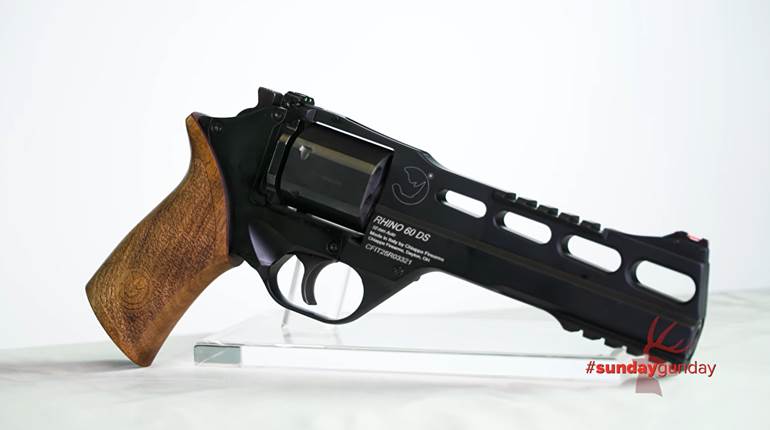
Initially offered only as a 2-inch-barreled .357 Mag., barrel-length options now include 3, 4, 5 and 6 inches. Chamberings have also expanded to include 9 mm, .40 S&W and a dedicated PPC-style gun in .38 Spl., resulting in the Rhino now being available in more than 50 variations. Chiappa expanded versatility by adding two new models chambered for the resurgent 10 mm cartridge: a 3-inch 30DS with a nickel finish and a 60DS with a 6-inch barrel and a matte-black finish.
I hadn’t previously handled or fired a Rhino and was skeptical about the gun’s futuristic, unconventional appearance and operation. I was shocked at how light the 6-inch revolver was. Checking its weight on a digital scale, the gun registered just more than 32 ounces; for comparison, a Smith & Wesson Model 10 Classic .38 Spl. with a 4-inch tapered barrel weighs 34.6 ounces.
Chiappa engineers accomplished this light weight by using a high-grade aluminum alloy for the frame and barrel shroud on the Rhino. Steel is used for the barrel liner, the cylinder and its internals, the yoke (crane) and the “blast shield” behind the cylinder. The smooth-face trigger (which is .465-inch wide) and “hammer” are also constructed of steel.
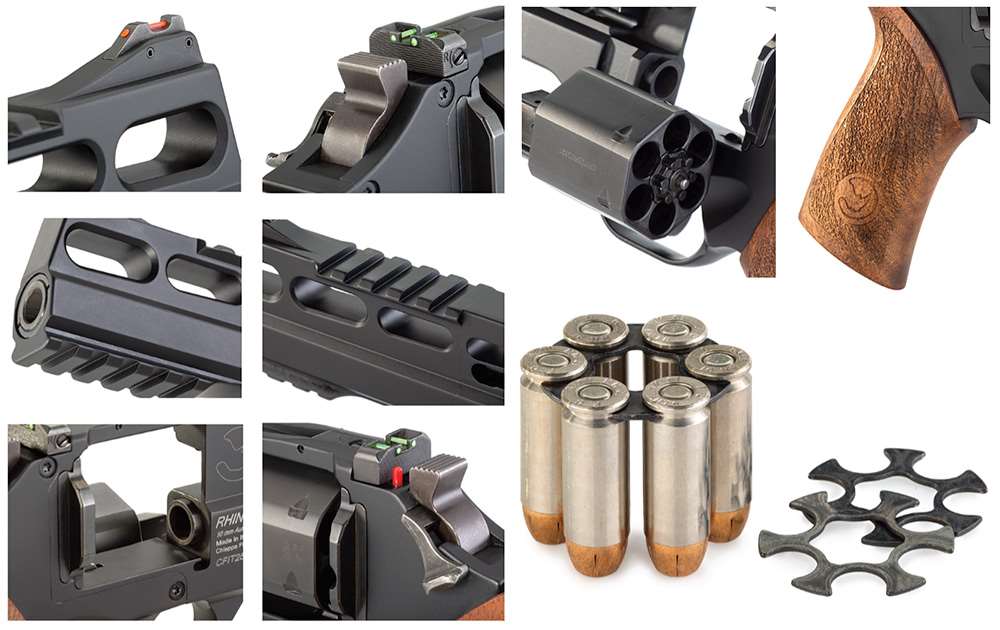
What appears to be a hammer is actually a cocking lever that doesn’t stay back when cocked like a conventional hammer. The Rhino operates like a traditional double-action revolver in that it can be fired by simply pulling the trigger, or by first cocking the hammer (causing a red cocking indicator to emerge) and then pulling the trigger to fire it in single-action mode.
The cylinder-release is conventionally located on the left side of the frame and requires downward pressure to actuate. Each chamber has a light chamfer at the rear, and the Rhino’s cylinder rotates in a clockwise direction. The adjustable sights had a pair of green fiber-optic rods in the rear, with a red one up front. The test sample’s stocks are made of a handsomely stippled walnut. The cylinder features milled flats instead of flutes, and the front lock-up incorporates a ball detent on the yoke.
The Rhino’s fit and finish are outstanding, and all moving parts function smoothly. Live-fire started with Winchester’s 180-grain FMJs. The bases of the Winchester cases were too thick for moon-clip use, so car- tridges were dropped into the cham- bers loose; Chiappa cuts the chambers to properly headspace on the case mouth. The Rhino sailed through the 50-round box without issue. While the extractor couldn’t eject the loose, rimless cases, they were easy to simply pluck out with a fingernail.
The test Rhino worked as advertised with respect to recoil control; the bottom-mounted barrel minimized muzzle flip and felt recoil was remarkably light for a revolver in this chambering weighing so little. The rear sight was close to being bottomed-out from the factory, and the lighter, 180-grain bullets impacted a few inches high at 15 yards. The sights were likely regulated for .357 Mag.; 135- to 165-grain 10 mm projectiles would shoot to point-of-aim, but I couldn’t quite get the pistol dead-on with heavier bullets.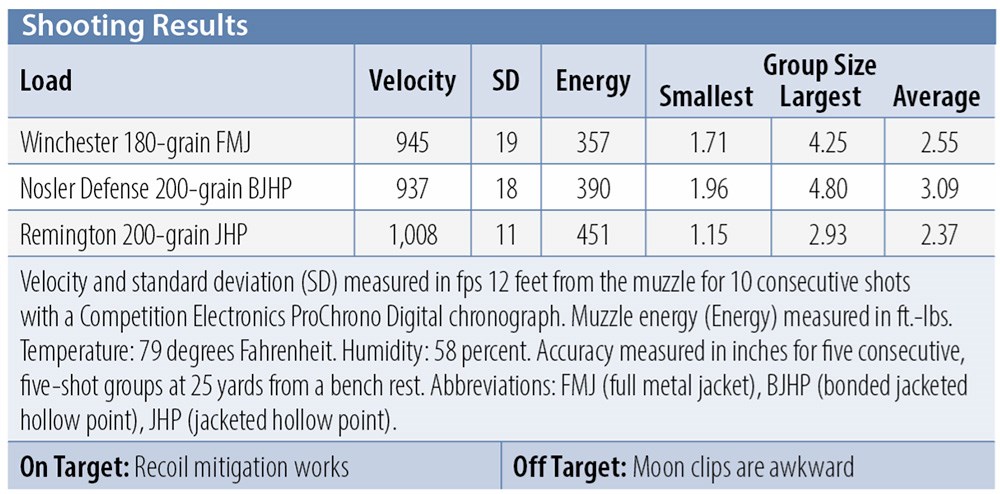
Earlier Rhinos were rumored to suffer from heavy trigger pulls; this one certainly did not.
All loads were pleasant to fire at the bench and printed consistently, except for one group per load. I attributed that to human error, not Rhino error. I ran the Rhino in double-action mode at distances from 5 to 20 yards. After getting used to the grip angle, the red dot stayed visible in its window and assisted in making quick, solid hits.
A total of 190 rounds were put through the gun without a hiccup—or complaints of harsh recoil. The stoutly chambered Chiappa Rhino performed well enough to completely change my opinion; it doesn’t look so weird now. The light weight, functionality and reliability of the Rhino, combined with its new chambering, make it far more than a mere design experiment or novelty firearm.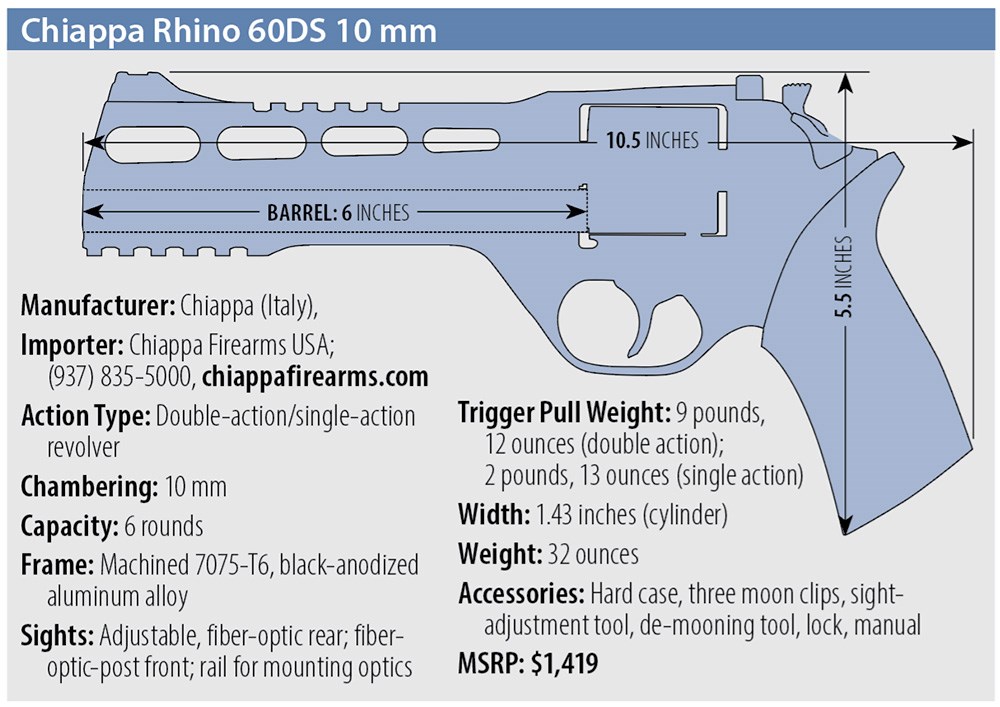
Most Popular