Browning’s Citori 825 Field is best described as a luxurious workhorse, sort of like a pick-up truck with leather seats and Bluetooth windshield wipers. Of the “8XX” series, it is designed for hunting or intensive clay shooting and is a well-rounded rendition. At its core is a redesigned receiver that starts out as a forging before the breechface is cut with a broach, and the rest is finished with precise CNC machining. If you’re up on your Citoris, you’ll notice that this receiver is cut to a noticeably lower profile than the preceding series. This brings the bore axis closer to the mounting point on your shoulder and significantly reduces muzzle flip. As a result, picking up a second target or sending a follow-up shot will be dramatically faster, possibly deciding the difference between a hit and a miss.
As this gun is intended for high-volume shooting, a full-width hinge pin is used in place of the more common trunnion-style lock-up. This requires a bit of hand fitting, which is reflected in the MSRP, but also in the overall feel of the firearm. Sliding the top lever instantly reveals the difference, as cracking it open takes a little bit of work, and there is absolutely zero wiggle once you snap it back closed. More importantly, the gun will remain this way for thousands upon thousands of rounds, with most owners never having to have it rebuilt; a common practice for over-under shotguns.
Of course, as the Field is still a Citori, there must be a touch of class encompassed in the package. The receiver is adorned with elegant scrollwork with game themes of pheasants on the left side and ruffed grouse on the right. It is also finished in a silver nitride, a move that adds both durability and discernment. The same holds true for the American black walnut stock that is treated with a high-gloss, oil-rubbed finish. Prior to this, fine checkering is etched into the grip and fore-end.
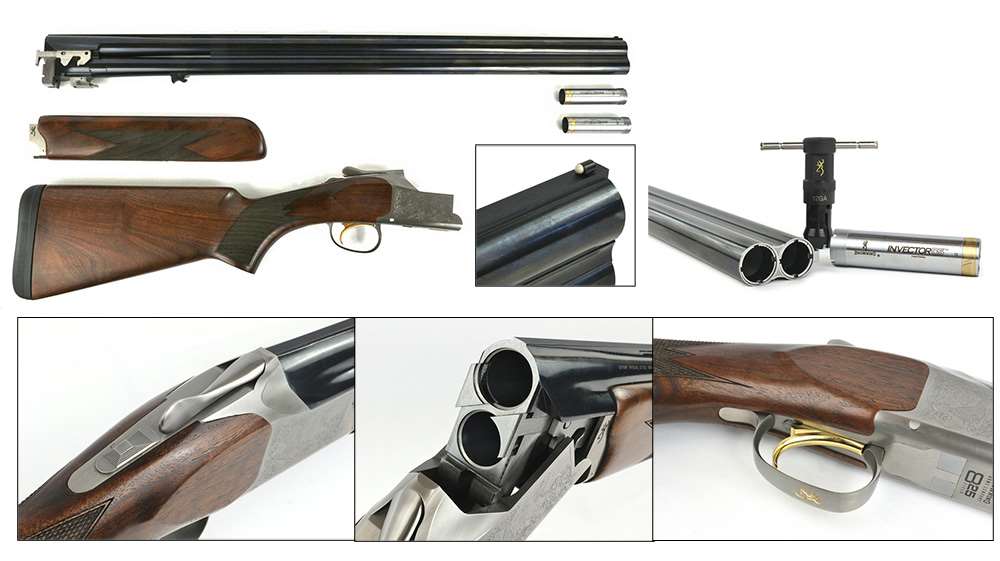
This finish is also applied to the controls, which are equally noteworthy. The top lever is actuated by pressing it to the right and is equally accessible for left-handed operation as it is for righties. Fine serrations are cut into it to aid with gloved operation or with sweaty fingers if the mercury is stretched out a bit. The safety is not automatic and must be pressed forward to allow the gun to fire. When in the rear position, it can be slid left or right to select which barrel fires first.
Building on the trigger improvements that started in the seventh generation, the mechanical firing mechanism ensures the second barrel will fire if the first shell fails or produces light recoil. This is imperative for light target loads and increasingly popular mini shells. This performance is largely the result of the new high-pivot disconnector that makes the design more compatible with a wider range of ammunition and also staves off the possibility of both barrels firing simultaneously.
The barrel set is of monoblock construction and available in either 26- or 28-inch lengths. For this piece, I was issued the longer of the two. At the time of this writing, all chambers are cut for 12-gauge shells up to 3 inches in length and are chrome-lined for smooth operation. Both options include an ivory, Bradley-style front sight paired with a mid-bead of the same composition. These are installed on a low-profile, ventilated rib which aids in cooling and better aligns the pair with the shooter’s eye. The ends are threaded to accept Invector-DS Flush-style chokes. This style of choke tube is unique in that it features a brass ring in the rear to keep carbon from reaching the threads, potentially locking them in place.
For range testing, I used Remington’s American Clay & Field load, for its versatility and light recoil, which would challenge the firing mechanism. Initial patterns were exceptionally consistent, but about 2 inches low on the top barrel. Admittedly, this is only noticeable when using the full choke. Reliability was spot-on, which is something that I was paying extra attention to, as the tested load produces minimal kick.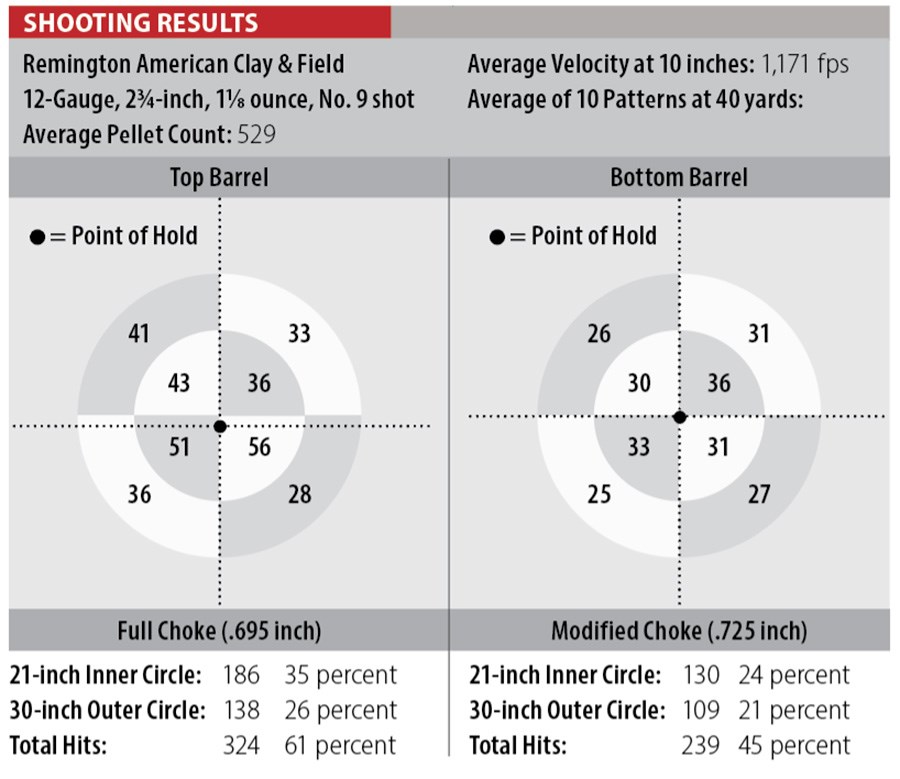
Taking the gun to a casual clay field revealed its true prowess, as it landed on my shoulder and face with flawless timing and essentially guided itself toward the clay target. Letting some get a bit further away, I was pleased to see that the point-of-aim remained true and that I could count on the 825 field for distant birds.
In the end, the Citori 825 Field doesn’t so much replace the old Citori that reshaped expectations as refine them. Browning has taken a proven formula and sharpened it with thoughtful updates that matter in the field. For shooters who have long judged over-unders against the yardstick set by earlier Citoris, the 825 Field stands as evidence that progress doesn’t have to come at the expense of tradition. If previous Citori models taught me what spending a little more could deliver, the 825 Field proves that Browning still understands exactly why that lesson matters.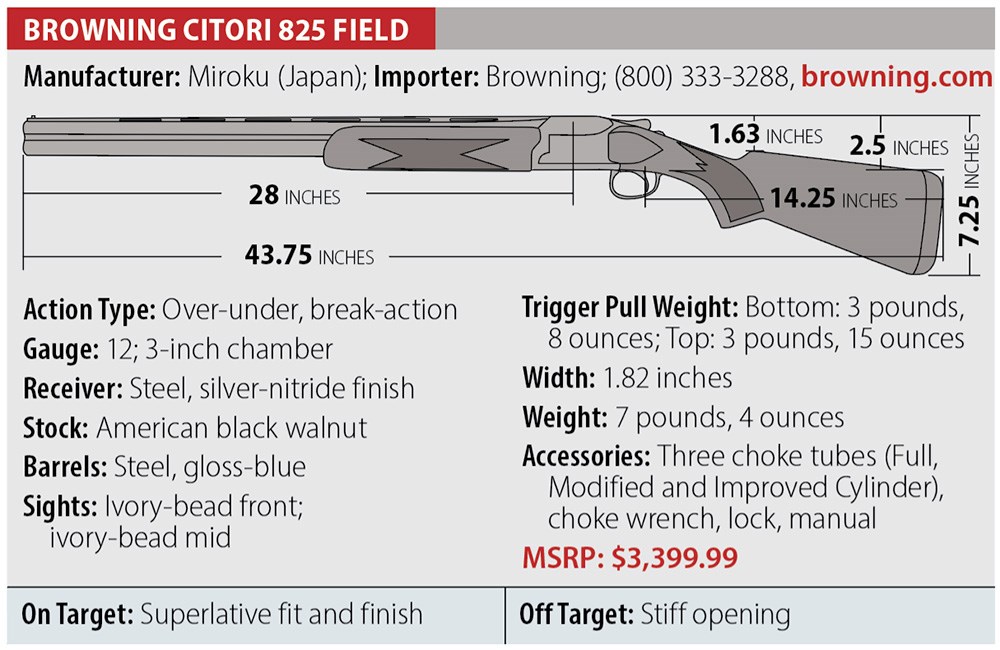
Most Popular