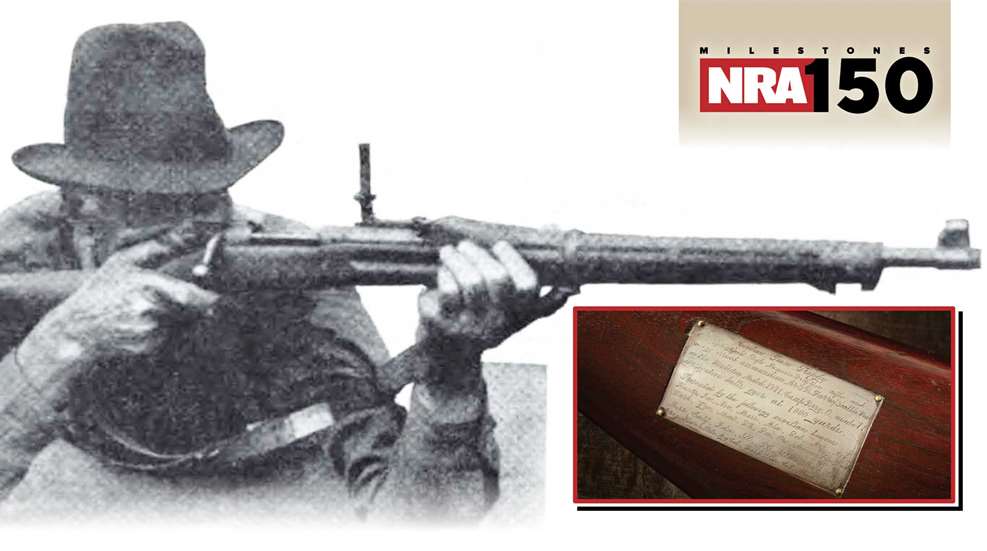
There were several outstanding features of the 1921 N.R A. Individual Matches that will long live in the memories of riflemen. One is the riflery of Sergeant John W. Adkins of the Marines, who established new records at 900 and 1,000 yards; won the Wimbledon, and, in a single day’s shooting, ran two strings totaling 211 bullseyes.
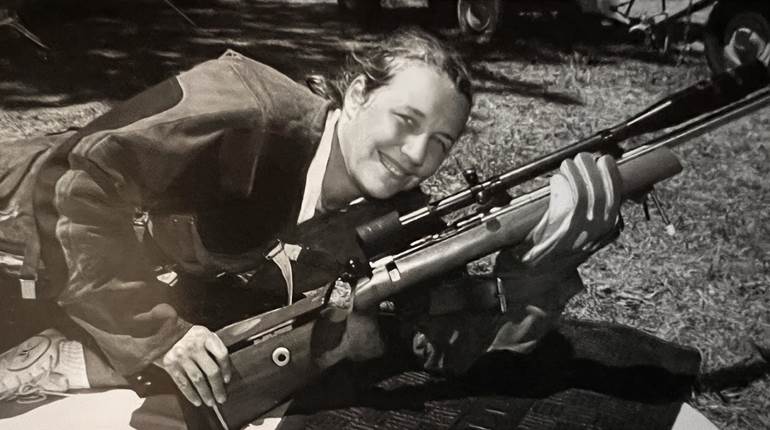
Another is the marksmanship of George R. Farr, the Washington rifleman, who, although 62 years of age, took a service rifle which had been issued to him the morning of the match and, with service sights, entered the Wimbledon and gave Adkins, with his special rifle and telescope sight, the closest call that the young Marine had in all of his string of victories.
Those who watched the old man firing against the handicaps of gathering darkness and equipment supposedly inferior to that of his opponent, while giving full credit to Adkins for his superb skill, may still wonder who actually won the great silver cups presented each year to the champion long-range rifle shots.
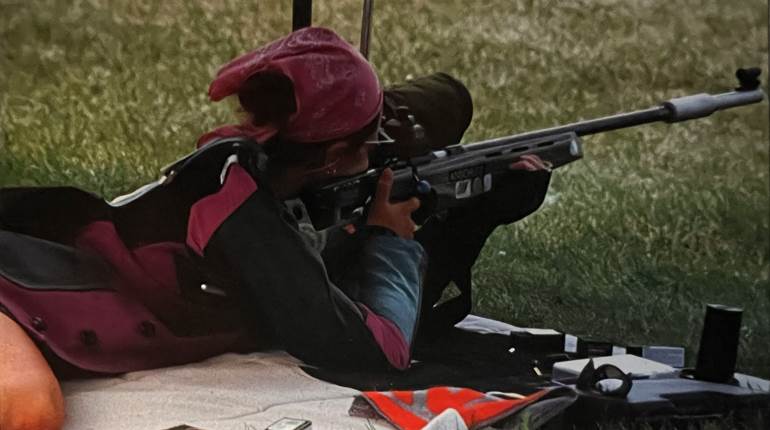
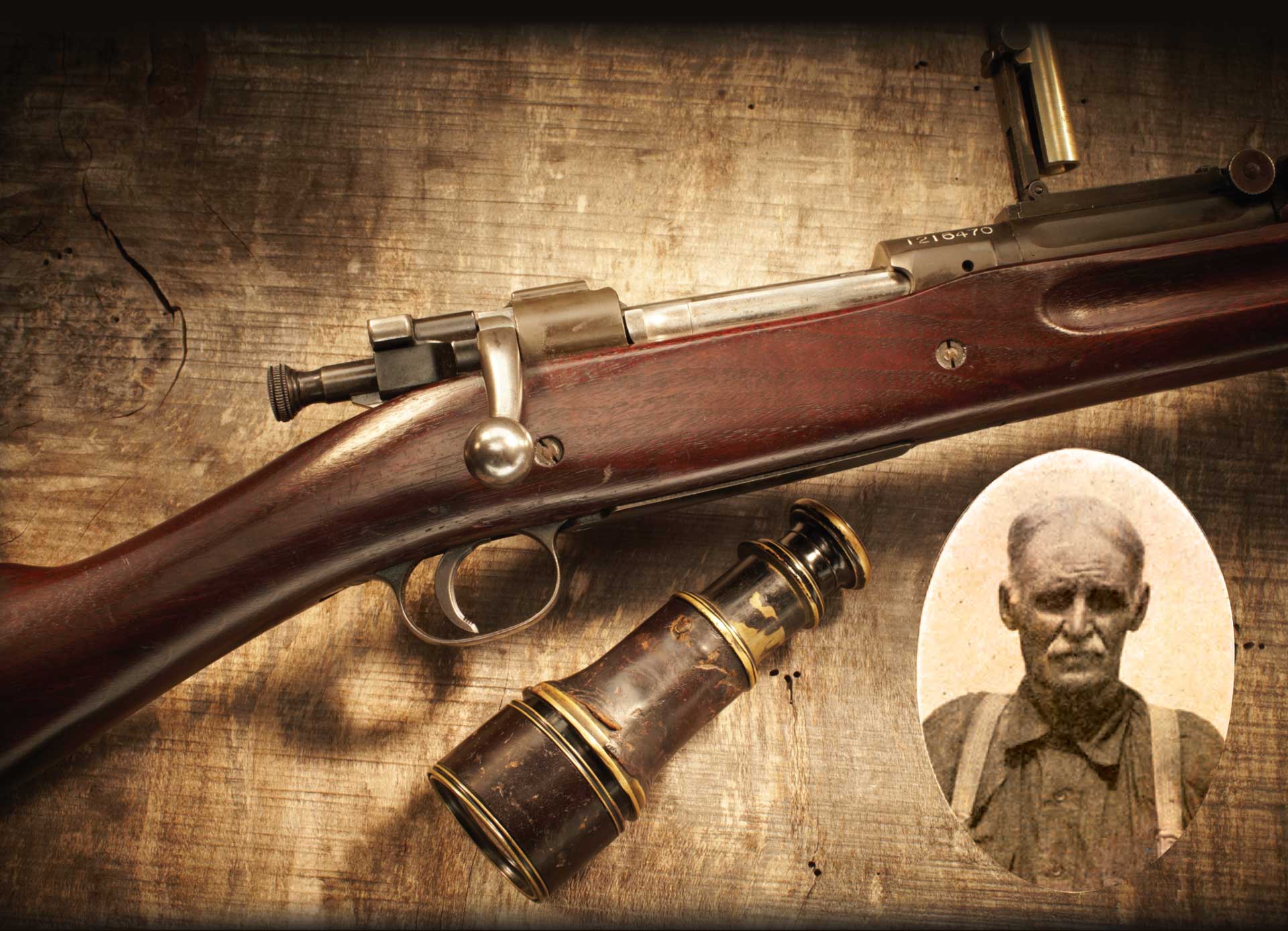
Few took heed of Farr when he drew five clips of Frankford Arsenal ammunition and lay down at the peg, opening his shooting bag to remove the strangest spotting scope that could be imagined—one barrel of a cylinder field glass [binocular] that had been cut apart with a hacksaw.
”Dad” Farr fired his first sighter at 4:30 p.m. Through his sawed-off glass, the spotter showed a Three. He made an adjustment, removed his glasses and fired. This time, the spotter showed stark against the black of the bull, and his first record shot followed it. When five bullets had sped down the range, Farr jammed in another clip with no more concern than if he had been shooting a string of rapid-fire and continued shooting.
Nineteen record shots had found the black when Farr seemed to grow a bit nervous. His later explanation of this circumstance, in the light of what followed, is particularly interesting. ‘’When that 19th shot scored a bullseye,” he said, “I just happened to think that if my next shot got in, I’d make a possible. I’d never made a possible at 1,000 yards.”
”Mr. Farr’s twentieth shot for record’’ the scorer droned—“a Five.”
Then, to the unfeigned surprise of the range officer, “Dad” Farr rose from the firing point and started away.
“Wait a minute; keep on firing,” the range officer called.
“What for?” Farr asked.
“Well, you might win something.”
“All right, I reckon I can shoot some more, only I haven’t any cartridges.”
“Here are some,” the range officer said, offering him two clips.
From then on, Farr, disregarding every known range custom—firing from the magazine instead of loading singly, moving his elbows from their position, now and again hunching his body into a more comfortable position—continued to hang up bullseyes while an astounded gallery gathered behind him.
Until he had fired his 60th shot, the light was fairly good, then it rapidly began to die away. After the 65th shot, the light was very bad. On the 66th shot, he began holding down on the butts, with added elevation, but this device served him in the fading light for only four more bulls. His 71st shot was a Four, and the most remarkable of all service-rifle-and-service-sight records was completed. It was 6:10 p.m.
Farr’s run at 1,000 yards was easily the sensation of the matches, and so impressed with the achievement were the riflemen attending the matches that they purchased the rifle with which the record had been made, and, bearing a suitable inscription, it will be presented to him.
[Arms & The Man, Sept. 15, 1921]
Most Popular