Think the gun control agenda of Hillary Clinton has nothing to do with you and your guns? Think again. If you own a Ruger 10/22 or a Remington Model 870, your guns are on the list “worth looking at” for national confiscation and destruction. Pump-action shotguns, semi-auto .22s, all gone in the land Down Under. 
It should send chills down the spine of every freedom-loving Americans to know the leading democratic presidential candidate says Australian-style gun control is on the table. As Hillary Clinton told a town hall in New Hampshire. “I don’t know enough details to tell you how we would do it or how it would work, but certainly the Australia example is worth looking at,” Let me tell you what the “Australian example” really means. And I’ll do it through one gun. 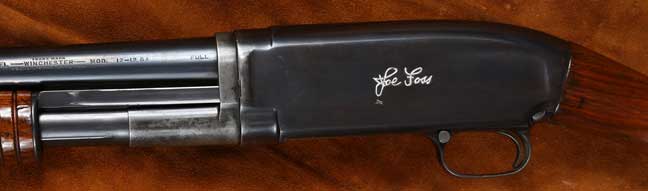
A friend of mine owns a Winchester Model 12 that has some pretty special provenance. On its receiver flat is a signature engraved in the steel. If you look closely you can see that it says “Joe Foss.” 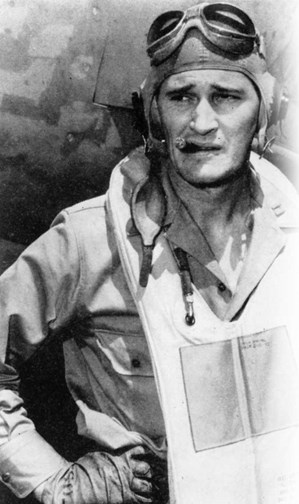
Joe, who I knew and admired, was a South Dakota farm boy who learned how to fly, and he ended up piloting a Grumman F4F “Wildcat” as a Marine Corps officer over the skies of Guadalcanal. He was the executive officer of VMF 121, part of the “Cactus Air Force.” Flying from Henderson Field, Joe was the first American fighter ace of World War II to tie Eddie Rickenbacker's World War I record. He downed 26 Japanese aircraft. For his actions and leadership over the skies of the island that would turn the tide of the war against the Japanese, Joseph Jacob Foss was awarded the Medal of Honor.
After the war Joe went on to become a brigadier general in the South Dakota Air National Guard. He was governor of his home state. And he was a commissioner of the American Football League. If you like watching the Super Bowl, you can thank Joe Foss. He also hosted “American Sportsman” on ABC.
And, of course, Joe was president of the National Rifle Association of America from 1988 to 1990. Joe served as an NRA director for many years and also on the executive council. Joe was very active in the Congressional Medal of Honor Society, too, and even set up the Joe Foss Institute to reach out to American school children to teach them about liberty, history and patriotic values. 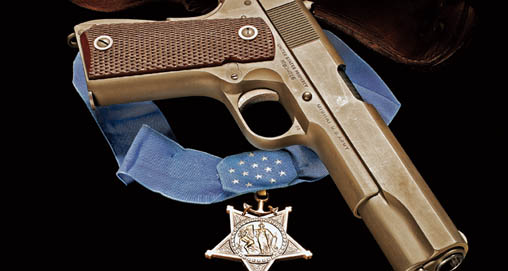
Joe loved to hunt, and he loved to shoot, too. His Model 12 is a beloved part of a friend of mine's collection (another friend has an M1911 from Joe). Frankly anybody who met him was automatically a good friend of Joe's--that was Joe’s way. That Model 12 was Joe’s first gun, and it was his favorite pheasant gun.
That Model 12, a very special gun out of the nearly 2 million Model 12s produced by Winchester from 1912 until the debacle of 1964, holds a special place in our history because of the special American who owned it. And it holds a special place in the heart of my friend. Whenever he takes it out, he can remember the smile, the plain-spoken talk and good-natured laugh of one of the greatest men of the greatest generation.
But if Barack Obama and Hillary Clinton continue to “look at” Australian-style gun control as “something we should consider,” that Model 12 with Joe Foss engraved on the receiver will be destroyed. Because that’s what happened in Australia.
After a horrific mass murder by a deranged maniac, Australia's national government, led by John Howard, decided it was time to confiscate all semi-automatic and pump-action firearms in Australia. When I say all, I mean all. Thanks to Australia's efficient gun registration laws (remember that next time an anti-gun politician calls for “universal background checks”), the police knew which guns were owned by whom Down Under and could ask for them anytime they wanted. And in 1996 they more than just asked for them. With the full force of the government behind confiscation, Australia's licensed gun owners had no choice. The penalties for not turning in your guns were clear and severe.
The Australian government called it a “buyback.” But it wasn't a buyback at all; it was forced confiscation with compensation. The guns didn’t belong to the Australian government—you can’t buy back something that wasn’t yours in the first place--they belonged to individual Australians. Australia’s courts ruled that the government could not just simply take them, so gun owners were paid for the forcible confiscation of their property. Hillary bragged in a speech they received a “good price.” I have news for you, Madame Secretary, it wasn’t about the money.
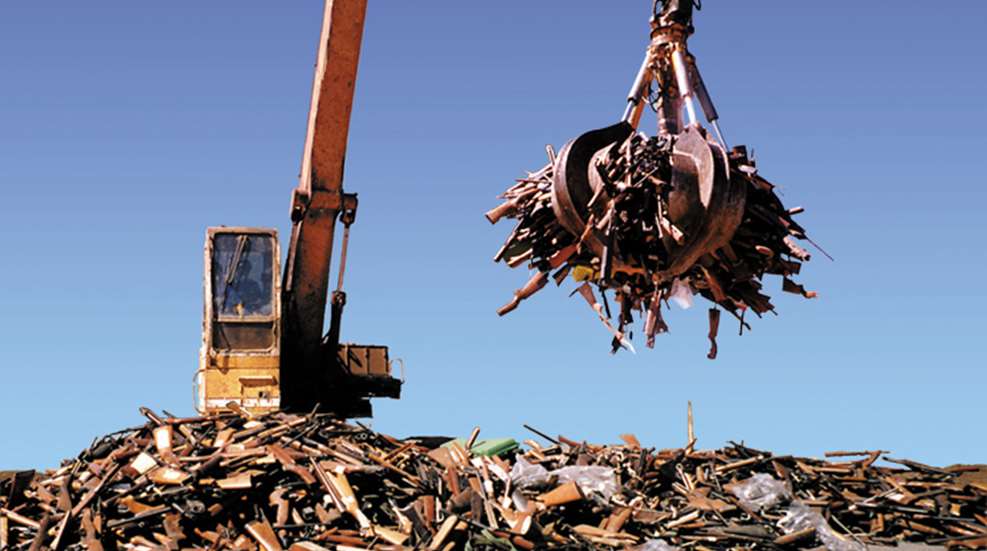
And the Australian government destroyed them. Nearly three-quarters of a million firearms confiscated from their owners were turned into “soup cans” and “park benches.” An entire nation was forced to give up entire categories of firearms.
Think this is crazy? Look closely at the photo at the top of this post. In the upper left of the pile of sawn-in-half guns heading for the shredder, you can barely see the “corncob” fore-end of a Winchester Model 12. While it may not have belonged to a national hero, it is the same gun. Was this a gun used to feed a family living on a remote station in the outback? Was it passed from father to son? We'll never know because it’s a park bench now.
Look in your gun safe. Every pump. Every semi-auto. Gone. Don’t let Joe’s Model 12--or your 10/22--become a soup can.
Most Popular