The French CSRG Chauchat machine gun was produced in greater numbers than any other automatic weapon during the First World War. Over a quarter of a million examples were made during the conflict and the gun served effectively in combat with several nations, including the United States. In fact, three U.S. Army soldiers earned the Medal of Honor during the 1918 Meuse-Argonne Offensive using it: Pvt. Frank J. Bart (C Company/9thInfantry/2ndInfantry Division), Pvt. Thomas C. Neibaur (M Company/167th Infantry/42nd Infantry Division), and Pvt. Nels T. World (I Company/138th Infantry/35th InfantryDivision). The version of Chauchat that these Americans used was the "Fusil Mitrailleur Modéle 1915 CSRG" chambered for the 8x50 mm R Lebel cartridge, the same version used by the French military and also the version produced in the largest number. Out of the 262,000 Chauchat machine guns made between December 1915 and November 1918, over 240,000 of them were in 8 mm Lebel.
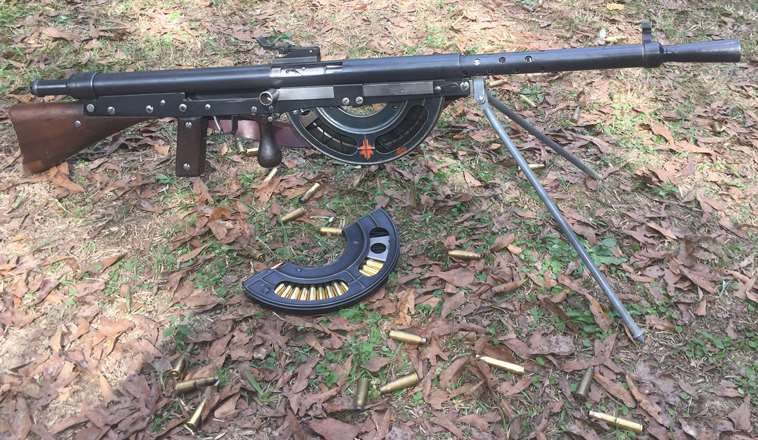
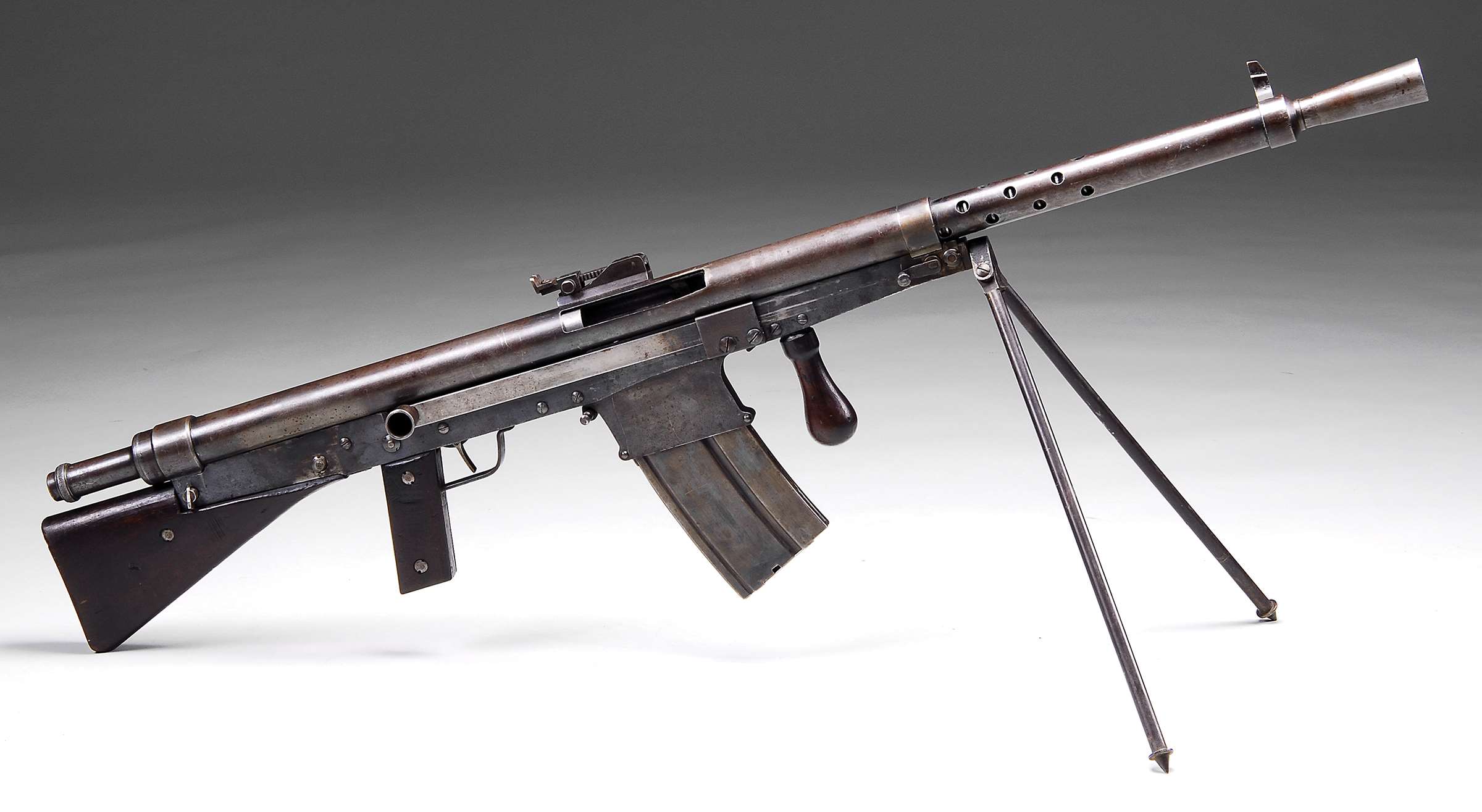
All of the known photographic evidence and film footage of U.S. troops armed with the Chauchat during World War I show the Model 1915 with its distinctive half-moon-shaped magazine and nob-shaped vertical foregrip. But the Chauchat would eventually be chambered for other cartridges than just 8x50 mm R. The Belgian military adopted it in 7.65x53 mm and the Greek military adopted it in 6.5×54 mm Mannlicher–Schönauer. The Polish military would convert most of their CSRGs to fire 7.92x57 mm Mauser and a version chambering the .30-'06 Sprg. cartridge was even developed for the U.S. Military. Designated the Model of 1918, the .30-caliber Chauchat required a different magazine, a modified magazine well, and a relocated foregrip.
It retained the original’s long-stroke recoil operating system, which was largely based on John Browning’s patented design for the Remington Model 8 autoloading rifle, but in .30-'06 Sprg. the Chauchat experienced some now infamous problems. According to the 1995 book Honour Bound: The Chauchat Machine Rifle by Gerard Demaison and Yves Buffetaut, the .30-caliber chambers of Model 1918 CSRGs were not reamed deeply enough, and the guns experienced extraction failures as a result. This imperfection in manufacturing was a reflection of the differences in quality control that characterized the two firms that made the Chauchat: SIDARME of Saint-Chamond near Lyon was known for producing examples of a generally better fit and finish than Gladiator in Le Pré-Saint-Gervais near Paris. The former did not produce the Model 1918 in .30-'06 Sprg. while the latter turned out over 19,000 of them.
Although Gladiator may very well have contributed to the American Chauchat’s notorious reputation with its poorly executed chamber reaming of .30-caliber barrels, magazines and overheating were certainly contributing factors as well. Field Editor Martin K.A. Morgan recently did some shooting with a particularly nice .30-'06 Sprg. caliber Gladiator Model 1918 CSRG and the results were surprisingly good. Using handloaded .30-'06 Sprg., the gun ran great but it became quickly obvious that loading the magazines to full capacity would only bring on failures to feed. A partial load of eleven or twelve rounds though produced reliable functioning. That in addition to the handloads and exercising care to avoid overheating certainly helped to make the day a success, and that success suggests that we might need to reconsider the .30-'06 Sprg. Chauchat’s negative reputation.