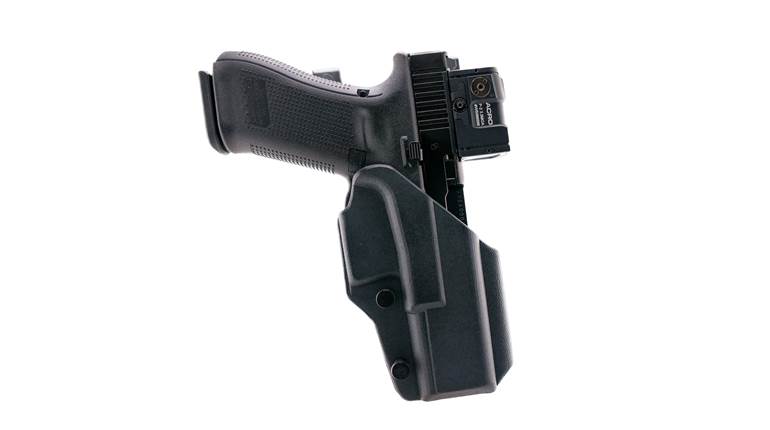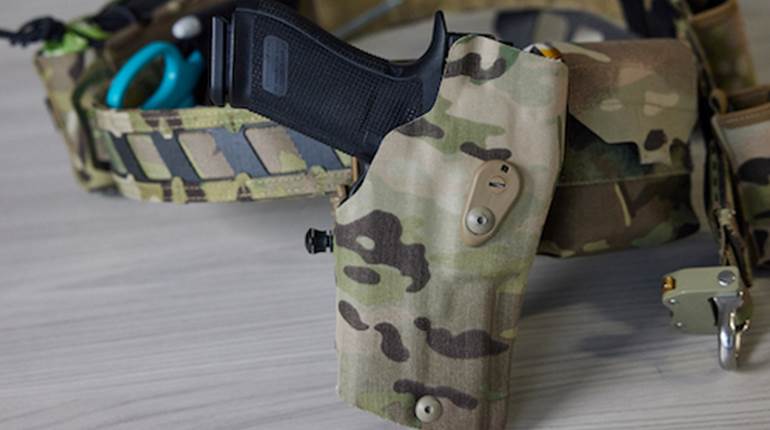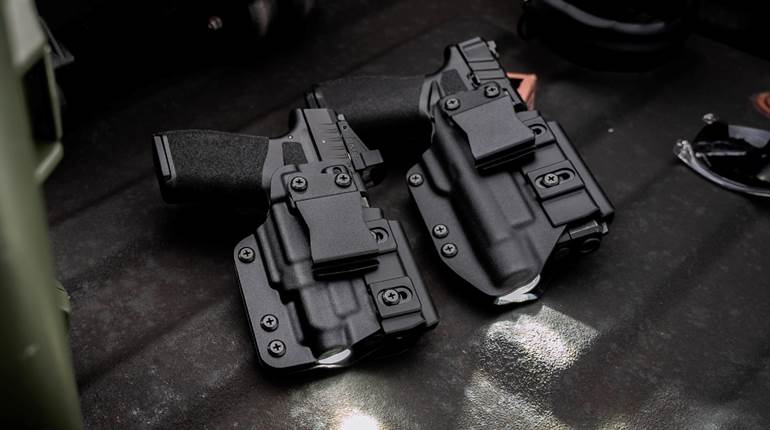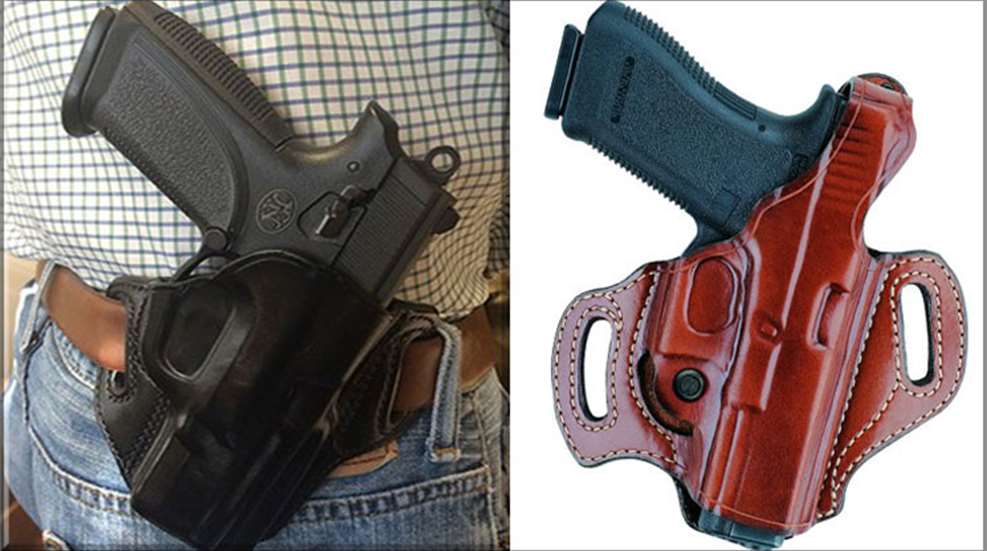
Having worn a defensive handgun virtually every day for over 40 years, I hope you'll understand that I have some pretty firmly set ideas about defensive holsters. To begin with, they should be made of the very best material so that they don't quickly get out of shape and fail to hold the handgun securely. Whether one chooses to use leather or a polymer material is irrelevant; the holster should be made to fit the specific model of defensive pistol that one chooses to carry. A holster that almost fits will only almost hold a gun securely. Holsters made of soft nylon or soft, thin leather should be avoided like the plague.
I would also suggest that the defensive shooter avoid a safety strap or thumb snap retention device on his carry rig. As citizens, we are often already under attack before we realize the need to draw our pistol. Releasing straps and thumbsnaps takes time at the very moment that time is of the essence. Besides, a quality defensive holster will hold a handgun securely without the need for such straps. The tension-screw arrangements that allow the shooter to adjust the amount of tension to the handgun are the exception. They do not require one to release anything during the draw.
Another reason to avoid a thumbsnap or safety strap on the defensive holster is that the handgun should be accessible to either hand. Should the strong-side hand be occupied or incapacitated, the defensive shooter should be able to get his gun into action by reaching across with his support-side hand and drawing the pistol. Obviously, this will usually be a slower proposition, but it is one that could very well save your life.
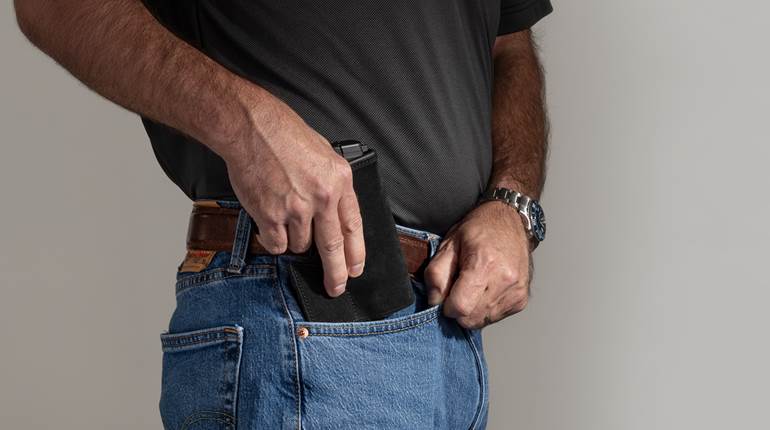
Most defensive shooters carry his or her handgun behind the hip bone on their strong side. This is generally a good idea. However, as we get older we often find that our shoulder just doesn't want to cooperate with this type of draw. With age, it often becomes difficult to raise the shoulder at the proper angle to make the draw. If you find yourself in this situation, you might want to consider switching to an appendix carry—in front of the hip bone on the strong side—or even cross-draw carry.
Just as important as the defensive holster is the kind of belt from which it hangs. If a holster and ammo carrier are hung from a thin, soft belt, they will tend to bend out away from the body, making concealment that much more difficult. Whether the belt is made of leather or some synthetic material, it should be strong and rigid enough that it doesn't bend or fold with the weight of the handgun. In short, it should hold the handgun and holster snugly against the body and do its part to provide proper concealment.
Women seem to have a particular problem with this because they typically don't have to wear a belt in order to keep their pants up, and are more used to wearing belts that are part of their fashion statement. While I am a keen observer—and appreciative of—women’s fashions, a woman who carries a handgun on her hip should take a note from men's fashions and get a stout belt that will hold her gun securely. It should also be buckled snugly around the waist.
We always encourage the shooter to buy quality when shopping for their defensive handgun, and the same holds true with the defensive holster. Quality holsters and belts will last longer and work properly for years. When your life is at stake, it is just not a smart idea to go cheap.
Check with just about any serious defensive shooter and you will find out that he/she has a box of holsters at home. This comes from trying out different styles and designs to determine what works best for the individual. This is simply an unavoidable part of the whole defensive process, finding what works best for you. However, the key to the proper defensive holster is to shop for quality and security. That is the way to ensure that your defensive handgun is right there where you want it to be should you ever be faced with a vicious criminal attack.
Most Popular