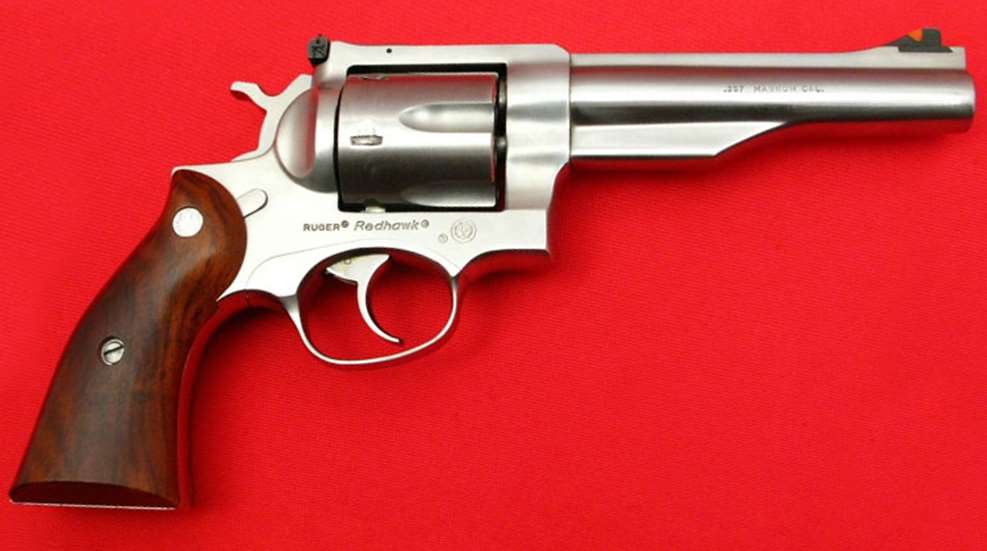
My young friend was a tall and powerfully built man with good athletic ability. He was well-suited for police work, full of common sense and sympathy for the citizen, but unwilling to tolerate unlawful behavior. Let’s say he was “firm” in dealing with the inmates while serving his time in the jail division. Naturally, he was intent on getting out to patrol, where the rubber meets the road. We became friends and he barraged me with questions about guns and shooting. At the range one day, we shot several kinds of guns, most of them the various revolvers we were allowed to use. Inevitably the question came up—which gun do I buy? As always, I recommended as much gun as he could comfortably carry. In fast shooting sessions, weight soaks up recoil and you deliver more accurate rapid fire. A couple of days later, I saw what he had purchased.
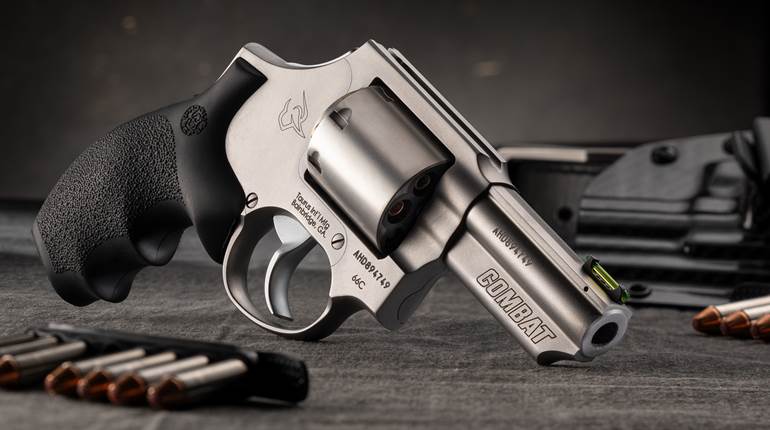
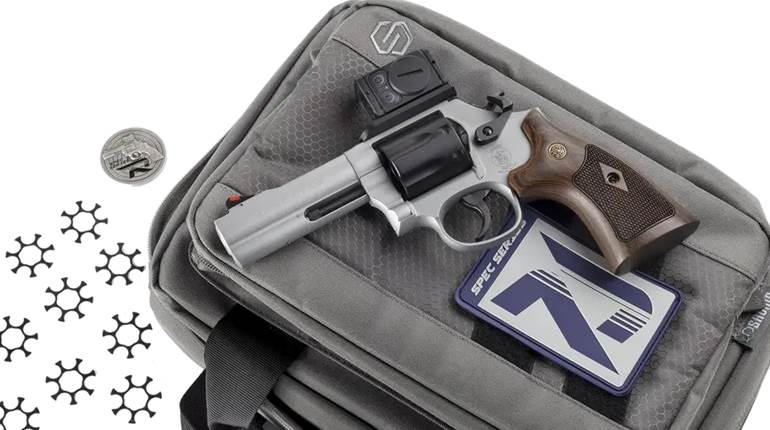
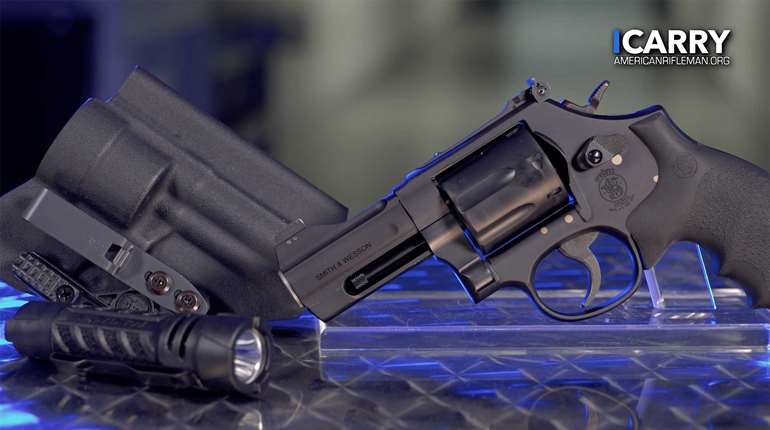
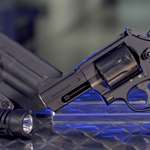
It was a Ruger Redhawk in .357 Magnum with the shorter 5 ½-inch barrel. When Bill Ruger designed this gun, he wanted a big one for the American Sportsman. It was the company’s first large frame DA/SA revolver and needed a massive frame and cylinder to take the real magnum cartridges for which it was chambered—.44, .41 and .357 Magnum. I doubt if Mr. Ruger ever intended this brute to ride in a policeman’s holster. In .44 Magnum with 5½-inch barrel, the gun weighs 49 ounces. The .357 version has to be heavier, because far less metal is removed to make the barrel and cylinder. I am betting it was around 53 to 54 ounces. Now, that’s a heavy gun, but our hero strapped it on every day, when he went to work as a patrolman. And everybody giggled and pointed fingers at the young cop and his overgrown handgun.
Damned if it didn’t happen—the proverbial dark night and a long hallway with a man with a gun at the end. Reason and persuasion failed; the felon brought up his handgun and the deputy his (heavy) service revolver. He fired a pair that were as fast and accurate as any peace officer ever fired. Use enough gun.