Although there are many ways to develop practical rifle skills, one of the most effective ways is by burning ammunition through the gun you’re planning to use. However, until pallets of ammo are delivered free of charge, most of us will continue to rely on dry firing and sub-caliber conversions for low-cost training, particularly when it comes to modern sporting rifles like ARs.
Fortunately, more companies are developing .22 conversion kits to alleviate some of the financial sting of regular range time. However, most are variations of the Ceiner conversion unit and come with inherent drawbacks. Don't get me wrong, I've owned several of these, and when they ran, they did a good job of putting holes in paper, but the .22 LR round is notoriously underpowered and it’s a testament to the engineering prowess of the designers who develop conversion kits that they run at all.
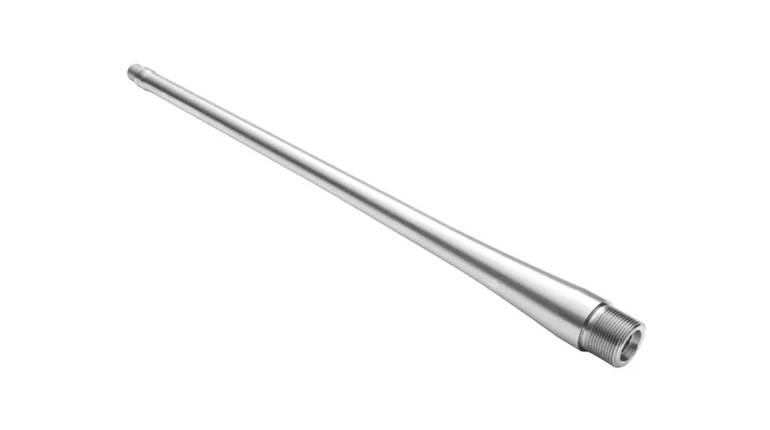
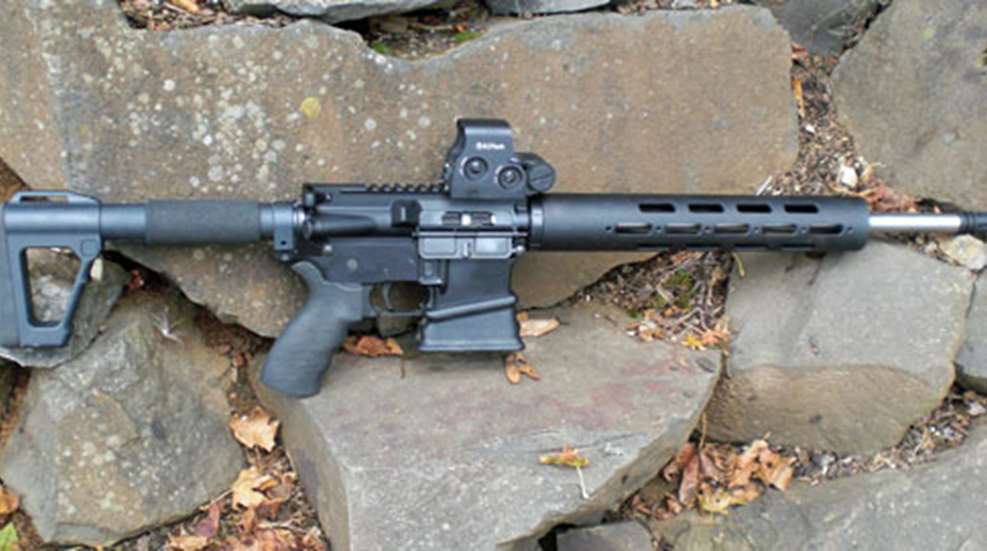
The Nordic NC22 was designed as a tough-as-nails training tool to overcome the drawbacks of the .22 LR round. At first glance, the Nordic upper seems like a regular 5.56 mm A3 variant available with either a black or stainless barrel—depending on barrel length—A2 flash hider and a ventilated free-float tube. Pulling the bolt reveals the thought that went into the design. Unlike its predecessors, the dedicated bolt group is square in profile and rides on corresponding rails cut into the sides of the upper receiver. A fixed, AK-style ejector is bolted to the left receiver wall serving to kick empties out of the ejection port, which is in turn covered by the regular (and fully functional) port cover. Ammo is fed from .22 conversion magazines and a Black Dog 10-round magazine is included—larger capacity versions are available. As I had a few high-capacity magazines, I included those in the testing session. The unit is offered with 16-, 18- or 20-inch barrels featuring 1:16-inch twist rates. As I wanted to replicate my competition AR, I chose the 18-inch medium profile version, reasoning that it would be close enough in feel to a government profile barrel, a choice that turned out to be a good one.
At the Range
I popped the pins on an AR lower with a 2.5-pound Jard trigger, threw on an EOTech XPS holographic sight and headed off to the range with a variety of .22 ammo, ranging from bulk-pack fodder pulled from the shelves of a local big-box store to hyper-velocity premium hollow points, figuring that I'd start off with the good stuff and progress down the pecking order until the gun choked. Suffice it to say, I was there for a long time before I had my first stoppage, a round from a bulk box of Remington Golden Bullets, which refused to fire on the first strike. As rimfire ammunition has issues, it would be difficult to fault the gun for this. I worked on transition drills, shooting around cover, mag changes and shooting on the move and throughout a 600-round session, the NC22 enabled me to concentrate on my own shooting rather than stoppage drills that bore no resemblance to a full-size firearm.
Accuracy testing was conducted at 25 yards, using an improvised rest. While the combination of 1-power optics and a less-than-rock-solid shooting position imposed its own limitations, a clear idea of real-world performance was obtained with seven of the ammo types. The NC22 expressed a clear preference for CCI MiniMags and Federal Bulk Pack 40-grain hollowpoints; group sizes for both rounds hovered at 7/8 inches, with CCI Blazer grouping right around 1 inch. Surprisingly, at the bottom of the pack came Federal Champion 40-grain lead round nose rounds, which produced 2 1/2-inch groups with a lot of lateral stringing, showing once again that 22s can be picky about their fodder.
If I had one criticism of the NC22 as a training tool, it would not be of the upper itself, but rather of the magazines—it's too easy to blow through mag after mag of inexpensive ammo. One huge advantage that Ruger's 10/22 has is the availability of Butler Creek's nifty little loader, which makes stuffing mags quick and painless, while manually cramming the little .22 rounds into the NC22's version is time consuming and fiddly. Hopefully some enterprising company will spot this gap in the market and come up with a solution in the very near future.
Most Popular