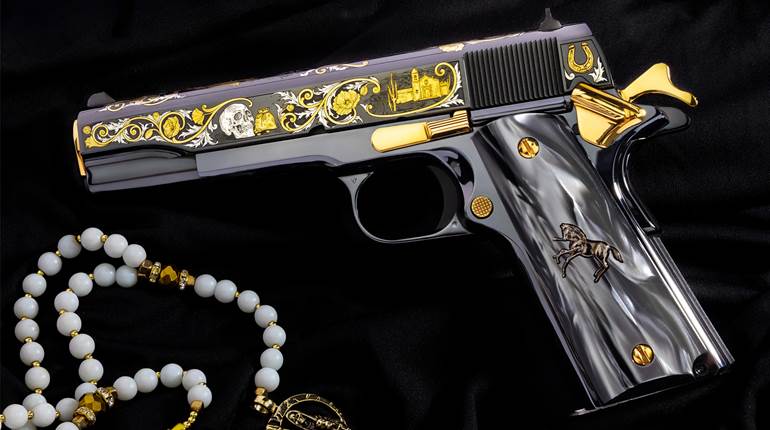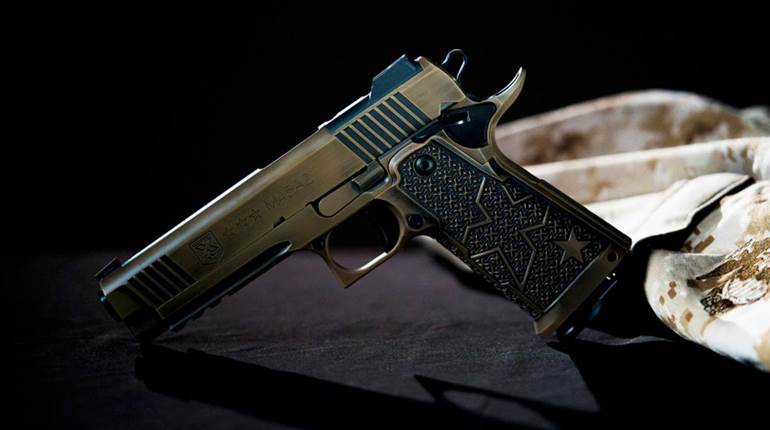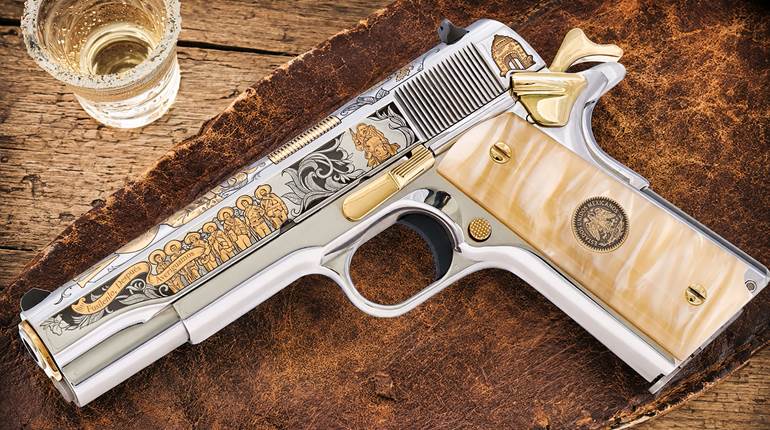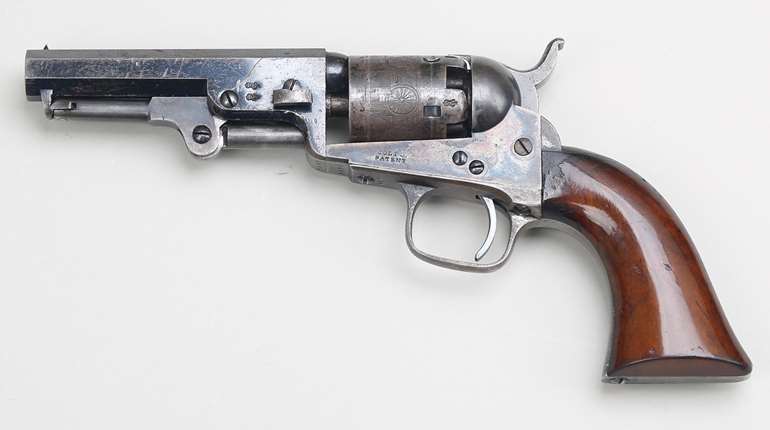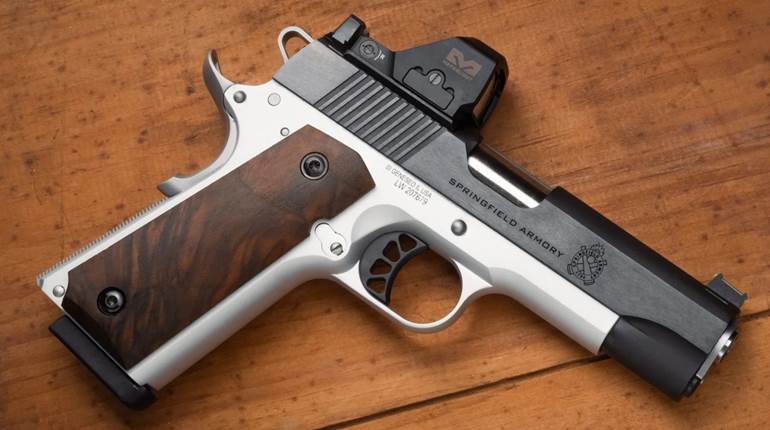
Colt's Patent Firearms Mfg. is considered by many-and with good reason-to be the first name in American firearms. But despite its powerful brand and rich heritage, Colt has, on the commercial side, essentially ceded the marketing, manufacture and vast sales of three of the greatest firearm designs of all time to other makers. The guns are, of course, the M1911-A1 .45 ACP pistol, the Single Action Army Revolver and the AR-15 rifle. Colt still offers variants of all three. Limited numbers of SAAs and M1911s flow from the Colt Custom Shop; standard production includes eight major variants of the M1911, three models of the Colt Match Target, and the Colt Accurized Rifle.
But all three are commercially produced in greater numbers and in wider variety by other makers. It was Colt's battle to lose on the commercial side, and it did just that: lose. If the venerable Connecticut maker couldn't produce enough guns at an appropriate price, or variants with the features consumers wanted, another manufacturer stepped in to fill the market's demand. Another significant factor in the erosion of the Colt market position is its almost complete absence from consumer advertising and cohesive marketing and promotion. Small- to non-existent advertising budgets and an erratic supply of the guns themselves to dealers, plus tenuous or weak relations with the mainstream firearm press, have led to many rumors about Colt being out of the gun business.
At recent gun shows, there have been a disproportionate number of Colt Match Targets (or the semi-automatic-only "law enforcement models" with bayonet lugs) available. Is Colt finally serious about selling its firearms to American consumers? Colt's main problems have been limited production capacity, high costs and, to quote from "Cool Hand Luke," a failure to communicate.
Colt's main business for 15 or so years has been the production of the selective-fire U.S. M4 and M4A1 Carbine, which were adopted by the U.S. Army in 1994. Colt Defense has produced hundreds of thousands of M4s, and now that its single-source contract with the military is set to expire in June 2009, rumors abound concerning Colt. Other firms that produce black rifles, specifically, but not limited to, Remington/Bushmaster and Heckler & Koch are extremely interested in producing the next carbine for the U.S. military.
Is the end of Colt's single-source contract on the U.S. M4 and M4A1 carbine the reason Colt seems more committed to competing on the consumer side? Perhaps, but sources indicate it is more likely Colt just being Colt. The firm has invested in new tooling and modernized its facilities in recent years, increasing its production capacity, and more of its rifles are currently flowing through commercial channels.
There are many problems one can ascribe to Colt, but the Hartford factory can only produce a given number of firearms, for the sake of argument, let's call that number a production capacity of "X" (in rifles the number reportedly around 800 to 900 per day). If that given number is taken by military contracts for the American Armed Forces, one can't be too hard on Colt's Mfg. for limiting its production for American commercial consumers. If the U.S. military needs "X" number of M4s, it should get "X" number. No one can fault Colt for ensuring a trooper in Basra has a new M4 at the expense of a consumer not being able to purchase a Match Target-especially in time of war. Colt's priorities, on the long gun side, have been military contracts, then law-enforcement carbines and finally civilian sales. Colt has done, to be charitable, a lackluster job of explaining that fact to the shooting community. Colt faces many of the same problems manufacturers of the firearms and other industries face, and of course, some unique to Colt.
Colt, as a company, believes it has obligations as a national security component, and the U.S. government is its prime and No.1 customer, hence Colt Defense first fulfills rifle orders for government contracts, followed by sales to law enforcement. Remaining production-in the form of Match Targets and Colt Accurized Rifles without bayonet lugs-are then sold to Colt's Mfg., a separate division within the company, for commercial sale.
Modern M1911s flowing from Hartford are judged not only against other contemporary makers, but also against its own products from a different era that tower over its modern guns in fit and finish. Colt has taken, in my view, some grave missteps, including plastic parts on the M1991-A1, Series 90 triggers and in never offering a modern, competitive double-action pistol (anyone remember the Double Eagle and the All American 2000 for example?) but the company's foremost error has been communication. That can be corrected, and it appears it is on the road to recovery.
In handguns, Colt officials have finally recognized the importance of nostalgia. The re-issue of the Colt Super .38 (in nickel or blue) is nothing short of cool. The blue Model of 1918 retro military M1911 (not M1911-A1) is also a promising introduction that plays to Colt's strength. A healthy Colt company is a standard preferred by virtually all American shooters.
Most Popular