by
Support NRA American Rifleman
DONATE
** When you buy products through the links on our site, we may earn a commission that supports NRA's mission to protect, preserve and defend the Second Amendment. **
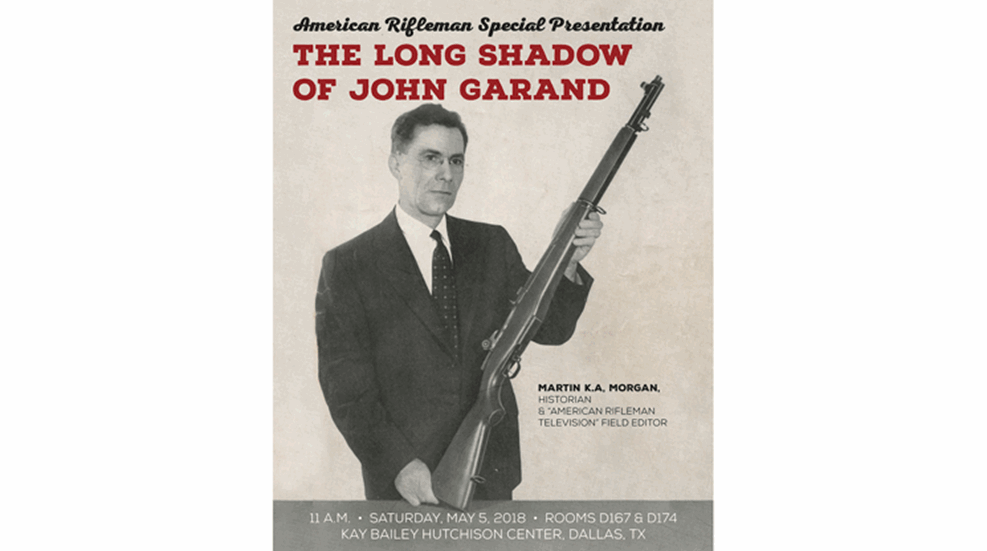
"The greatest battle implement ever devised"—the M1 rifle—made a dramatic contribution to victory during the Second World War and it went on from there to arm U.S fighting forces in Korea. For another decade beyond that, the M1 served the U.S. military albeit in a diminishing role. But just because more modern designs would eventually take its place does not mean that the Garand era was over. This presentation with Martin K.A. Morgan describes the other users of the M1 rifle, the subsequent designs that it inspired, and the ways that its longevity has reached across the decades all the way to the present. This topic is brought to life during an American Rifleman Special Presentation, "The Long Shadow of John Garand," delivered by noted historian and American Rifleman contributing writer Martin K.A. Morgan at the NRA Annual Meetings & Exhibits in Dallas, Saturday, May 5, 2018 (11 a.m. to 1 p.m., Kay Bailey Hutchison Convention Center, Room D167 and 174). Regular session attendees know the seats fill up fast, often rendering the event Standing Room Only. In other words, get there early!
Most Popular