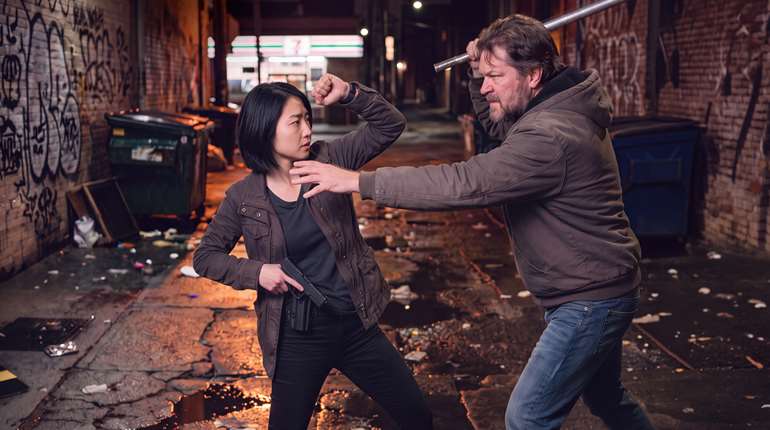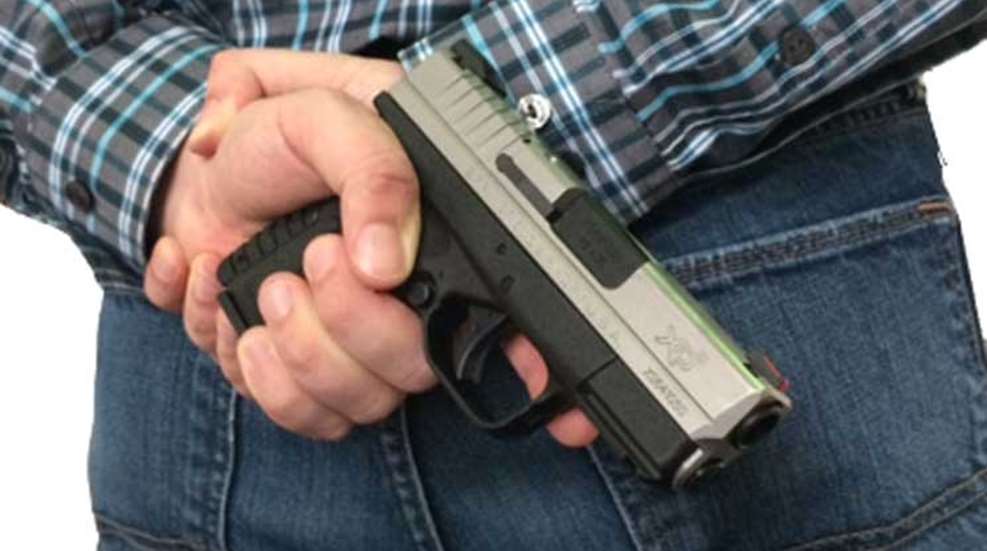
It has been said that the eyes are the window to the soul. While that may be true, it is the hands that hold the threat to the honest citizen. The smartest thing a person can do is to watch the hands of those strangers who are around them until they are satisfied that the person does not represent a threat.
Unfortunately, too many people look but they don't really see. They aren't expecting a gun, or other weapon, so they don't even see one when it is in plain sight. As a police detective, I learned that I could move into a potentially dangerous situation by holding my pistol down by my leg. Most of the citizens that I passed never even saw it because, while they might have been looking, they weren't really seeing. And, of course, nowadays so many people are intently engrossed with their cell phones that a person could probably carry a bazooka and it wouldn't be noticed.
If a person is really intent on seeing, he will notice an armed person, or just a suspicious person, while they are still some distance away. The farther away that they are spotted, the more options that the citizen has for dealing with it. And simply leaving the immediate area should always be high on that list of options.
A common occurrence is that we often cannot see both of the stranger's hands. They may be in his pockets. One, or both, may be out of sight behind his body. This doesn't automatically mean that we will pull our trusty defensive handgun and throw down on him. But it does mean that we will keep him under observation until we are satisfied that he is not a threat. It may feel like a good idea to create a little distance or to step behind some available cover. We can do these things quietly and surreptitiously without creating a scene.
This is what Col. Jeff Cooper meant when he referred to Condition Orange. We see someone who, for whatever reason, makes us nervous. We don't take action, but we are prepared to take action. And we keep him in sight until we are satisfied that he does not present a threat or he leaves our area.
We don't take action, but we are prepared to take action. And we keep him in sight until we are satisfied that he does not present a threat or he leaves our area.
Most law enforcement officers are trained to watch a person's hands when they are making contact with them. This is the reason that it is an excellent idea to keep both hands on top of the steering wheel when being stopped for a traffic violation. The officer can see both of your hands and he can see that they are empty.
I use the same technique when approaching a law enforcement officer, for any reason, when he does not already know me. You don't have to hold your hands out in front of you. And you certainly don't have to hold them up like you are surrendering. Just hold them down at your side, with both hands open, so that he can see that they are empty. Seeing that your hands are empty, he will probably be far more inclined to help you with your situation in a lot less stressful manner.
An untrained person, observing those around him, will most likely spend too much time looking at a person's face. Next he will observe the way they are dressed. And, finally, he might look at their hands. By then, it might be entirely too late.
A person trained in personal defense looks at the hands very quickly after he realizes that the person approaching is a stranger. He not only looks, but he also sees—that is, he consciously takes note of what he is looking at. It takes a little training and a little practice but it can buy you valuable time in dealing with an actual threat.
Learn to look and to actually see. And learn to watch their hands. It's a critical part of any personal-defense plan.
Most Popular