If ever a lever-action rifle evoked visions of laced-up leather boots, Montana-creased felt hats and plaid wool shirts, it would be the Savage Model 1899. But at the time of its introduction, it was one of the most advanced sporting rifles in America.
The rifle’s inventor was Arthur W. Savage, the son of a British official. Savage was born in Jamaica in 1857, schooled in England, ran cattle in Australia, and ended up in Utica, N.Y. There, on April 5, 1894, the Savage Repeating Arms Co. was formed to market a rifle he designed, the Savage Model 1895, the first hammerless lever-action and forerunner of the Model 99. It featured a unique rotary magazine for the then-new spitzer bullets. A number of improvements culminated four years later in the Savage Model 99, which would be produced off and on for the next 98 years.
A well-balanced rifle with a pop-up firing pin indicator and a coil mainspring, the Model 99’s five-shot rotating magazine centered the weight in the receiver. Moreover, an oval hole in the receiver displayed a brass counter that indicated the number of rounds in the magazine. Chamberings included .303 Savage, .30-30 Win., .22 Hi-Power, .300 Savage; the less encountered .25-35 Win., .32-40 Win., and .38-55 Win.; and the classic .250 Savage. A great variety of models were produced, including lightweight and take-down versions, often with extra barrels and other special options. In 1960 the safety on the lever moved to the tang and eventually a four-round-capacity detachable magazine replaced the rotary design. The last Model 99 was produced in 1997, just two years shy of its 100th anniversary.
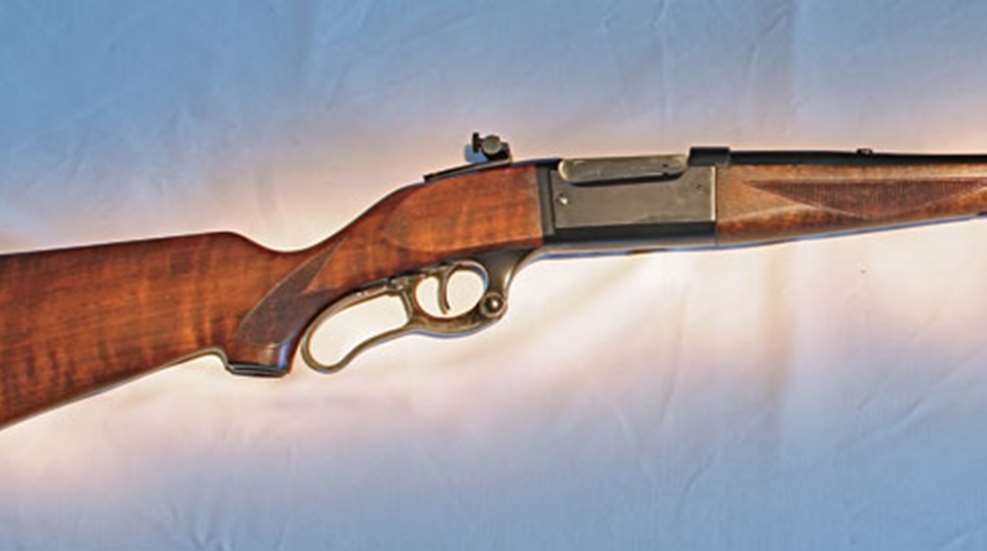
This Savage 99EG with checkered pistol grip and schnabel fore-end was made in 1950. Even with minor nicks on the screws, it is in NRA Excellent condition, retaining all of its bluing, with casehardening on the lever starting to fade. Its rear sight was replaced with a Lyman peep, but the front sight is a rare duplex. Normally this gun would bring $600, but with the front sight and a 50 percent premium for .250 Savage chambering, its value is between $875 and $950.
Gun: Savage Model 99EG (post-war version: 1946-1960)
Caliber: .250 Savage
Condition: 98 percent (NRA Modern – Excellent)
Manufactured: 1950
Value: $875-950 (includes 50 percent premium for .250 Savage chambering, according to the Blue Book of Gun Values)
Most Popular