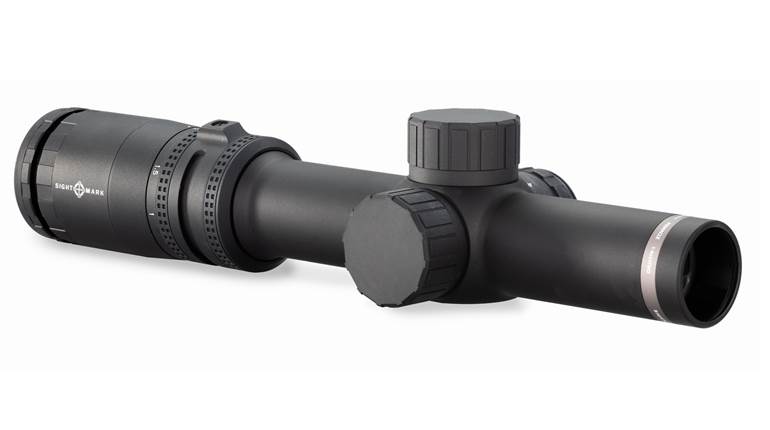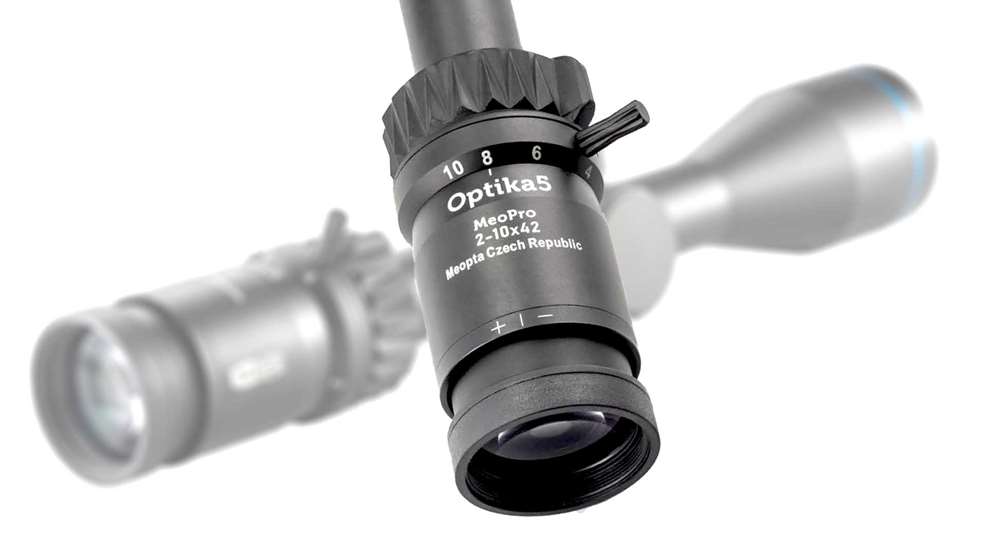
Q. I have noticed several scopes at the range have their eyepieces screwed all the way in—just as they come from the factory. The shooters using these scopes claim the reticles are in focus. I have found my focus to be two to three turns from the shipping position. I wear corrective lenses, but my oldest scope is more than 30 years old and the reticle is still in position. How many turns does one make on the eyepiece of a scope to have the reticle focus for 20/20 vision?
A. There is no set, standard number of turns required to focus the eyepiece of a riflescope for critical reticle sharpness for any specific visual capability, such as 20/20 vision. Among the variables are: The eyepiece setting when the scope was shipped; manufacturing variation from one scope sample to another; the pitch of the focusing threads; and condition of the user’s eye. In 20 years of handling a wide variety of scope sights, I have encountered scopes that required no ocular adjustment at all and still others that required only moderate focusing movement to sharpen the reticle for me. The latter were in the majority.
—Hugh Birnbaum
This “Questions & Answers” was featured in the July 2004 issue of American Rifleman. At time of publication, "Questions & Answers" was compiled by Staff, Ballistics Editor William C. Davis, Jr., and Contributing Editors: David Andrews, Hugh C. Birnbaum, Bruce N. Canfield, O. Reid Coffield, Charles Q. Cutshaw, Charles M. Fagg, Angus Laidlaw, Evan P. Marshall, Charles E. Petty, Robert B. Pomeranz, O.D., Jon R. Sundra, Jim Supica, A.W.F. Taylerson, John M. Taylor and John Treakle. To subscribe to the magazine, visit NRA membership page here and select American Rifleman as your member magazine.
Most Popular