It is well understood that in order to retain the American tradition of shooting (not to mention our right to do so), it is imperative to get the younger generations involved. Renowned air gun manufacturer Daisy and the Iconic Outdoor Group have held this statement in high regard throughout their existence, which is evident in their programs and products. On several occasions, I have had the honor of joining Daisy's sister brand, Gamo, on the Squirrel Master Classic event, which aims to bring interested youth on the small-game hunt of a lifetime.
While this has been wildly successful, it hinges on the word “interested.” Finding kids from an Alabama 4-H club who might want to shoot guns isn’t the hardest thing to do, but how do we reach the “tablet” generations? Technology, while important and essential, has confined many children to the couch, robbing them of the more tangible activities that most of us grew up enjoying. Taking a different approach, instead of pulling today’s youth from their devices, why not use these to get them involved in the shooting sports? Almost everybody enjoys video games that involve guns, so Daisy has blended the two in its new Smart Target System (STS).
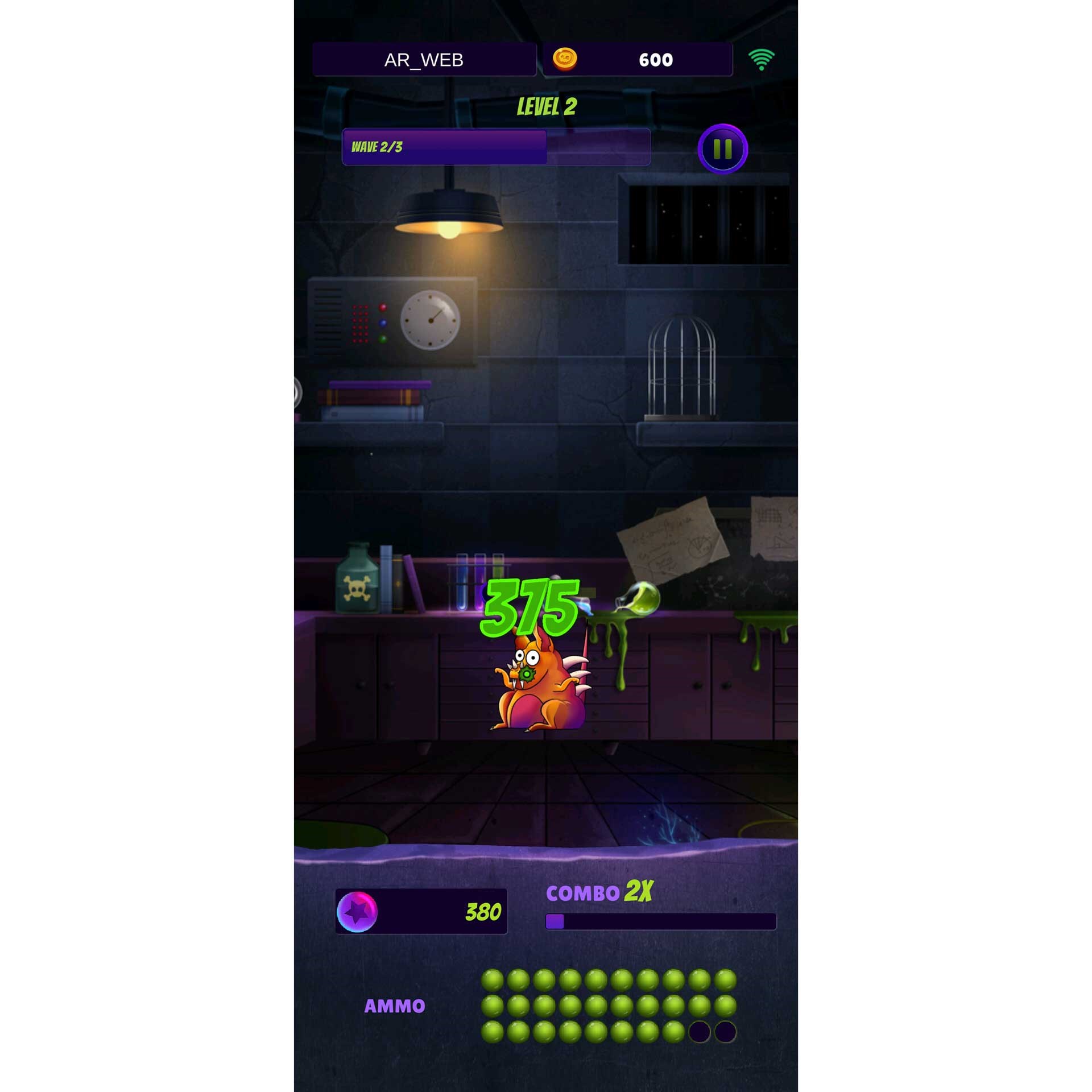 The Daisy STS is a digital target system that makes use of a Wi-Fi camera and specialized targets. Geared for the youngest shooters, each sheet features an array of colorful monsters that must be dealt with using a trusty Red Ryder BB gun. Once the target and camera are calibrated, the free app directs gameplay and provides feedback. Sounds expensive, right? Well, the wonderful thing about tech is that it gets exponentially cheaper to make each year, so the package, which includes the BB gun, lists for just $199.90.
When my sample arrived, I wasn’t surprised to see that it required some assembly. However, over the years, I’ve learned that this means I can take items like this apart for storage, and perhaps even replace parts that get damaged. Putting it together only took about 15 minutes, and I was pleased to see that Daisy included the tools needed. The target holder consists of an upper and lower assembly that uses a spring-loaded clip to keep the target sheets in place. These are held in place by a frame constructed of rods and brackets. The upright connects to a V-shaped base, which houses the Wi-Fi camera and is completed with a shield to protect it from stray shots. Higher-velocity air rifles can be used with the STS, but keep in mind the target frame is not rated to withstand the more powerful impacts.
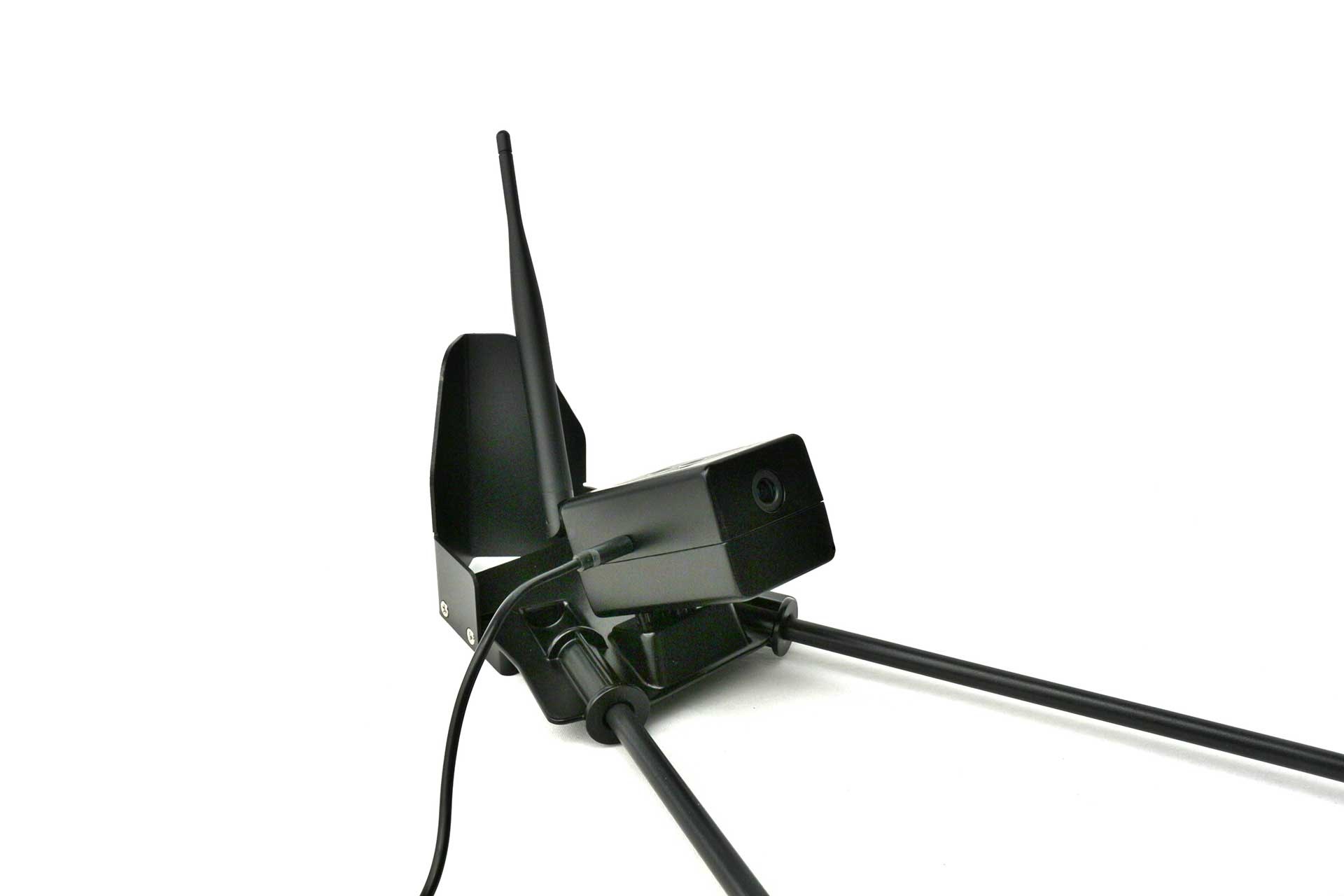 Once the target system is assembled, you are left with the decision of using it indoors or outdoors. Shooting indoors is a viable option as it only takes heavy fabric to stop BBs from a Red Ryder, and this offers the easiest solution for a continuous power supply. Shooting outdoors works just fine, too, as the camera houses an internal battery and is unaffected by bright sunlight. For longer sessions, you also have the option of using an external power bank, such as you would use to charge a smartphone on the fly (not included).
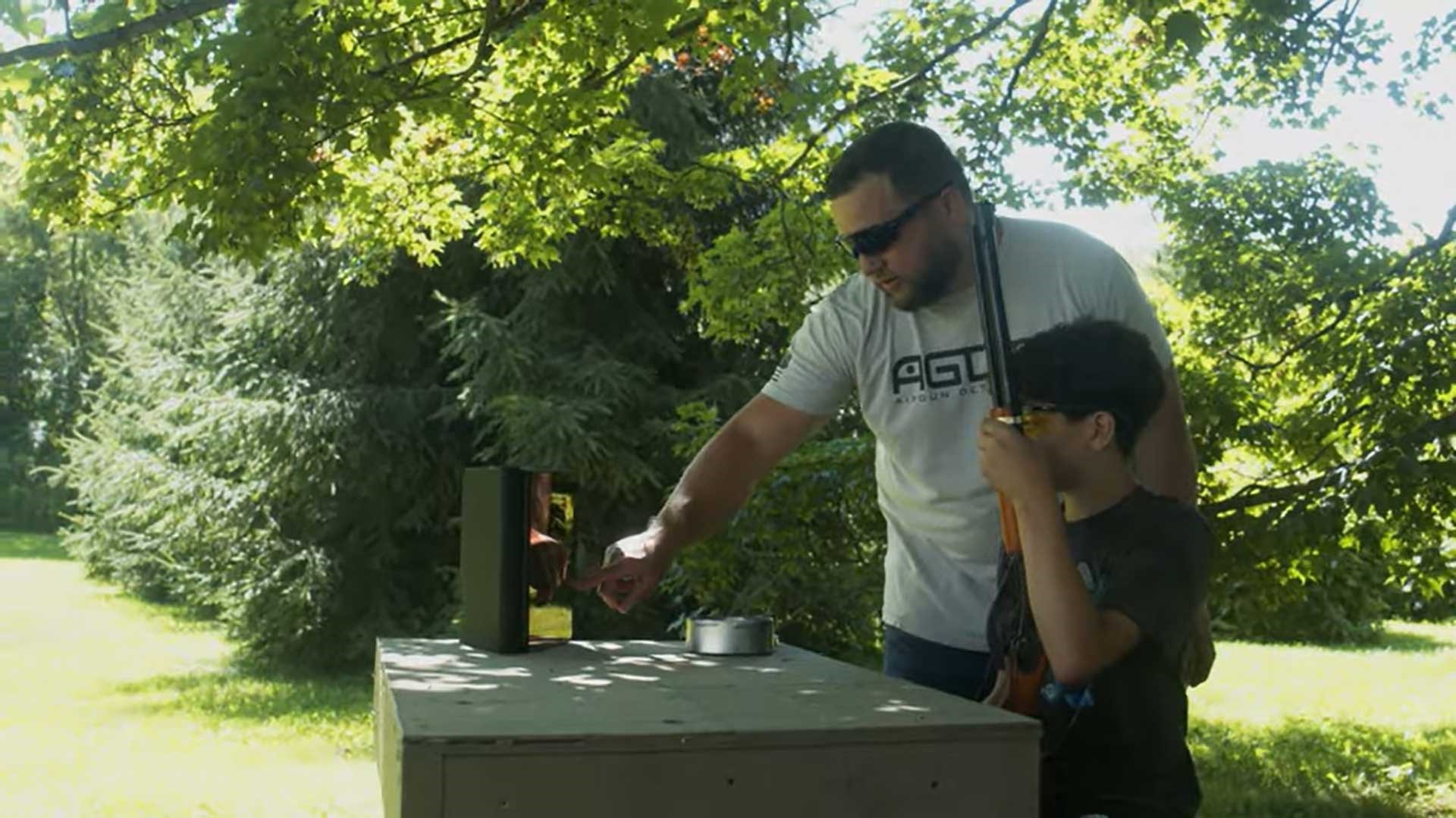
From the start, I viewed this as a viable training tool for new shooters. Prior to forking the gun over, the conversation of always keeping your muzzle pointed in a safe direction, keeping your finger off the trigger until your sights are aligned and on target, and never loading a gun until you’re ready to shoot should flow naturally. While the lesson of the “know your target” part of Safety Rule No. 4 will be taught during game play, I appreciated the opportunity to discuss the “and what’s beyond it” part during setup.
 Daisy’s app was relatively straightforward to download and install and requires the basic steps of creating an account (also free), followed by a calibration process. Doing so involves dragging four individual boxes over the reference marks in the corners of the target. This routine ensures the impacts are viewed properly and sent back to the app for accurate scoring. Once this is completed, gameplay can commence.
The inaugural game for the STS is called Monster Blast, which shows shooters a specific monster target on their device and gives them a decaying time bar that they must engage within. From a training standpoint, I liked that it teaches the folly of “fussing” with sight alignment and trigger press, while still holding the shooter to the fundamentals of marksmanship to ensure accuracy. I was also fond of the fact that the app shows you specifically where the shot landed, allowing for some coaching along the way. Old hits do not appear in a new game, so determining a new one from an old one is effortless. This also dramatically extends target life.
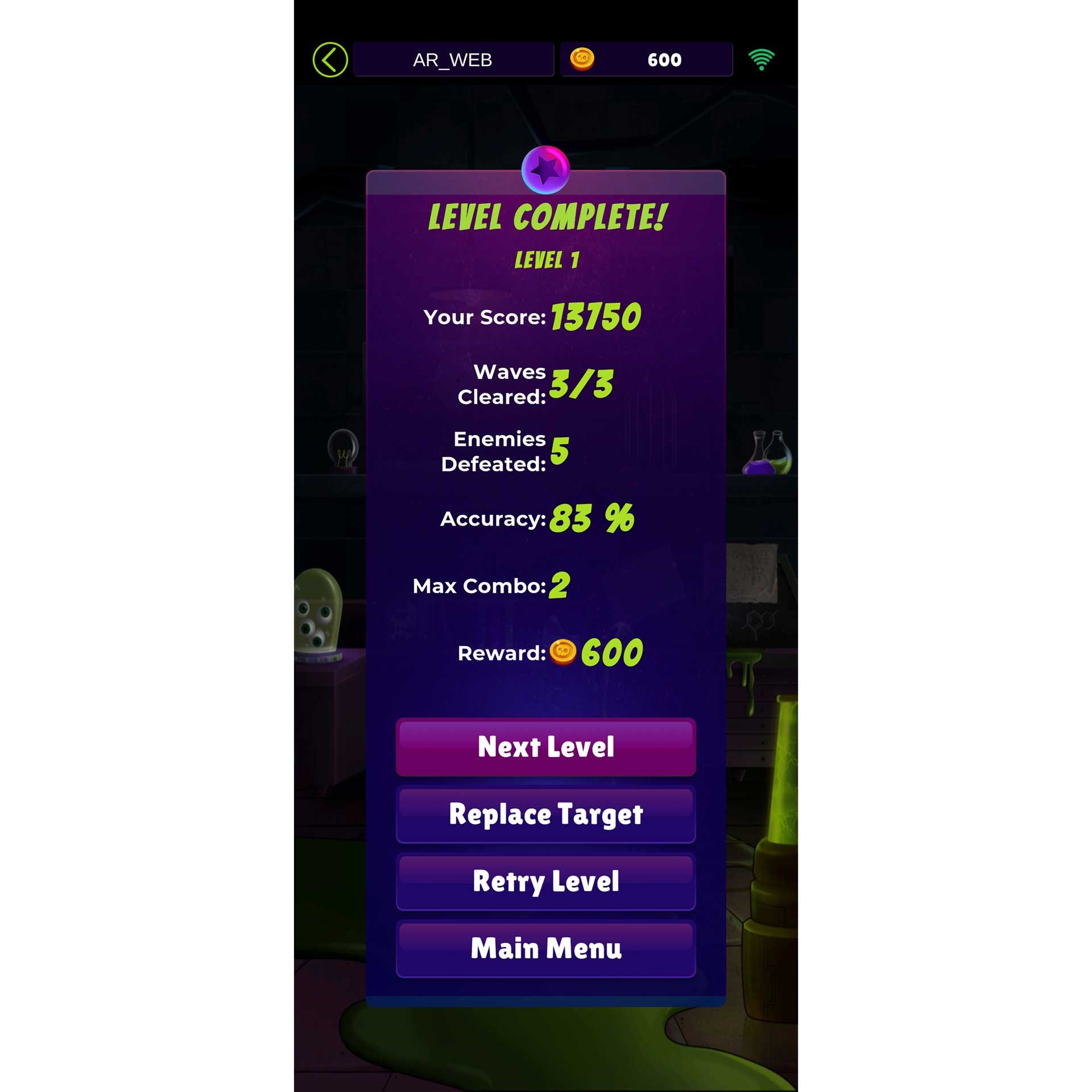
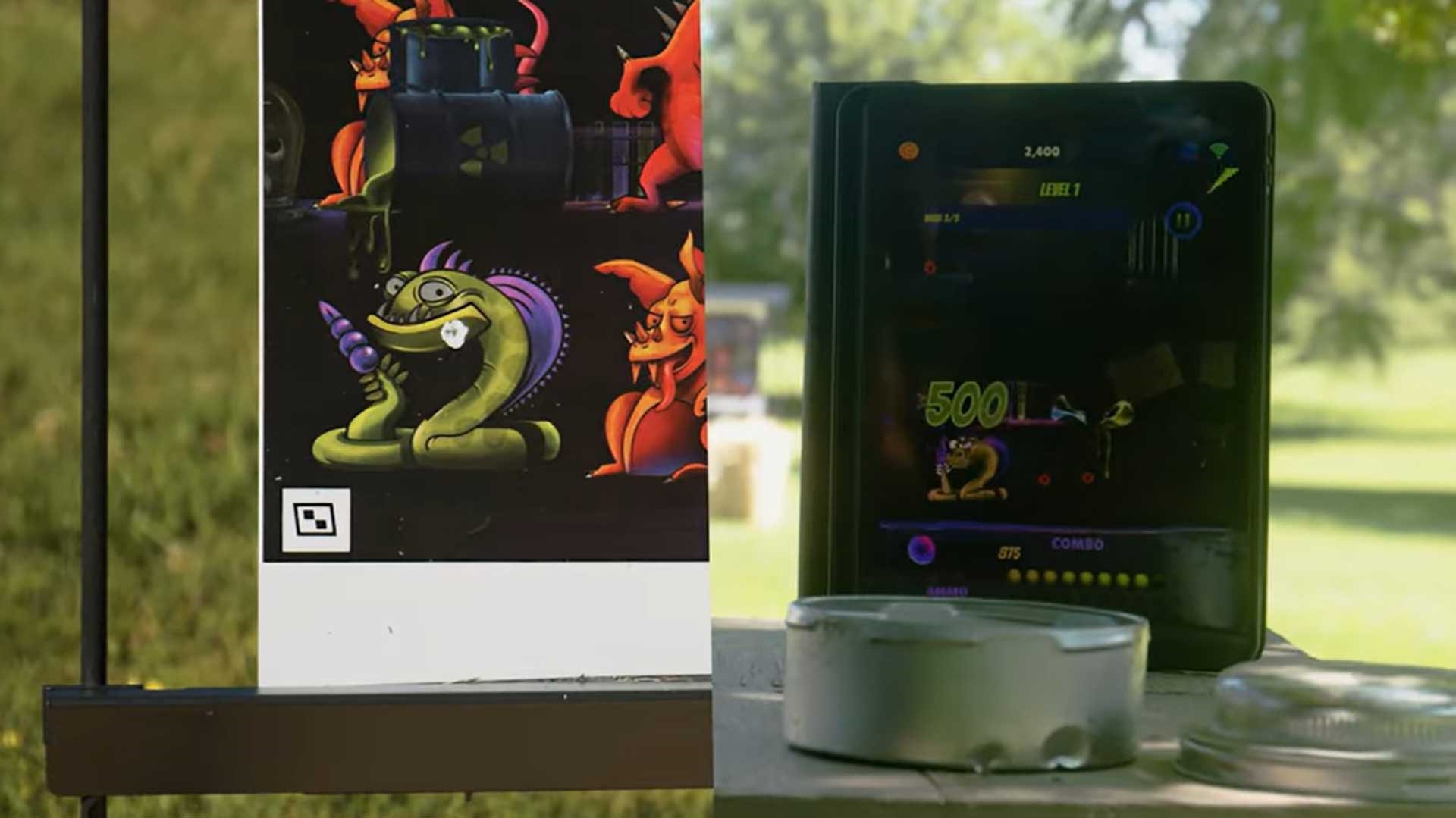 Playing a few rounds of the game, I found it exciting, and I particularly enjoyed how the monsters were animated throughout the process. More importantly, it worked as described without any bugs to work out and with accurate hit registration throughout. I liked that the targets were scored, and that the score was dependent on shot placement, making this an excellent multi-player game and one that introduces aspiring marksmen to competitive shooting.
In this world of augmented reality systems, the Daisy STS is a natural fit. I’ll admit, I was sort of crotchety when I first read the press release exclaiming “they even need to bring tablets into shooting, now?!” but after using the system, the benefit of digitized scoring became very obvious, as did the entertainment value. Daisy seamlessly blended the fun of live shooting with the utility of our current app-based existence, and I’m not at all upset with the creation. This is an attitude that I believe we all ought to adopt, as any product that gets kids to the firing line is a good thing! For more information, visit the Daisy Smart Target System website here.