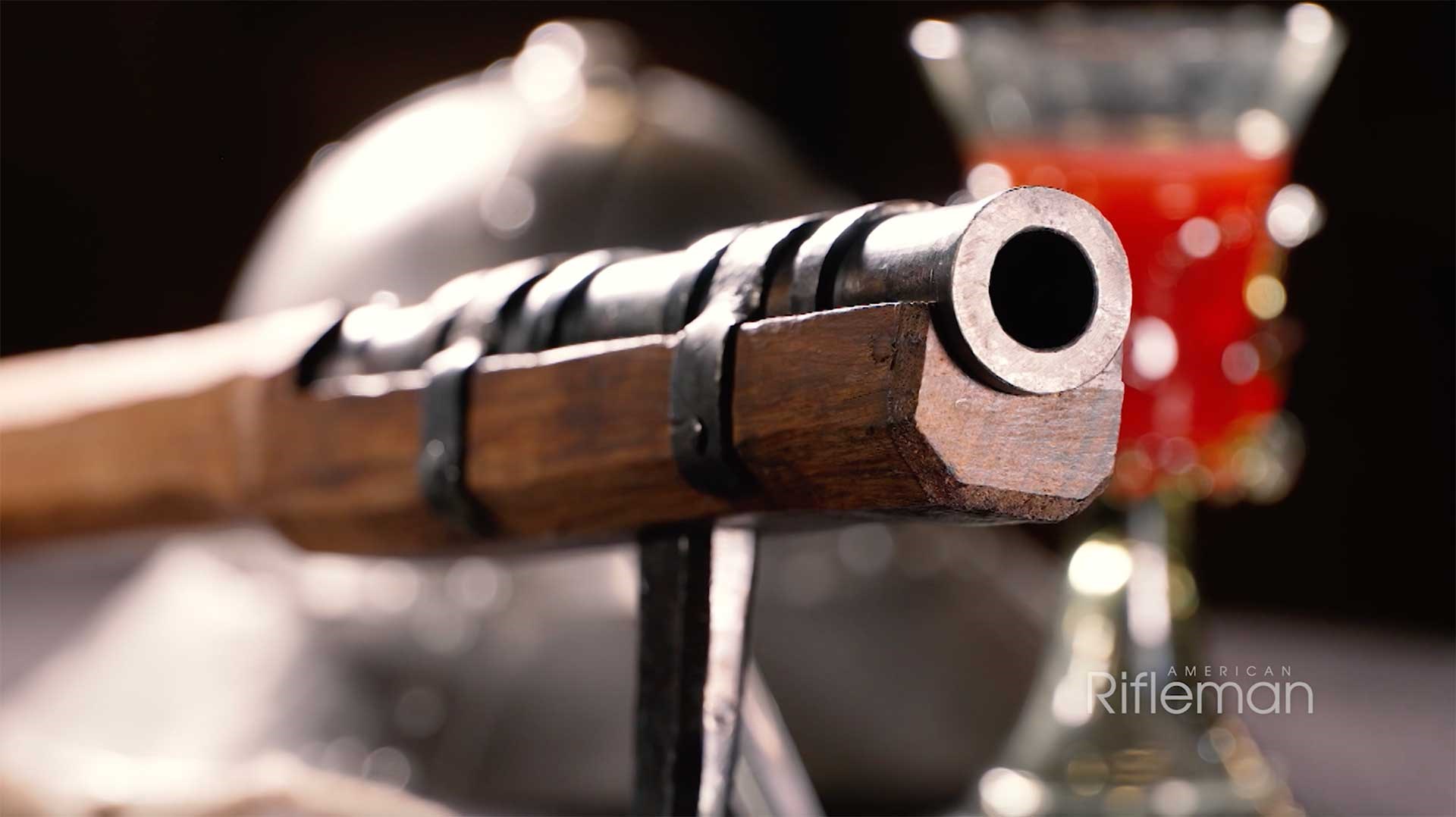
It all had to start somewhere, and for handheld firearms in Europe, Genesis is what we call the "handgonne" or hand cannon, a simple metal tube lashed to a wooden tiller. Watch our "American Rifleman Television" I Have This Old Gun segment above to see the hand cannon in action and hear how this developed as one of the most important steps in firearm evolution.
"There was development in China, but really, we focus on the European-made hand cannons, and the first time they really can be documented is about 1326 to about 1332," NRA Media Editorial Director Mark Keefe said. "The basics of the hand cannon are very simple. You have a metal tube. It's got a hole in one end where you put a projectile. And at this point there wasn't such a thing as a lead ball that they thought should be used. They put all kinds of stuff in there, metal arrows, eventually stones, and then iron balls were used. And the thing about this hand cannon, the handgonne, is there's no real stock."
Primarily, the role of the "handgonner," the origin of the phrase "handgunner," was to fire into enemy formations, which produced both literal and psychological impacts on opponents. Hand cannons could be used defensively within fortifications, and many designs had built-in hooks that would latch onto a defensive wall to brace the gun for firing.
" The first 'handgonnes' or hand cannons, as some people describe them, were a very, very, very important step in the history of military hardware," American Rifleman Field Editor Garry James said. "There were three basic types. The first ones were fairly small. They were connected to a straight wooden stock. Nothing very fancy. It could either be inserted into a socket that was actually part of the firearm itself or the gun could be nestled into like, a little cradle on the stock and then held in with bands. This was the earliest type of handgun or 'handgonne.'"
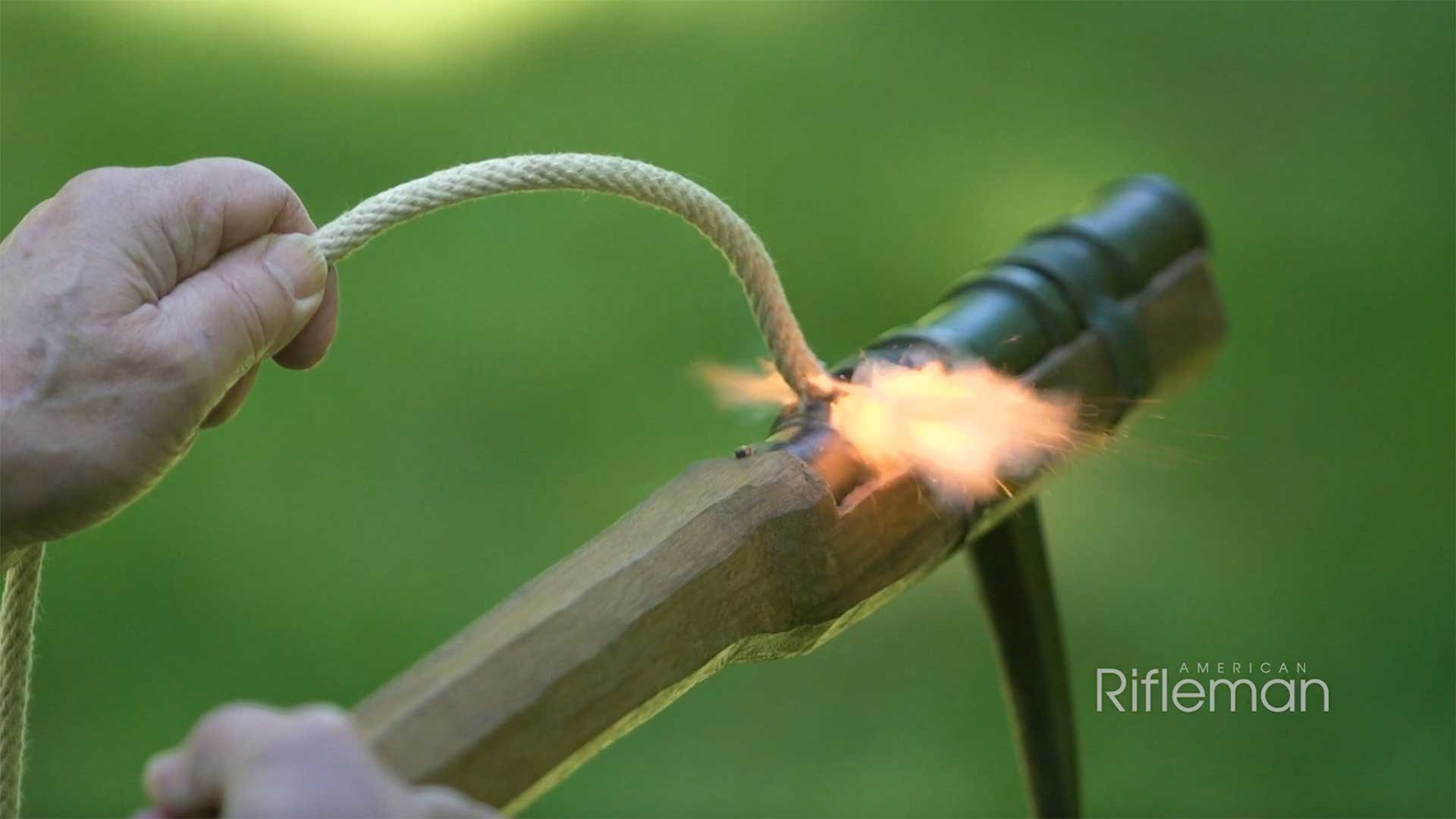
Eventually, straight stocks, or tillers, were abandoned in favor of shaped shoulder stocks that allowed for better control, and the touchhole was eventually moved from the top of the barrel to the side to give gunners an improved line of sight. Lockwork, triggers and other innovations followed in the ensuing centuries.
"Eventually they developed a better mousetrap," Keefe said. "You get the arquebus. And then, eventually, you get the matchlock because with the hand cannon, your touch hole is on the top, which is very difficult to get to. But if you move it over to the right side, that makes it easier. And if you have the match already attached, that makes the job even easier still."
To watch complete segments of past episodes of American Rifleman TV, go to americanrifleman.org/videos/artv. For all-new episodes of ARTV, tune in Wednesday nights to Outdoor Channel 8:30 p.m. and 11:30 p.m. EST.