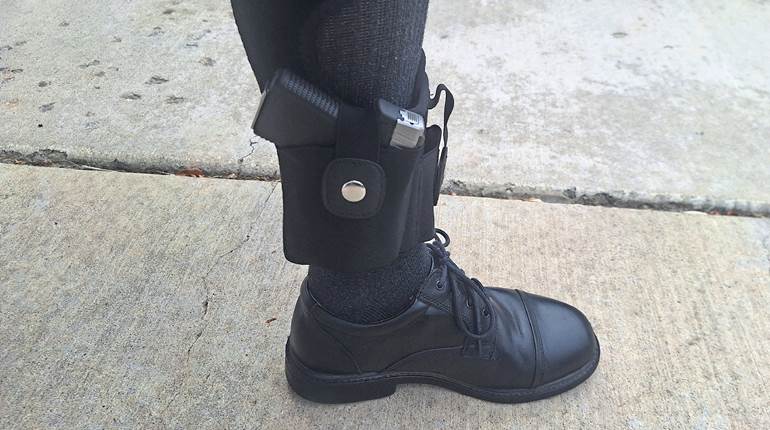
On June 4, 2026, the Appellate Court of Maryland ruled that law enforcement cannot stop and search a person merely because they see a gun—or the outline of one printing from a concealed holster.
This case is Steven Hicks v. State of Maryland.
This decision marks a post-New York State Rifle & Pistol Association v. Bruen (2022) evolution in how law enforcement interacts with armed citizens in the Old Line State. The Second Amendment, after all, protects an individual right to keep and bear arms. In Bruen, the U.S. Supreme Court acknowledged that the right to lawfully carry firearms extends outside of our homes.
The facts of this case are straightforward.
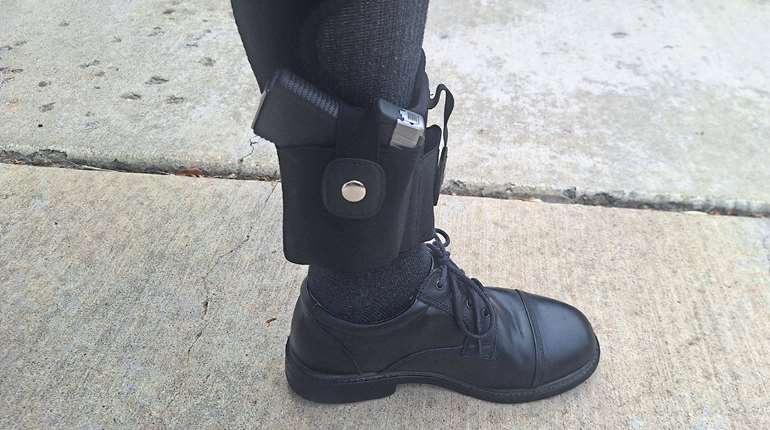
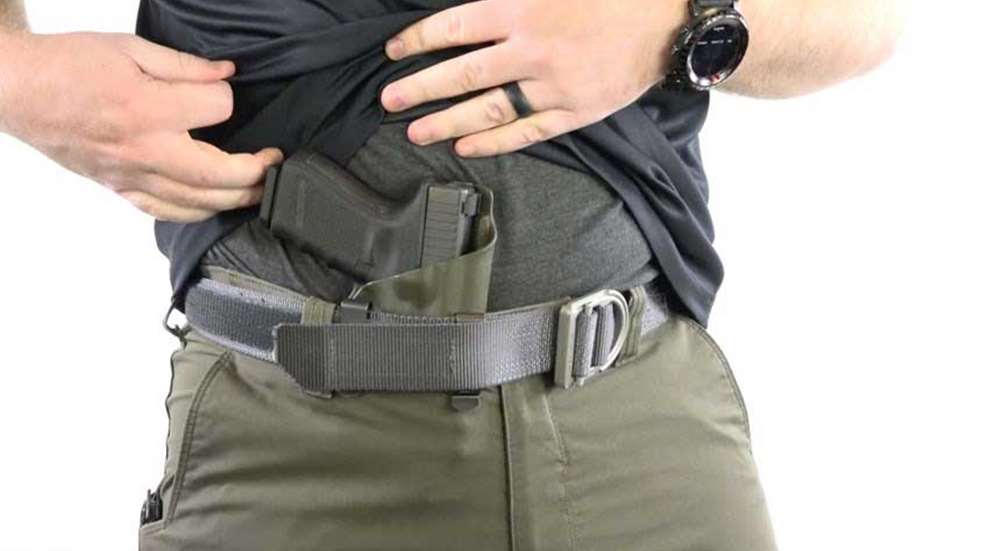
On July 5, 2023, in Baltimore, Md., Detective Mitchell Ramsey observed the handle of a handgun printing through Steven Hicks’ shirt while he stood near a group of people. When officers approached in an unmarked vehicle, Hicks walked away.
Officers stopped Hicks, handcuffed him, and recovered a holstered handgun (for which Hicks immediately claimed he had a permit), a second handgun from his satchel, and cocaine was found in his pocket.
The officers also found a Maryland handgun permit (wear and carry license) on Hicks with an expiration date of Feb. 28, 2026.
Hicks was subsequently charged with various drug and firearm offenses. He moved to suppress the evidence, arguing the stop and search violated his Fourth Amendment rights.
After the trial court denied the motion, he entered a conditional guilty plea and appealed.
The Appellate Court reversed, holding that the initial stop lacked reasonable suspicion. Writing for the majority, Judge Kathryn Grill Graeff said that Bruen established a presumptive right to carry handguns publicly for self-defense.
Consequently, wrote Graeff “mere possession of a concealed firearm, by itself, is not indicative of criminal activity.”
The court found that the mere possibility that someone might lack a permit or be prohibited from possessing a gun does not justify a seizure. Officers must have specific, articulable facts suggesting the gun is possessed illegally or that the person is engaged in other criminal activity.
Prior to this ruling, Maryland had treated visible or suspected gun possession as sufficient grounds for a stop and search.
The decision is nuanced. The court rejected the defense argument that Bruen prohibits “Terry frisks” of armed individuals. (A Terry frisk is a pat-down search of a person’s outer clothing conducted for the purpose of officer safety. It is not a full search of pockets or belongings.)
In Hicks’ case, said the court, the frisk exceeded constitutional bounds: officers reached into pockets and the state failed to prove exceptions like plain feel or plain view applied.
This decision reinforces the interplay between the Second and Fourth Amendments. Bruen affirmed that public carry is a core constitutional right, not a second-class privilege. Allowing stops based purely on exercising that right would eviscerate it, subjecting law-abiding gun owners—particularly in high-crime urban areas—to constant scrutiny and potential arrest.
Second, it has immediate practical effects on policing in Maryland. Officers can no longer rely on a “gun bulge” or printing firearm as automatic reasonable suspicion of illegality. There are millions of Americans, after all, who legally carry concealed.
The 130-page opinion, complete with multiple concurrences, delves deeply into constitutional text, precedent, and Maryland’s handgun statutes. It signals to other states and federal circuits that post-Bruen jurisprudence demands rigorous protection of carry rights alongside traditional Fourth Amendment safeguards.
Most Popular