Gun owners are catching onto the high-tech algorithms and Internet-scouring software employed by several websites can soften the blow when it’s time to buy ammunition, and more are going online. Some of these tools have been around for years, offering gun owners a particularly useful tool when events signal another shortage may be on the horizon, while others are relative newcomers to the market.
Some don’t sell ammo, so there’s no sales pitch. The information is usually presented in a spreadsheet format, with lowest-price-per round the common default setting. Results can be tailored to sort by cartridge, volume desired and other categories. A link often takes you directly to the retailer’s web page to make the purchase.
The grandaddy of all is likely AmmoSeek, which launched in 2010. It has since been joined by others recently, including BulletScout. Caliber King is another newcomer, although it brings features you won’t find offered by some competitors. It also monitors firearm prices, reloading supplies and more.
It’s the easy-to-understand price-trend graphics that caught our attention. The company displays average prices for the last 90 days.
AmmoSquared provides similar graphs. It’s also a retailer that provides expanded services, however, so the charts compare its price against market average. Select the cartridge, then hit the “Detail” tab to look at the info.
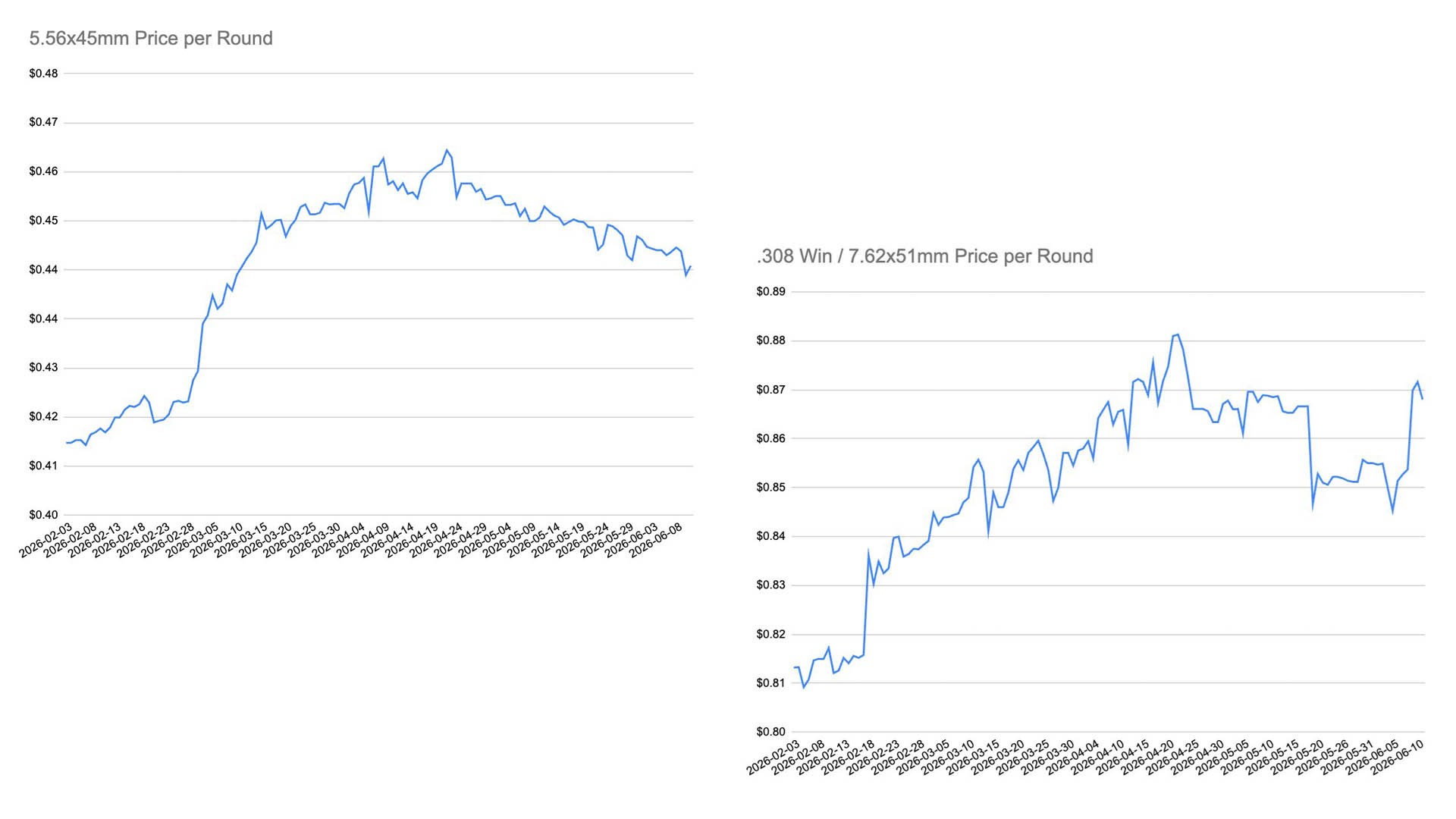
All the websites are a great resource for budget-conscious enthusiasts. The charts are a welcome feature for enthusiasts too busy to monitor trends, particularly those catalyzed by unexpected events, including viral social media posts.
We contacted Hilton Hart, founder and CEO of Caliber King, and asked for additional information. His company compiles ammo prices from 186 online retailers and updates the information every 10 minutes (when the store’s feed allows).
Impressive, but do the company’s charts reflect the price bump that followed joint strikes conducted by U.S. and Israel on Iran on February 28? As seen in the charts Hart provided above, they do.
There’s something more interesting with closer inspection. For some reason, the average price of 7.62 NATO rose faster than 5.56 NATO. In both cases, there was window of a week or two to confirm suspicions and hopefully avoid inflated prices. Admittedly, the cost didn’t skyrocket like it did during the COVID-19 pandemic, although the accelerating trend is reflected very well in the graphs.
BulletScout launched in June of last year. Caliber King opened its doors in early 2026. They and others reflect a quietly growing high-tech trend for enthusiasts, providing resources to help stay in front of the next ammo shortage—and inflated prices—or the budget if they’ve waited too long to hit the “Buy Now” button.
Most Popular