Defensive handgun shooters spend a lot of time practicing presenting their handgun to the target. The draw stroke should be practiced often, and you should be able to conduct it quickly and smoothly. What is often overlooked in practice sessions is holstering. This is the primary reason many self-inflicted gunshot wounds occur while holstering; shooters either do it wrong or do it in too much of a hurry. There is a proper technique to holstering, and, if done correctly, it’s very safe.
The first rule when holstering a handgun is to not be in a hurry. It might be imperative that you get your gun out fast, but it is never critical to holster it with the same speed. When you decide it’s time to holster your handgun, take a deep breath, consider if there are any ammunition concerns that need to be addressed, and then—and only then—begin the holstering process.
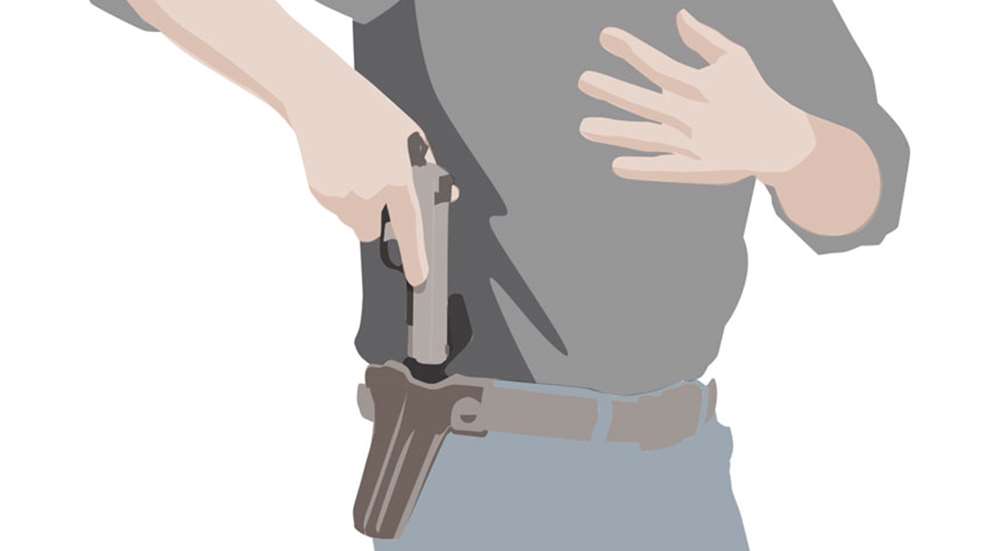
The first thing you want to do is remove your finger from the trigger and place it alongside the frame of the handgun. Then, bring the gun into your workspace, close to your body at chest level. At this point, if the handgun is equipped with a manual safety or decocker, you can activate it. Now it’s time to remove your support hand from your two-hand grip. When you do so, place that hand flat against your chest this will prevent any chance of covering that hand with the muzzle of the handgun.
Now, begin rotating the handgun 90° toward the ground as you move it to a position directly above the holster. If you’re wearing a cover garment you can extend the thumb on your shooting hand to sweep it out of the way. Once the handgun is directly above the holster, reconfirm your trigger finger is out of the trigger guard and alongside the frame, and then slowly lower the handgun into the holster.
Once the handgun is fully seated in the holster you can release your grip on it with the shooting hand. If your holster has any retention devices such as a thumb strap you can now secure them. If it takes two hands to do so, that’s fine; remove your support hand from the center of your chest and lock the security devices in place.
Most Popular