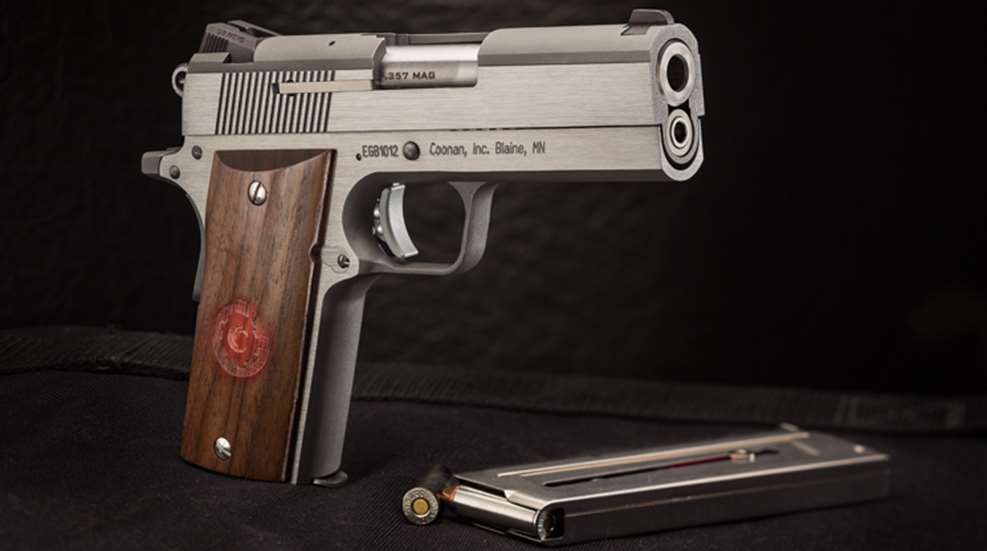
About a quarter-century ago, we were awash in magnum semi-automatic pistols—AutoMag, Wildey, Grizzly, Desert Eagle, Coonan, etc. The semi-automatic pistol in general was achieving greater shooter acceptance and more people than ever before were actually shooting. Magnum semi-automatics were either recoil- or gas-operated and were invariably big, heavy guns. Moreover, they fired such stout cartridges as the .475 Wildey, .50 AE, 10 mm Auto and .45 Win. Mag., as well as the so-called “revolver” magnums. Recoil, noise, weight and expense (both ammunition and gun) worked together to kill the popularity of the idea. Only the Desert Eagle and the recently reintroduced Coonan are available today. It is a new variant of the Coonan called the Compact that is the focus of this review.
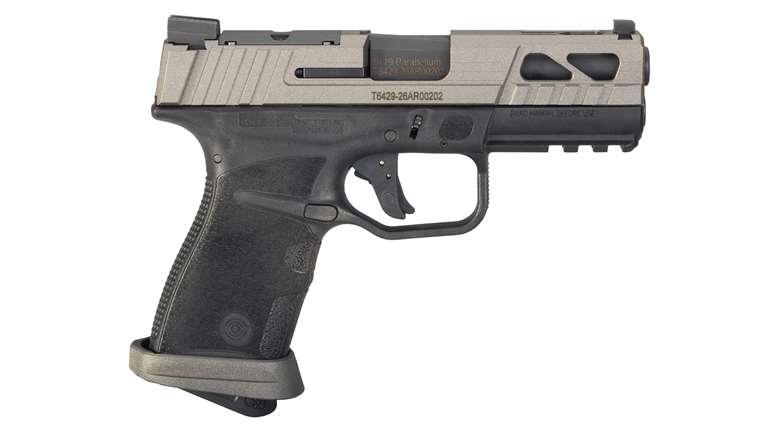
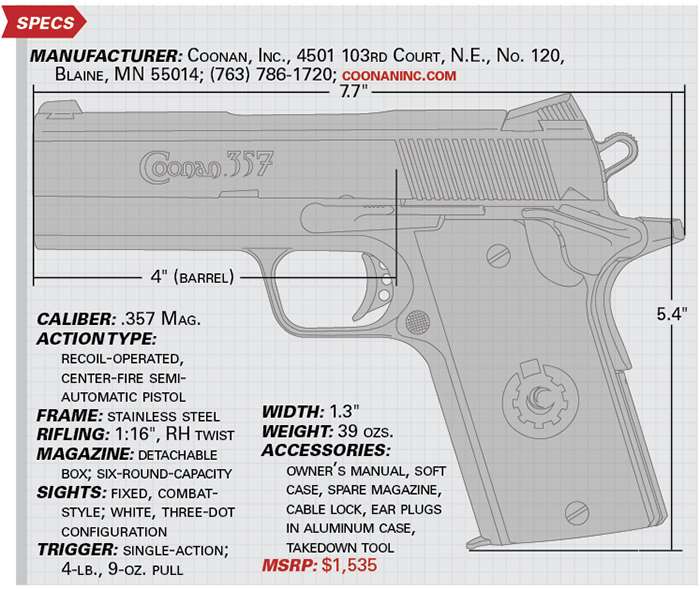
Designed and developed by gun designer Dan Coonan, and eventually produced by the Minnesota firm bearing his name, the Coonan pistols were chambered for the .357 Mag. cartridge. First the Model A, followed by an upgraded Model B, quickly gained a following for this well-made pistol. Dan Coonan eventually left Coonan Arms and, shortly thereafter, the company closed its doors. Coonan is now back and in full control of products and operations. The Coonan Compact pistol is a somewhat smaller and easier to carry version of the full-size Coonan Classic. At 39 ozs. and measuring 7.7"x5.4", it is still a pretty hefty pistol likely to find use more as a sportsman’s gun, or even as a home-defense pistol, than as a concealment piece.
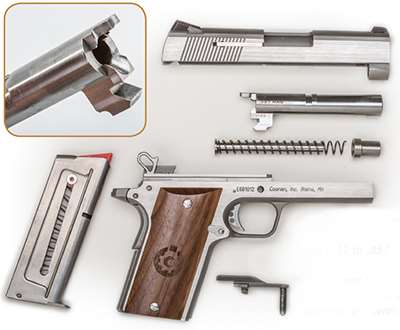
The .357 Mag. cartridge has a body diameter of 0.379", but the rim measures 0.440", which means the interior width of the magazine must accept the larger rim dimension. This leaves the forward end of the cartridge with more lateral space than it needs. To control it in the course of the cycle, Coonan swaged matching ribs into the outer walls of the magazine. They contact the cartridge close to the case mouth and just where the curve of the ogive begins. This confines the cartridges to radial movement, with the rim of the higher case just forward of its lower mate.
A red polymer follower positions the column of cartridges at a steep upward angle, so the top round has an almost straight run into the pistol’s chamber. Despite the clever engineering, the Coonan butt section is still much longer front-to-back than most pistols. Small-handed shooters might struggle with that aspect of the gun. If the shooter is familiar with the manual of arms for the Colt M1911-style pistols, he or she should be right at home with the Coonan. It is a single-action semi-automatic with controls that do the same thing—and are in the same place—as the .45-cal. service pistol. In fact, the Coonan website advises that there are 18 parts common to the two pistols. That includes the hammer and other lockwork parts.
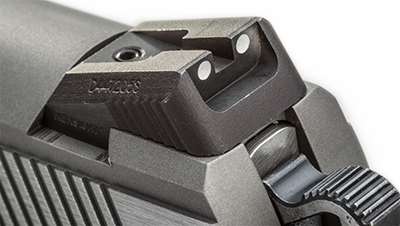
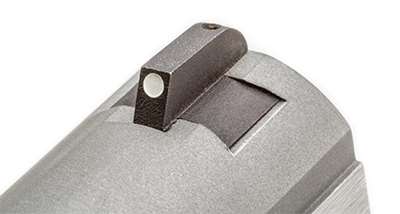
While the company’s main product is the full-size Coonan Classic, the Compact is shorter in overall length by a full inch and by about 1/4" in height. The pistol has a bearing of rugged quality, as it is comprised of almost 2½ lbs. of stainless steel. Shooters will also note that the single-action trigger pivots, and our sample exhibited a clean break at just under 5 lbs. Novak-style sights are dovetailed into the slide’s top and are of the three-dot pattern. Also, there is an external extractor on the right side of the slide, just to the rear of the ejection port. The Compact’s considerable recoil is handled by a powerful recoil spring mounted on a full-length guide rod under the barrel.
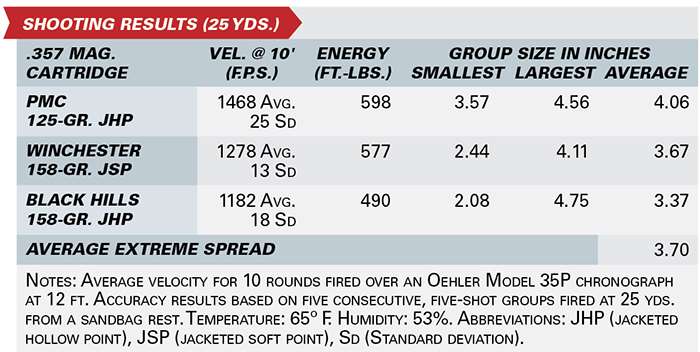
After initial familiarization firing with a variety of commercial loads, we ran the Coonan Compact through a 25-yd. accuracy evaluation—five consecutive, five-shot groups from sandbags with three different loads. There were two types of malfunctions. On four occasions during the 75 rounds, the pistol failed to extract the fired case from the chamber. This would be a serious malfunction in a tactical situation. There was also one failure to return to battery. As we might expect from a semi-automatic pistol chambered for a magnum cartridge, where the axis of recoil thrust is well above the shooter’s hand, recoil was stout, but by no means unbearable. The Coonan Compact’s main appeal is as a powerful handgun for field shooters who just have to have a .357 Mag. semi-automatic pistol. It fills that role.
Most Popular