Colleges and Universities Embrace Youth Shooting
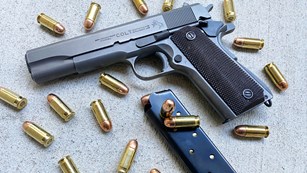
More and more college students are ditching the Xbox One and PS4 for a different kind of trigger time. Instead of shooting pixels, they are going to the range, shooting real firearms and real ammunition in a safe, structured environment. Some are long-time shooters, while others receive their first exposure to firearms while attending college. Regardless, students are finding that putting rounds downrange can have serious benefits in the classroom, too. Competition shooting has always been popular on certain campuses, and it appears the number of schools fielding teams is on the upswing. Today, nearly 200 colleges and universities have teams competing in various leagues or club circuits, and they including rifle, pistol and shotgun disciplines.
While NRA has worked closely with collegiate shooting programs for nearly a century--and has reported on it in American Rifleman and Shooting Sports USA monthly magazines--every so often the “mainstream” media catches wind of the “trend” or “surge” and subsequently grapples with reasons why bright young Americans might want to be involved in such activities. A recent article by Michael S. Rosenwald in The Washington Post, seemed to suggest collegiate shooting might represent an episode free of parental authority. Reported Rosenwald, “… there is a surge of new interest from students, both male and female, finally away from their parents and curious to handle one of the country’s most divisive symbols. Once they fire a gun, students say they find shooting relaxing—at MIT, students call it ‘very zen’—and that it teaches focusing skills that help in class.”
The shooting industry has long provided major support to foster collegiate participation in the shooting sports. The NRA created the All-American award in 1936 to honor top collegiate shooters, and the NRA administers the National Intercollegiate Championships in rifle and pistol. NRA also offers a free guide for developing a scholastic shooting program. The National Shooting Sports Foundation (NSSF) offers up to $100,000 in grants ($10,000 per institution) for colleges and universities seeking to establish a shooting program. In 2013, the MidwayUSA Bianchi Cup Scholarship Program gave lucky collegiate shooters a chance to compete side-by-side with the top handgun shooters in the world, all expenses paid.
Colleges are embracing such initiatives, and participation has skyrocketed. Rosenwald wrote, “… the growth has been phenomenal. The upcoming collegiate clay target championships—George Mason [University] has won 11 titles, including in 2013—has swelled from a few hundred shooters in 2010 to more than 700 this year.” Collegiate shooters from 17 different schools qualified for the 2015 NRA Intercollegiate Pistol Championship, to be held at Ft. Benning, Georgia this March 22-27.
Most Popular