In the era of bullseye shooting that started before World War II, the revolver was king. In those days, most folks shot either Colt or Smith & Wesson. Eventually, gunsmiths came up with ways to accurize the 1911, and then other autos surfaced and the revolver began to fade. Before it completely vanished from the competition arenas, some pretty accomplished craftsmen went to work on properly stocking the wheelgun.
Steve Herrett was well known to shooters of the ‘60s and ‘70s. He placed his first ad in 1955 and, while he built both pistol and revolver stocks, he was best known for fitting target revolvers. Herrett was a very prolific maker and came up with a number of original designs. Before him, there was Walter Roper, who employed a couple of different craftsmen to build grips to his design. Today, Roper grips are much-sought-after collector’s items. And then there was Sanderson.
Lew Sanderson was a gripmaker of that same golden age of the revolver. A Midwesterner, Sanderson is not as well known as the others or properly appreciated, but he made many fine sets of grips for target revolvers. For a time, a son carried on that tradition. Sanderson also delved into the world of combat grips. In those days, virtually every cop in America went to work with a Colt or S&W revolver on the belt or under the arm. Some of them were real shooters and knew that good grips made the gun handle better. But they were also aware that grips could not be bulky. Sanderson and the other makers all worked in the defensive revolver field.
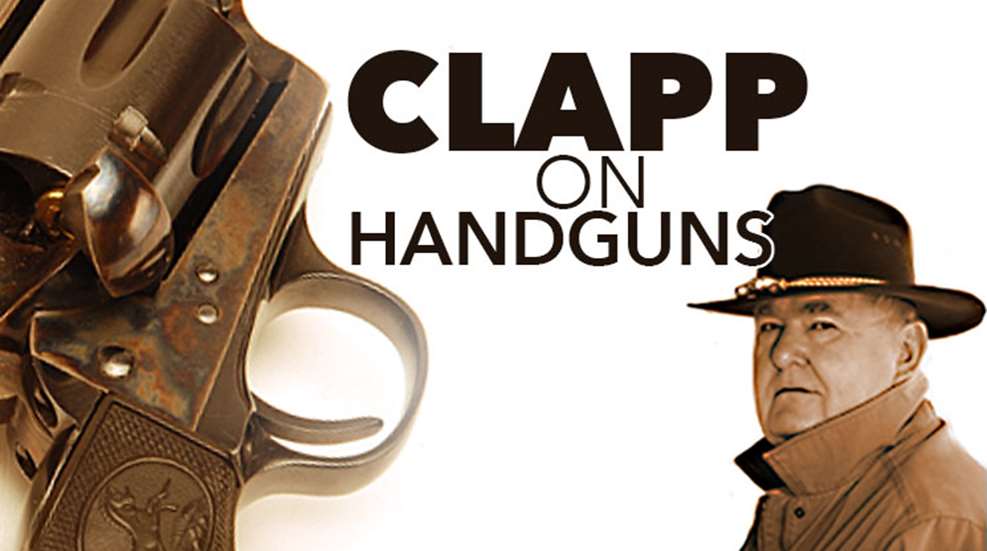
The pictured revolver is a S&W .38-44 Heavy Duty—the heaviest .38 Spl. that Smith ever made. It was a workhorse from the time of its introduction in the ‘30s until the mid-60s. Although the samples pictured are scuffed and battered, they still provide a good example of what a craftsman can do with a chunk of good walnut. Almost all combat grips use a bit of wood behind the trigger guard. For really big hands, they may completely enclose the revolver’s backstrap. Most shooters are better off with an open backstrap and so it is with this set of Sandersons. However, note that there is not one bit of excessive or unnecessary material left on the grips. Also note the gentle palm swell that has been worked into the cross section of the grip, as well as the full coverage checkering pattern. These Sandersons are fine specimens of the gripmaker’s craft.
Most Popular