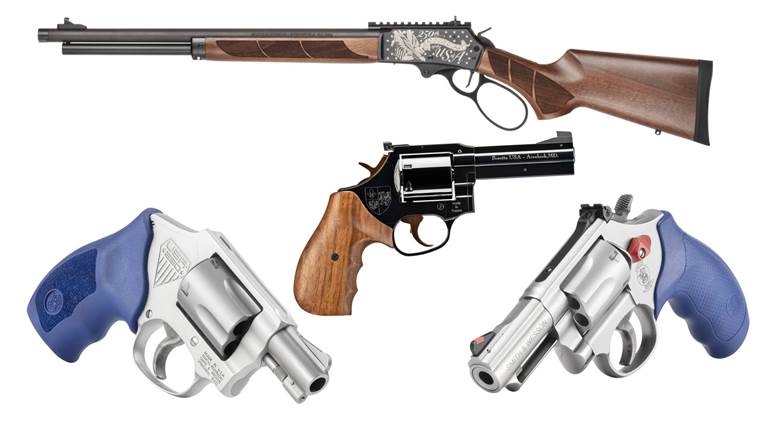
I love that old saying about “what goes around, comes around.” It means that history runs in cycles and what was once popular might be popular once again. We went through a long cycle of interest in larger, more powerful handguns for just about every use, including personal defense and concealed carry. The present conventional wisdom holds that the concealed-carry handgun must be small and light, but adequately powerful. To accomplish this, gunmakers have evolved both the conventional pistol and the even older revolver designs to new guns that fill the bill. All three of the major wheelgun makers now offer a light powerful snubnosed revolver with a polymer frame—Ruger LCR, S&W Bodyguard, Taurus 85PLYB2. The new designed automatics are so numerous as to be hard to enumerate.
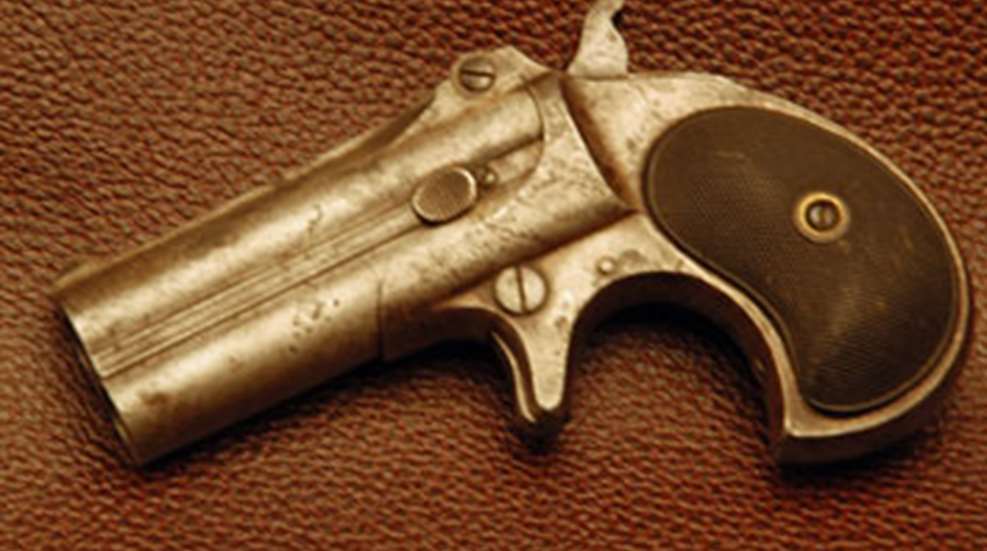
But there is another older design that has yet to be dragged into the modern materials and new styles era. The derringer was originally described as a one-shot caplock named after the first maker, Henry Deringer of Pennsylvania. This was once a popular gun, and when the cartridge era came about during the Civil War era, the simple derringer was one of the first types of guns to be used for this new cartridge. Generally speaking, the derringer was a small, light, short pistol with up to four barrels. They were popular enough to have been made by dozens of makers, including both Colt and Remington.
Arguably the best known derringer was the Remington over-under in .41 Rimfire. This gun was in the Remington catalog from its inception in 1866 until 1935. Hollywood would have us believe that this gun was used by everyone from riverboat gamblers to working girls. Paladin routinely produced one from behind his gunbelt buckle and John Wayne, as J. B. Books, had one alongside his wallet, so there is considerable justification for picturing the gun as what was used on the Frontier. Are we about to see a renaissance of interest in the stackbarrel handgun with modern calibers and materials?
I have no great insight for such a thing on the horizon, but I recall an all-steel derringer coming from a California distributor in the mid-80's. It had a DAO trigger system like the even earlier High-Standard .22 Win. Mag. gun, and was chambered for the.38 Spl. Several ammo manufacturers have developed short-barrel loads in popular pistol and revolver calibers. A modernized and lightweight (alloy? polymer?) twin-barrel gun in 9 mm Luger or the venerable .38 Spl. sure seems workable to me. It would not be competitive with revolvers or semi-autos, but it would be much easier to hide and carry. Most personal attacks involve a single attacker and our hypothetical little gun would get it done when used skillfully. Anyway you look at it, it's better than nothing, and it could be pretty inexpensive.
Most Popular