Increasingly, I am getting questions from readers who are obviously new to the world of guns in general and handgunning in particular. That's fine with me, because the sport is in danger if there isn't interest on the part of new shooters. I want handgunning to thrive for tomorrow's shooters, as well as for the continuing enjoyment of today's. Sometimes, the newcomers are a little reluctant to ask questions, for fear of sounding ignorant. Ignorance is a reversible condition—all it takes is information, which reminds me of the adage: “The only dumb question is the one that's never asked.”
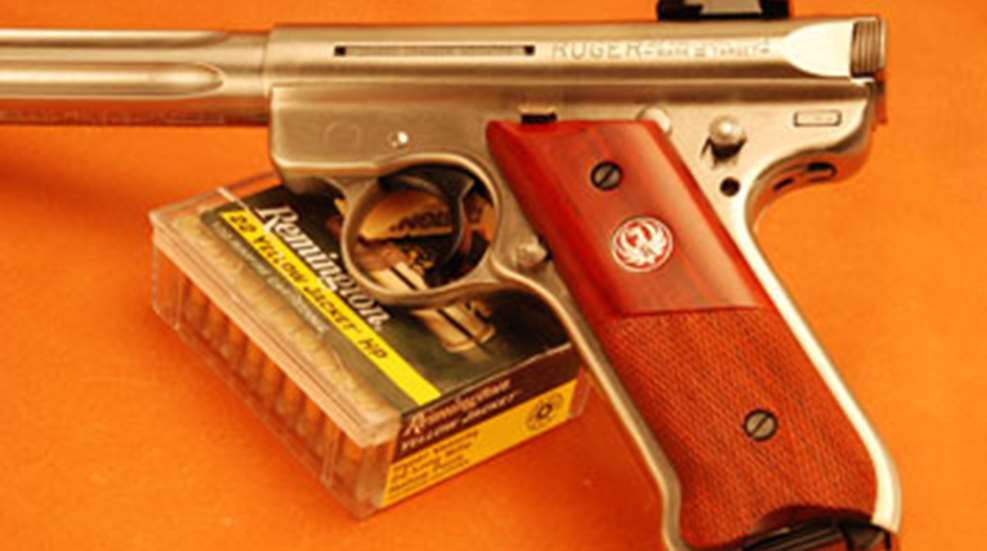
At the very beginning of a person's interest in the handgun, the question almost always is “What handgun should I buy to learn with?” Without exception, I believe that everyone should begin with a quality handgun chambered for the venerable .22 Long Rifle cartridge. There are several specific reasons why this is true. Certainly the most immediately obvious is expense. Shooting is a sport in which skill develops through repetitive practice. Shooters know how expensive center-fire ammo has become, but a little competitive shopping also shows that a brick (500 rounds) of plain .22s can be had for about the same cost as a full box of .45s. If your learning sessions concentrate on the basics of stance, grip, sight alignment, trigger control and follow through—as they should—it doesn't matter what caliber you’re shooting. Developing an understanding of the basic process and skill in applying to a given situation is the same with a .22 as it is with a .44 Mag. Also, using a .22 as a learner removes one distracting element from the practice session—recoil.
Now don't confuse basic handgun marksmanship ability with any form of advanced handgun shooting skill. For example, defensive shooting is best done with a pistol or revolver that is carefully chosen for that role. Here, the on-target effect requires more energy than .22s are capable of delivering. The same is true of many forms of handgun hunting and there are several forms of shooting sports that require heavier calibers. Obviously, your learning tool isn't good for this kind of work, but not all of handgunning is the white-knuckle stuff. If your .22 helps develop your overall ability to shoot, it has done its job. Finally, I would have to tell you that I know a whole lot of pretty macho dudes who still get a lot of enjoyment out of popping pine cones or dirt clods with a plain old .22.