My first shotgun was a Remington 1100 12 gauge, which I purchased with my father's help when I was 11 years old. Shortly after, I carried that wood-and-blue beauty on my first dove hunt.
Although I didn't do very well that September day, shooting the iconic shotgun with its high-gloss walnut wood stocks and rich blued metal made me feel like I was missing the birds in style.
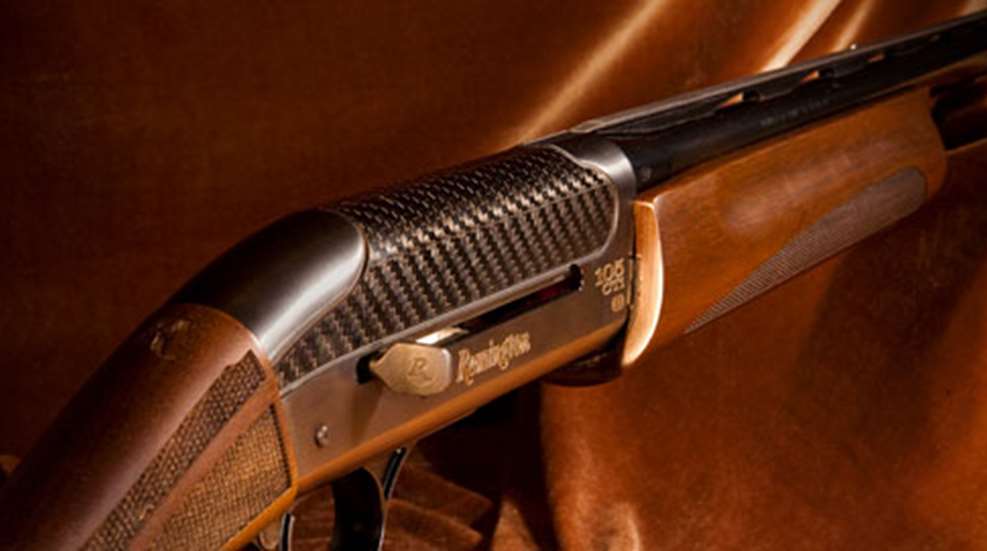
Sitting in a sunflower field in Maryland clutching Remington's new 105 CTi II brought back some of the emotions from that first time out, even though these are two different shotguns, and I'd like to think I'm a much better shot these days.
The 105 CTi II is Remington's latest entry into the shotgun market and is an upgrade on their 105 CTi semi-auto shotgun design. Remington claims the 105 CTi II to be "the lightest, softest-shooting 12-gauge semi-auto we've ever built." Designed more for carrying in the field rather than dragging through the woods, the 105 CTi II comes with satin-finished wood stocks and a rich polished-blued barrel. The CTi II is sleeker and lighter than my old 1100, but maintains the quality look and feel of a Remington semi-auto shotgun. The receiver is skeletonized titanium covered with a carbon-fiber shield to reduce weight to 7 pounds in the 28-inch barrel model while maintaining the strength to handle heavy 3-inch loads.
One interesting feature of the CTi is its "Double-Down" feed and ejection system, which loads and ejects the shells at the bottom. According to Remington, this "produces no peripheral distraction from ejecting shells." While this makes the 105 CTi ambidextrous, I don't see the problem with side ejection. I've never noticed the ejecting shell as I've born down for a follow up shot with my 1100 or another semi-auto shotgun.
The CTi II's feed system also helps speed up the loading process when it's empty with the slide locked back. From that position, the shooter only has to slip a shell into the magazine, and when the thumb slides off the back of the shell, the CTi's loading system automatically flips the shell into the chamber and closes the bolt. After filling the cylinder magazine with the appropriate number of rounds, the shooter's ready for whatever targets fly by.
However, loading the magazine is probably the hardest part of using the 105 CTi II. With most shotguns, I can slide additional shells into the magazine without thinking while watching incoming doves. Most of the time I had no problem loading the CTi II, but occasionally, when I was in a real hurry, the front end of the shell would catch the edge of the magazine opening, forcing a quick manipulation of the shell to seat it in the magazine. While this wasn't a big problem, there were a couple of times when I missed opportunities for shots as I was trying to get shells into the gun.
The 105 CTi II fit me well, but for those taller or shorter shooters, it comes with a Length-of-Pull Kit that allows 3/4-inches of adjustment from 14 1/4 inches to 15 inches in quarter-inch increments to ensure proper fit even when wearing heavy cold-weather clothing.
After three days of hunting on different fields, along with numerous test shots on the range, the CTi II proved to be reliable and quick for follow shots. No adjusting was needed to swap between light and heavy loads, and the gun only malfunctioned once during loading. The malfunction was easy to fix and never repeated, giving me the impression that I somehow caused the problem.
With its overbored barrel and heavy recoil pad, recoil was expectedly light using 2 3/4-inch field loads by Winchester and Estate. Heavier 2 3/4-inch loads were also extremely manageable, but heavy 3-inch turkey loads still felt like I was shooting a 3-inch load. Regardless of the load, the CTi II shot fast and reliable.
Remington's 105 CTi II was built as an easy-to-manage semi-auto shotgun for hunters and shooters. With its smooth lines, nice wood and excellent bluing, the CTi II brought back memories of my first shotgun, and the fun I had on my first hunt.
Manufacturer: Remington; (800) 243-9700; Remington.com
Gauge: 12, 3-inch
Action: Semi-auto
Receiver: Skeletonized titanium with carbon fiber shield
Barrel: Overbored: 28 inch (tested); 26 inch
Chokes: Three Rem chokes; full, modified, improved cylinder
Trigger pull: 6 pounds
Overall length: 48 1/4 inches
Weight: 7 pounds
Accessories: Hard plastic case; choke tube wrench; Length-of-Pull Kit; trigger lock; manual, magazine plug
Suggested Retail Price: $1,559
Most Popular