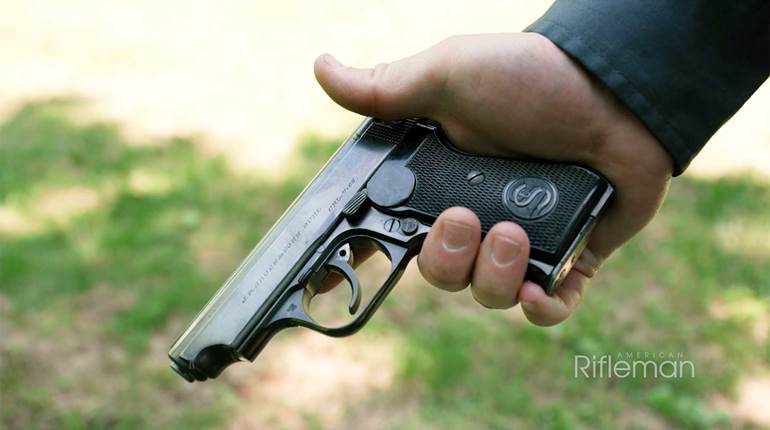
I’ve carried a pocket pistol for years, but rarely as my primary defensive tool. For me, it’s always been more of a backup—the kind of firearm that lives quietly in the margins of a daily carry system, present but never the centerpiece. It’s there for when the fight is closer than comfort, when my strong hand is tied up or when my primary handgun is no longer an option.
In today’s market, I find pocket pistols less appealing than I did five years ago. That’s partly because of their inherent limitations, but also because of the rise of hard-use, micro-compact pistols that can bridge the gap between a primary and a backup gun. The times I’ve relied solely on a pocket pistol have been limited, but not zero. Back when I carried a compact or full-size pistol as my primary carry, dropping down in size improved comfort, and in some cases, it was one of the fastest and safest ways to address a threat inside the house, where I spend more of my time these days.
Carrying a small handgun, tucked away in my back pocket, has taught me a lot about what these little pistols can and can’t do. And while the romance of a tiny, always-there gun appeals to many, I’ve learned they have hard limitations that can’t be ignored. Anyone making a pocket pistol a part of their defensive plan must be realistic about its capabilities, intentional about training and selective about gear.
Minimum Performance Standards: Why “Small” Can’t Mean “Weak”
One of the biggest mistakes people make when selecting a pocket pistol is choosing something so small or underpowered that it falls short of what’s actually required in a violent encounter.
For me, the benchmark has always been the same: Can the pistol meet the minimum performance standards I expect from any defensive firearm? Reduced size may mean reduced performance; there is a floor we must recognize.
That means:
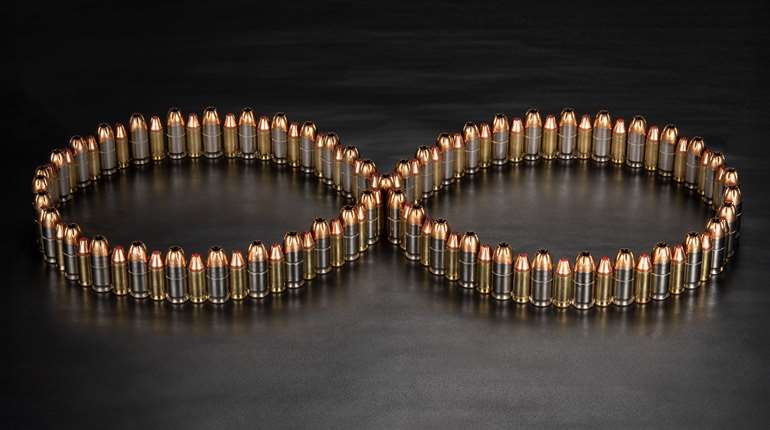
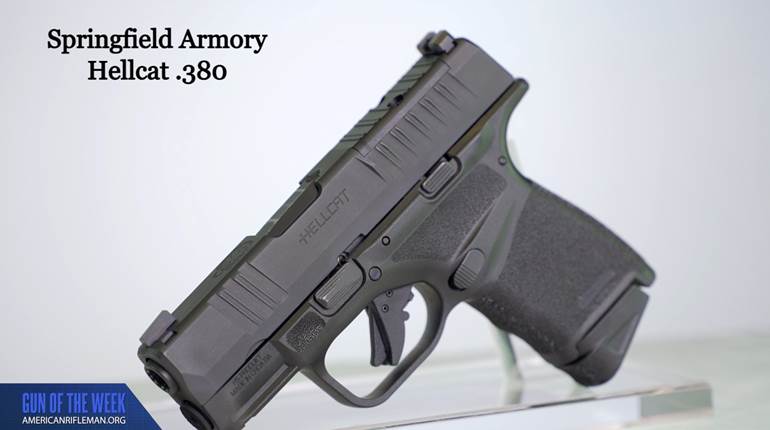
Adequate caliber: A cartridge that can reliably penetrate to defensive depths in ballistic gel, even through clothing. While .22 LR and .25 ACP pistols have their place in certain niche roles, they simply don’t meet many defensive minimums. For me, that means starting at .380 ACP, with a strong preference for 9 mm.
Sufficient capacity: I want at least eight rounds on tap before a reload. Violent encounters don’t happen in slow motion, and a handful of shots may not be enough if you miss under stress, if there’s more than one attacker or if the fight isn’t over in few seconds.
Reasonable accuracy potential: A defensive pistol, even a small one, must allow for quick, repeatable hits at realistic distances. I want to be able to keep rounds in a 4-inch group at 5 to 7 yards during rapid-fire and make reliable hits within 10 inches at 15 to 25 yards when shooting slowly.
These criteria may sound like a tall order for something that disappears into your pocket, but that’s the point. If your gun can’t deliver, it’s not a defensive asset—it’s a false sense of security.
Mode of Carry: Pocket Carry’s Advantages and Complications
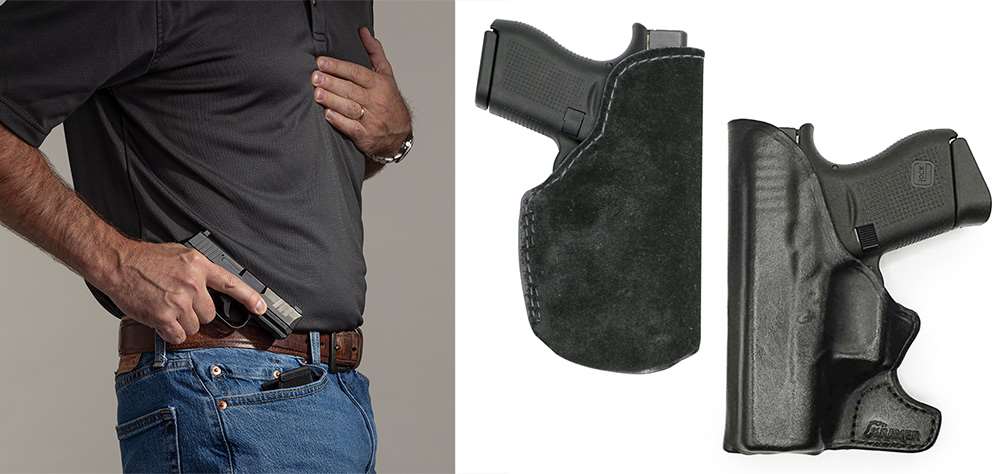
Pocket carry has undeniable strengths, especially for a backup gun. The biggest advantage is deep concealment with instant accessibility. If my strong hand is busy fending off an attack, holding a loved one or restraining a suspect, I can often get to my back-pocket pistol with my weak hand. This “support-hand draw” capability is worth its weight in gold, especially in close-range fights where getting to your primary firearm is difficult or impossible.
It also excels in situations where drawing a larger pistol would draw unwanted attention. I can have my hand resting naturally on the grip while the gun stays fully concealed. If I sense danger but don’t yet have a legal or tactical reason to draw, this lets me discreetly prepare. Until the ball drops, I’m just another guy with his hand in his pocket.
Pocket Carry is Not Without its Complications
Draw-speed limitations: Even in the best-case scenario, a pocket draw will almost always be slower than a strong-side IWB holster draw.
Seating and movement issues: Sitting on a back-pocket gun can be uncomfortable, and some chairs or vehicle seats can trap the pistol in place.
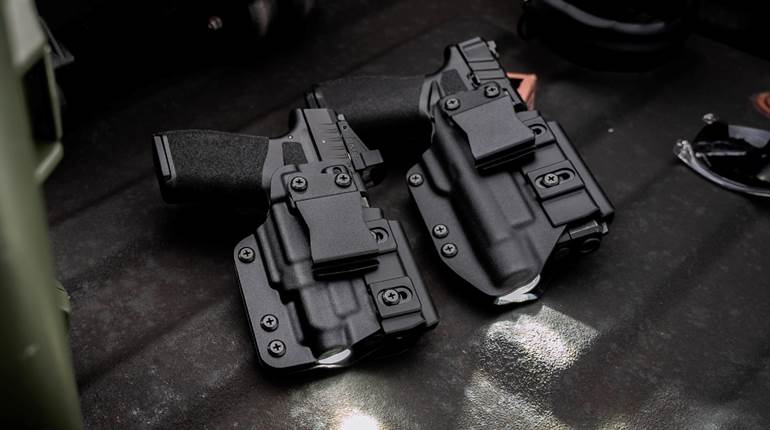
Holster dependency: Pocket carry demands a well-fitted holster that fully covers the trigger guard and is rigid enough to prevent anything from moving the trigger rearward while the pistol is inside. This isn’t optional; it’s a non-negotiable safety requirement.
A pocket pistol must ride in the same position every day, in a holster that protects the trigger and allows a clean draw without the holster coming out with the gun. Skipping this step invites negligent discharges and failed draws, both of which are unacceptable in a real fight.
Training for Two Guns: Twice the Skill Maintenance
One of the least-appreciated challenges of carrying a pocket pistol as a backup is the training burden. If you’re carrying two different pistols—for example, a duty-size semi-automatic in a strong-side IWB holster and a small, lightweight semi-auto in your pocket—you’re committing to mastering two different systems.
Differences Can be Subtle or Glaring
Trigger feel and break: A pocket pistol often has a heavier or longer trigger pull, which changes your shooting cadence and can cause accuracy issues if not practiced.
Sight picture: The smaller sight radius on a pocket pistol means aiming errors can be magnified (or the rudimentary nature of the sights (if any) complicates matters altogether).
Recoil impulse: Lightweight pistols in defensive calibers have snappier recoil, which can cause shooters to slow down or lose control if they don’t practice regularly.
Manipulation and reloads: A small pistol often requires different grip techniques to manage slide manipulation with limited surface area.
If you’re not training with both pistols to a high standard, your proficiency will degrade. Under stress, your brain will default to the motor patterns you’ve reinforced most recently, and, if those patterns don’t match the pistol you have in hand, the results can be disastrous.
I run a dedicated “BUG (backup gun) drill” session a couple times a year, where I focus exclusively on my pocket pistol. I shoot one-handed with both hands, practice drawing from the pocket and work reloads and malfunction drills. I’ve learned the skills you need for a pocket pistol are as important as those for a primary; they’re just harder to maintain because of the gun’s size and handling quirks.
Recommendation: The Ideal Pocket Pistol Setup
Here’s my distilled advice for anyone looking to add a pocket pistol to their everyday carry after experimenting with them for so many years:
Caliber and Capacity: Go with a small semi-auto in 9 mm with a minimum of eight rounds. This combination provides a proven defensive cartridge with adequate terminal performance and adequate firepower.
Reliable Platform: The pistol must run reliably with your chosen defensive ammunition. Reliability testing isn’t optional. Run at least 200 to 300 rounds of practice ammunition and 50 rounds of defensive ammunition. Ideally, you want no malfunctions before declaring the gun ready.
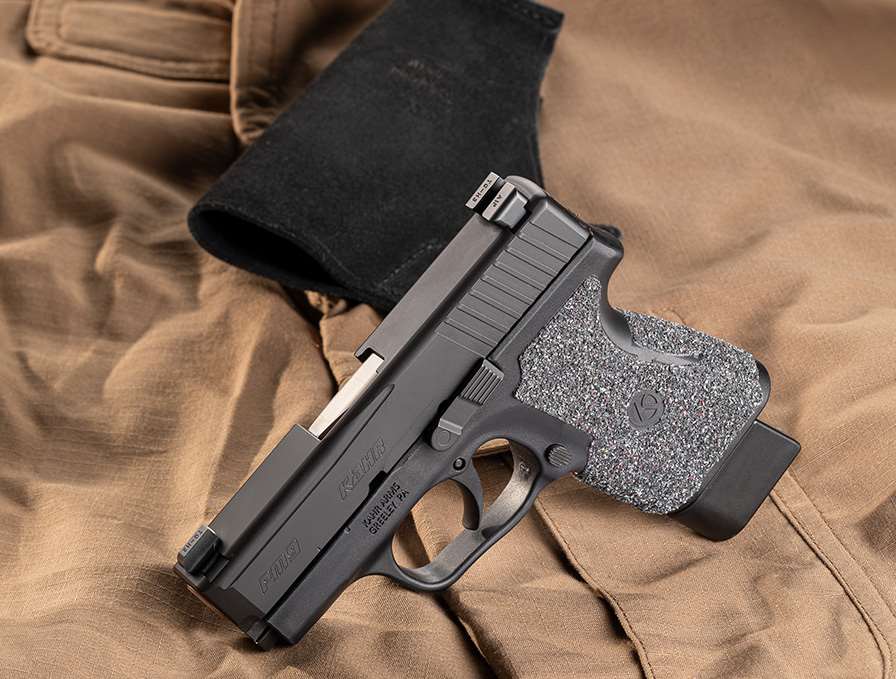
Good Sights and Controllable Trigger: Even though this is a backup gun, you still need usable sights and a trigger you can manage under stress. Consider upgrades if available.
Holster Quality: Use a form-fitting holster designed specifically for your pistol model, optimized for pocket carry. It should be rigid enough to fully cover and protect the trigger, keep the pistol upright for a consistent draw and stay in the pocket when you draw the gun.
Training Commitment: Dedicate dry-fire and live-fire time to the pocket pistol as frequently as resources allow. Include one-hand draws, weak-hand draws and seated draws in your routine.
Final Thoughts
A pocket pistol is not a magic talisman. It’s a tool and, like any tool, it’s only as good as the skill of the person using it. Carrying one as a backup has given me an extra layer of security in situations where my primary handgun might not be accessible, but it’s also forced me to confront the limits of what “small” can do.
If you commit to a pocket pistol that meets minimum performance standards, carry it in a quality holster and maintain your skills with the same dedication you give your primary gun. For me, that means a small 9 mm semi-automatic with at least eight rounds, riding in my pocket; quiet, reliable and ready.