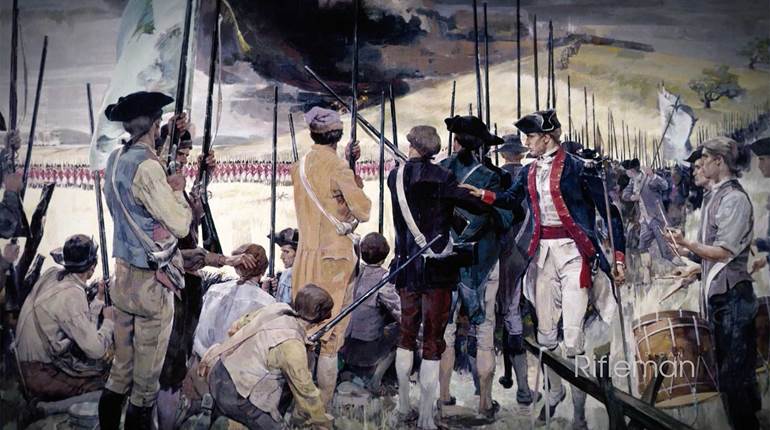
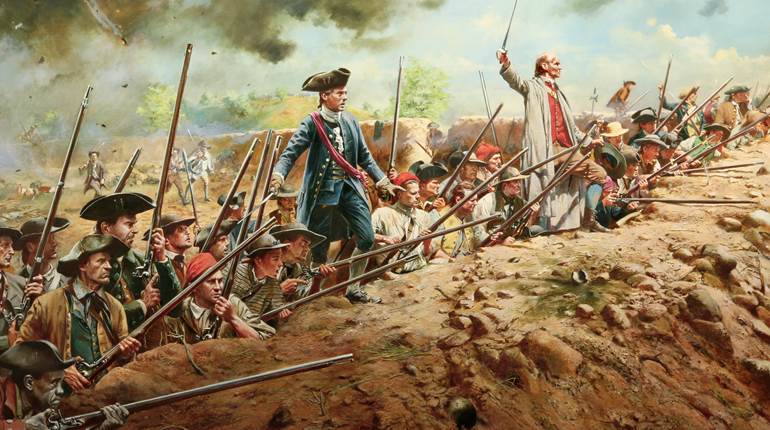
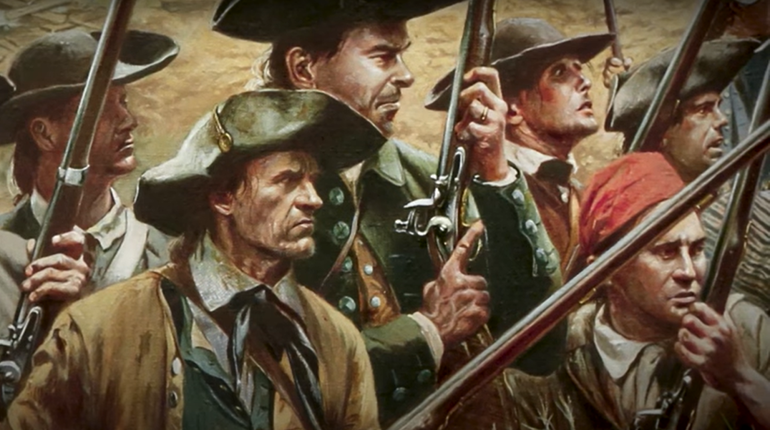
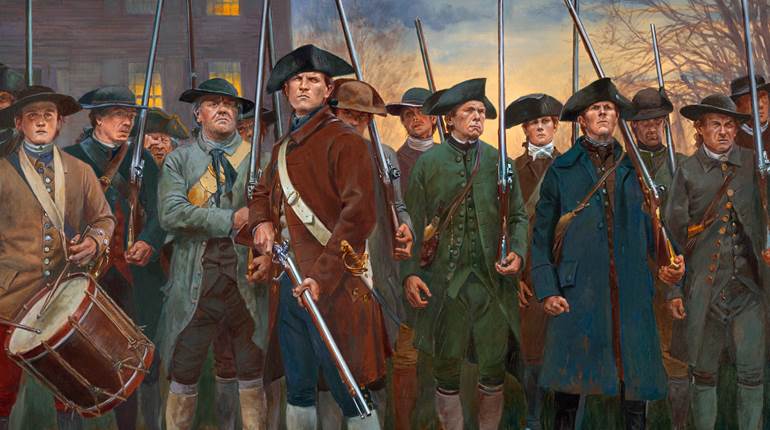
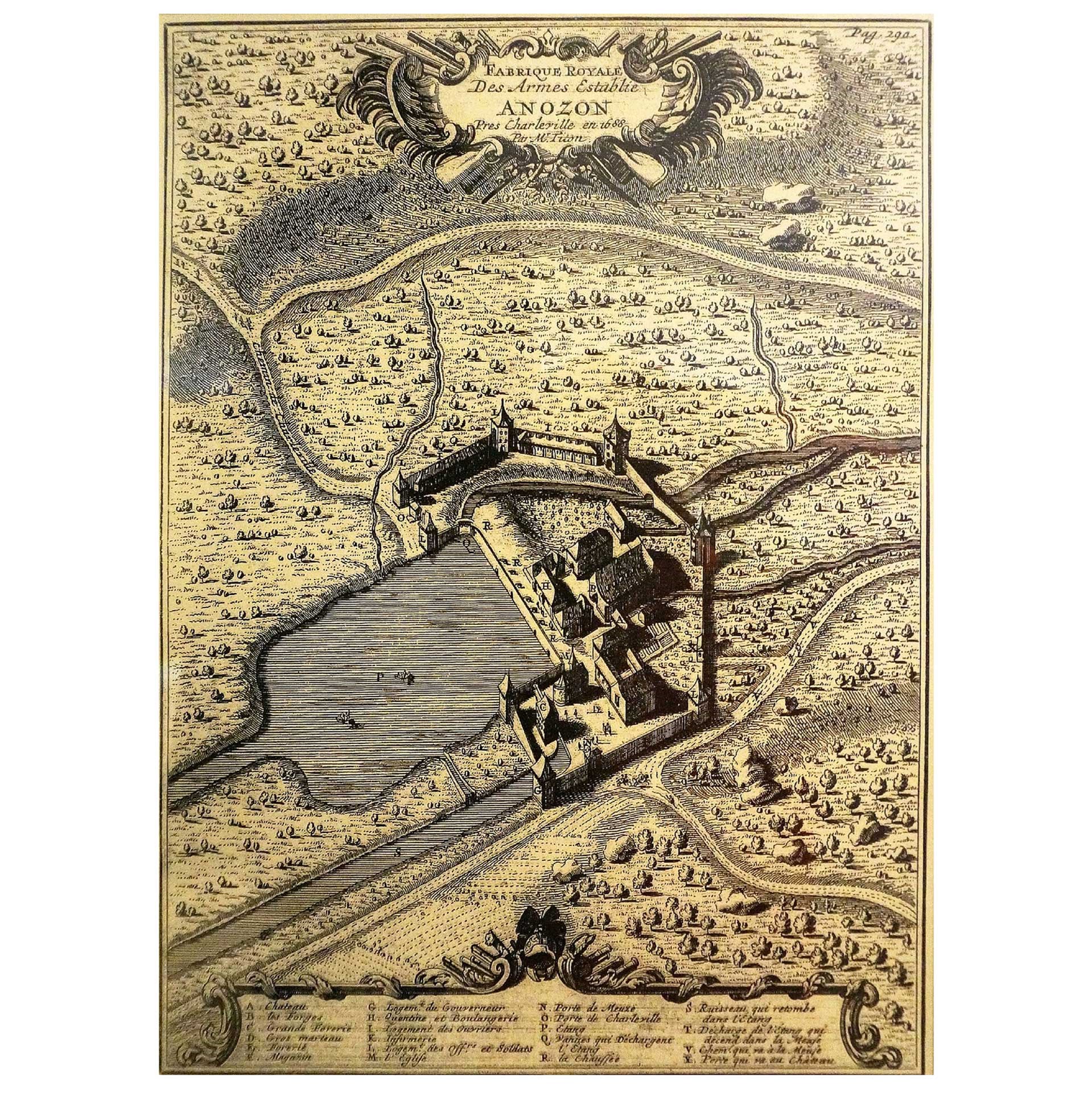
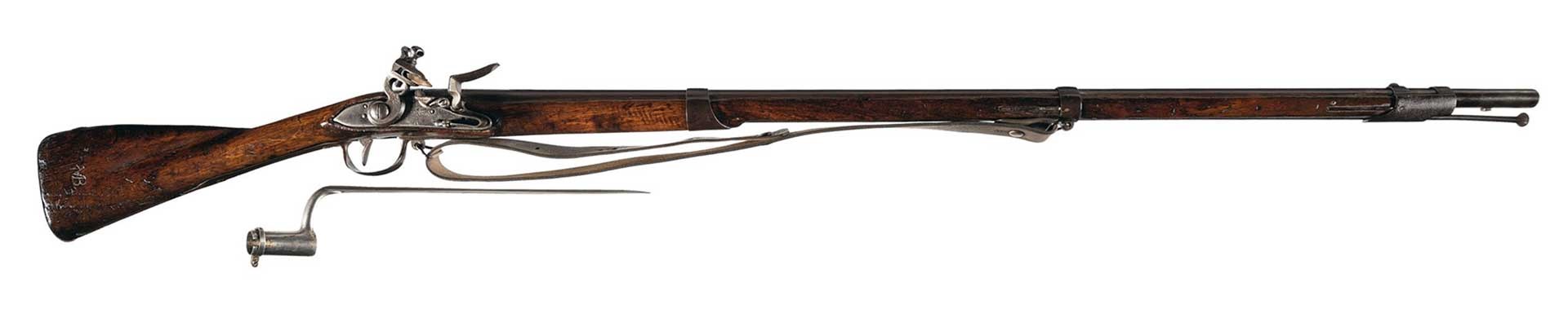
In 1717, the first standardized flintlock musket was supplied to all French soldiers. While identified as a French infantry musket or a French pattern musket, these firearms became known as "Charleville muskets," due to the armory from whence they came, the Charleville-Mézières in Ardennes, France, largely due to the gun's significant presence in and influence on the American Revolution.
As the American colonists’ close ally in the fight against Great Britain, France delivered thousands of “Charleville” muskets to the American government. This was vital in satisfying the deficiency of long guns as a result of Great Britain’s 1774 import ban on firearms to the American colonies. Later, this prohibition was stepped up with seizure of all pistols, long guns and black powder. This removal of arms was deemed, by the American colonists, to be an infringement of their rights.
This further pushed the American populace towards war with England, which finally broke out in April 1775. The Continental Congress was now pressed to seek arms from France. The exact number of Charleville muskets that were imported into America from France is not known, but what is known is that the Charleville musket was a quintessential firearm for the Continental Army. It also solidified France’s steadfast collaboration with America in its fight with Great Britain.
But the history of the Charleville in America goes back further than the Revolution. In 1754, the M1728 musket first was used in America during the French and Indian War and continued to be used long afterward. Evidence of its use lies in an example of this musket, which is the only known specimen with a connection to the state of Delaware. “DEL. State N.C no 94” is found on the face of the barrel. “DEL. STATE N.C.” is imprinted on the wooden butt stock. Both of these are in reference to the state arsenal in New Castle, where these arms were stored following the Revolution.
All muskets of the Charleville pattern were produced in three French arsenals: Charleville, Maubege and St. Etienne. The Charleville musket was first manufactured in 1717, with the M1728 as the second in the line. The barrel of the M1728 was attached to the walnut stock by three bands, whereas the M1717 had only pins. All subsequent versions of the Charleville musket were fashioned with three bands holding the stock and barrel together, and it is these versions that are most closely associated with the firearm's use during the Revolution.
Following the Revolution and in the early American republic, the existing muskets in American military inventory were favored by the Secretary of the Board of War, as well as high-ranking officers, GEN “Mad” Anthony Wayne being one. He was heard to have said of “never wanting to see another rifle, at least not a rifle without a bayonet.” He believed muskets over rifles in most fighting situations. In another case, when Maryland proposed conveying a company of riflemen to become part of the nation’s army, the Secretary of the Board of War stepped in and “declared that while they needed the men, they didn’t need riflemen.” He followed with, “if it were within the means of Congress, the existing rifles in the line would be replaced with muskets.”
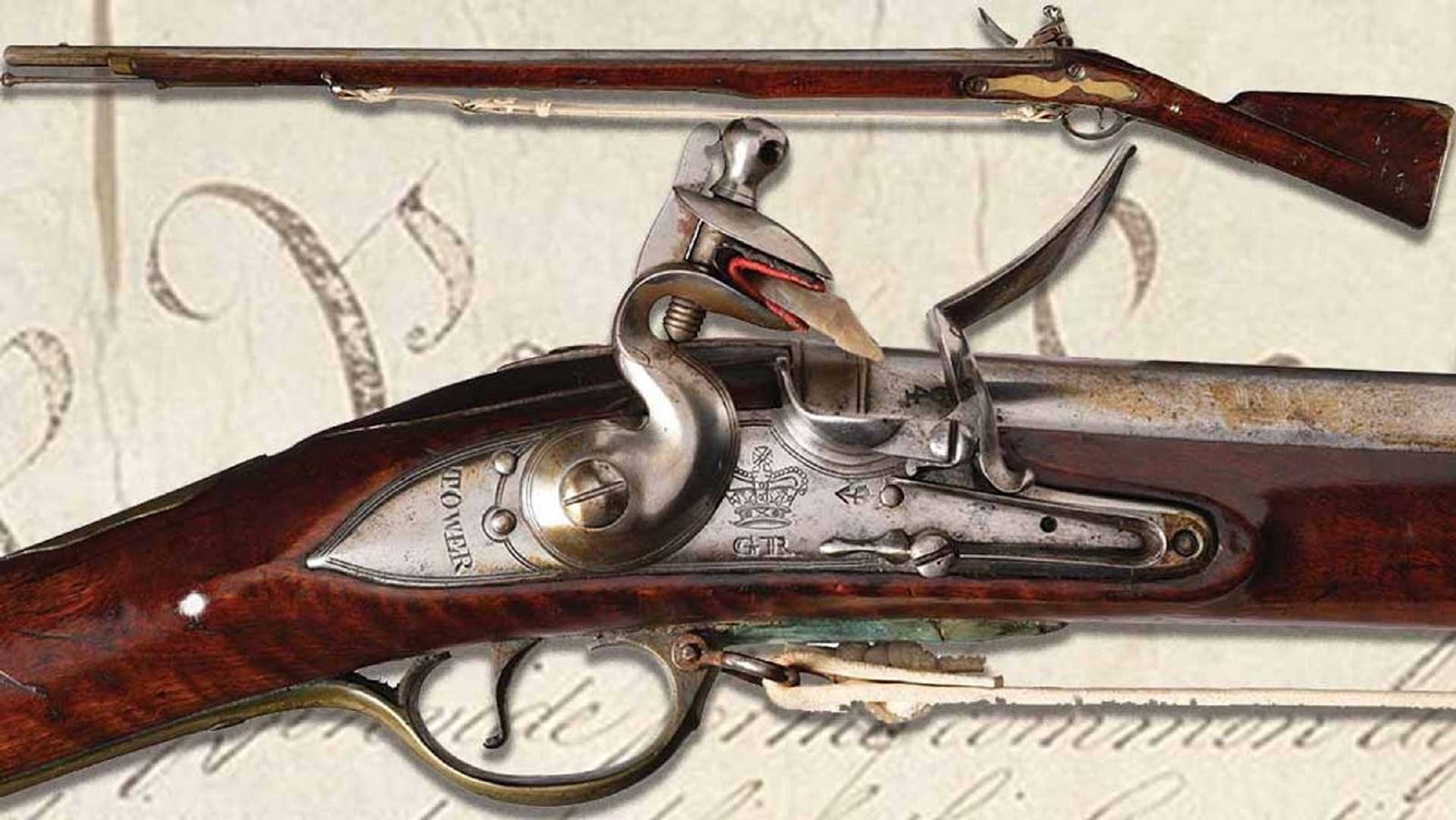
The Charleville's 0.69-caliber barrel was a bit smaller than the 0.75-caliber of the British-made Brown Bess, but the smaller size did not take away from its effectiveness. As a smoothbore musket, those contemporaries who employed the Charleville flintlock musket claimed an accuracy of about 200 yards when firing into a mass of soldiers, and up to half that distance when firing on a single soldier.
Under actual battle conditions, the Charleville muskets would be fired in measured volleys into the enemy’s columns. This could make up for the muskets’ inaccuracy and the soldiers’ lack of shooting skills. The three barrel bands strapping the Charleville's barrel added a robustness to the design. This musket easily surpassed the British Brown Bess musket for sturdiness, as only pins secured the barrel and stock together on the British longarm. The butt of the Charleville musket was described at times as the "patte de vache" (French for "cow's foot"), and could be used as a club in man-to-man fighting.
With an attached bayonet, the Charleville musket was an impressive melee arm. As reloading muskets was a slow process, a bayonet afforded vital defense against fast-approaching infantrymen or stampeding cavalry. With the slow rate of reloading, it was at times practical to employ bayonet charges that would force the retreat of the enemy columns. Equipped with a bayonet, it was impressive as an improvised lance, ordained as such by the Charleville's length and heft. A gun had to be ruggedly sufficient to thrust like a spear or used as a club. At the same time, it needed to be light enough to be handled without difficulty. The Charleville muskets fit the bill.
Over the decades, there were several variations of the Charleville musket. This first model carried the majority of the elements that were shared with all succeeding Charleville muskets, such as the “... .69 caliber barrel, an approximate overall length of 60 inches and an approximate weight of 9 to 10 pounds. The Model 1717 also standardized the smoothbore barrel and flintlock firing mechanism.” But it was not as hardy as the muskets that followed.
Following the French and Indian War, changes were made to this infantry musket. The barrel was reduced from 46 to 44 inches, and the stock's characteristic "cow's foot" butt was now of a new, straightened shape. The steel ramrod was also given a more trumpet-shaped end. The French produced 88,000 Model 1763 muskets.
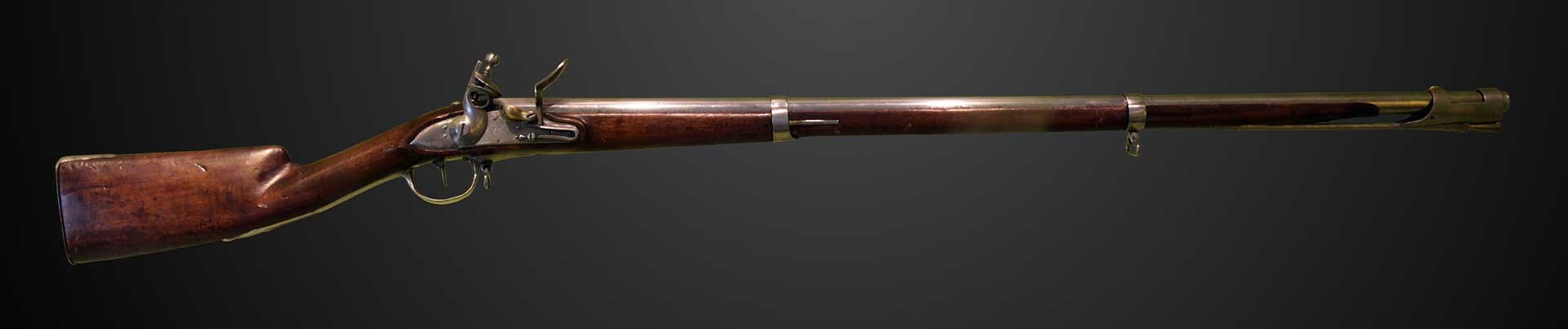
The weight of the M1763, being in excess of 10 pounds, was somewhat heavy for the infantry, so the French gunsmiths lessened the weight of the new model, the subsequent Model 1766 musket. This weight reduction was accomplished by thinning the barrel wall, shortening the lock, and slimming down the stock. Despite its reduction in weight, the Model 1766 showed itself to still be a well-built and robust infantry arm. The French arsenals turned out 140,000 of these firearms. The use of the M1766 was so favored by the American forces, that when the United States commenced producing its own long guns, the first model fashioned at the arsenal at Springfield, Mass., in 1795 was an exact copy of the 1766 Charleville.
France delivered Charleville Models 1763 and 1766 muskets in great numbers to the United States. In 1776, the United States, in urgent need of muskets, had sent Silas Deane off to France. His mission: secure arms and monies to sustain the fight against the British Crown. Deane was successful, due to a great extent from Marquis de Lafayette’s aid, as he rallied support from the French government. With no love lost between France and England, France lined up on the side of the Americans. It wasn’t until 1778 that the French were formally at war with the British, so until then, it was a clandestine operation, ferrying the arms to the American colonies.
Several modifications were made to the Charleville muskets in the 1770s, resulting in the following models; M1770, M1771, M1773, M1774, and M1776. Some view these five to be dissimilar models, but others look upon them as only variations of the earlier models, as several of the changed implemented during these six years were considered rather negligible. Of the more distinct variations were changes in the stock, wherein some of the Charlevilles were manufactured with a much more defined marked comb on the stock, while on some of the models, the comb is nearly absent, lessening the weight of the gun. In total, 70,000 muskets of this series were turned out.
The Model 1777 was designed with a few modifications. The most pronounced is the butt with “a cheek rest cut into it on the inboard side.” The story woven around the Model 1777, although incorrect, alleged that American soldiers carried large numbers of this musket into battle during the American Revolution. Yes, the M1777 did find use in the war with the British, but it was French troops, commanded by GEN Rochambeau, who carried them; the Americans shouldered M1763 and 1766 muskets. The M1777 would see service during the later French Revolutionary Wars, as well as the Napoleonic Wars that embroiled Europe from the early 1790s until 1815.
Some models were made for different branches of the military. These included the M1777 Artillery musket, the M1777 Dragoon musket, and the M1777 Navy musket. They were of variable barrel lengths. The artillery version’s barrel was 36 inches in length. Both the Dragoon and Navy muskets had 42-inch barrels. Cavalry muskets were offered in Models 1763, 1766 and 1777. On the Navy version all the furniture was of brass. On the others most of the furniture was brass.
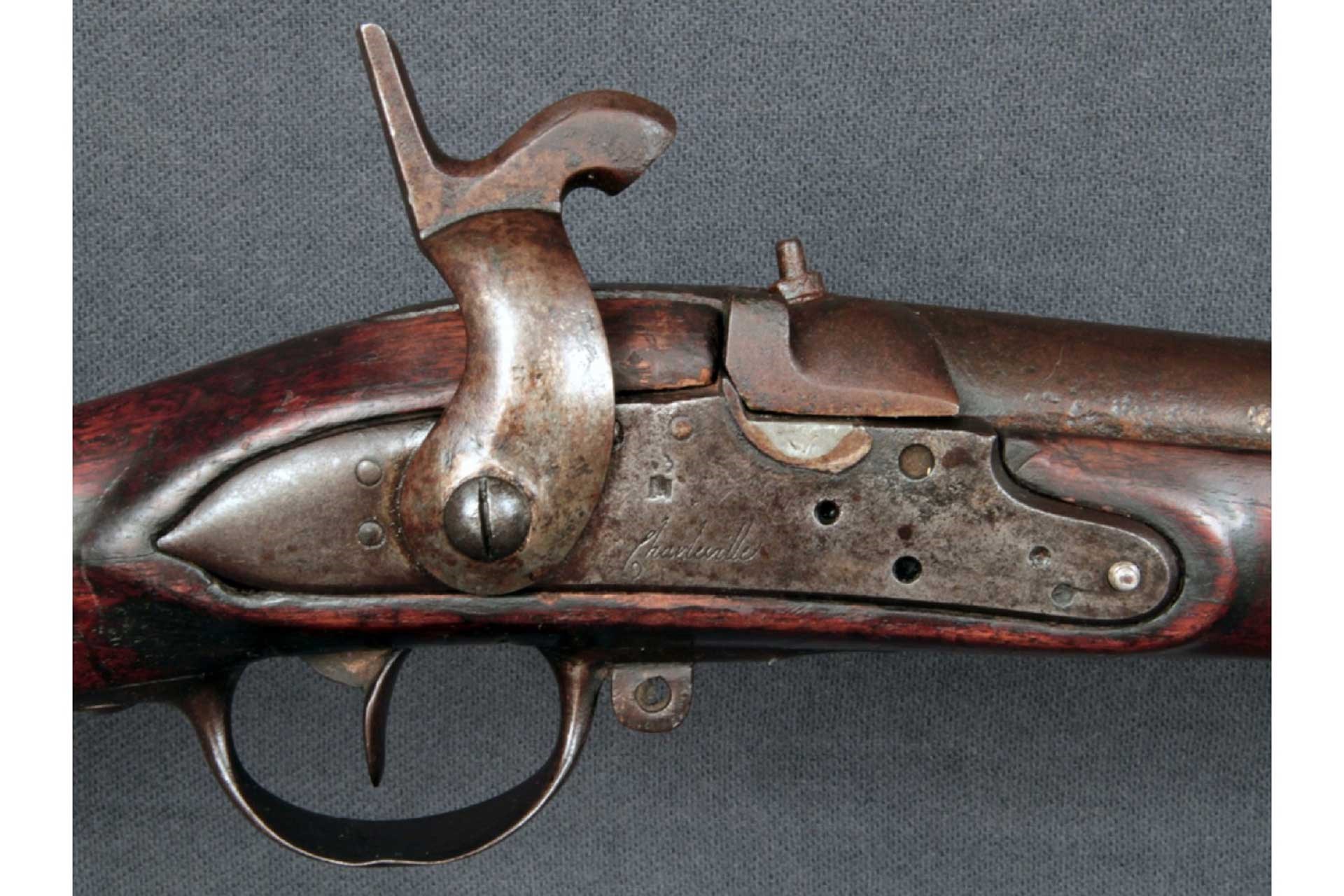
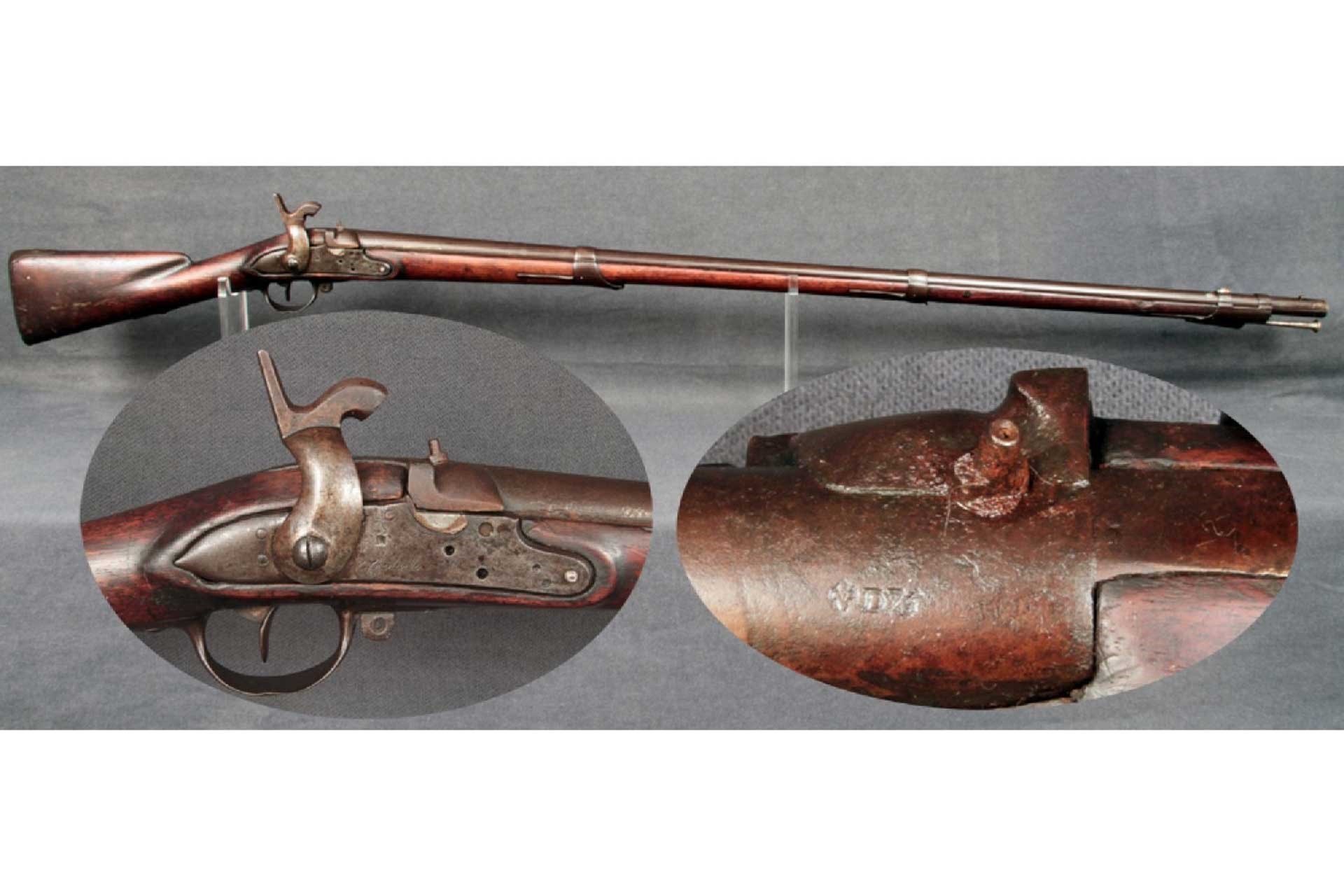
The Charleville muskets had a long tenure of service, as later models continued to be used until 1840, when percussion lock systems took over from the dated flintlock mechanism. A number of foreign countries, including Russia and the Netherlands, based their muskets on the French M1777. Belgium, Austria and Prussia also copied Charleville muskets. During the 1830s and 1840s, several older Charleville flintlock muskets were changed to percussion locks.
A number of modern gunmakers have fashioned replica Charleville muskets, notably Pedersoli and, in the past, Navy Arms. Military reenactors, both here and abroad, favor these arms and continue to do so, due to the firearm's extensive use across the world in the 18th and early 19th centuries.