Terminology: Hammer Spur

by
posted on December 20, 2010
** When you buy products through the links on our site, we may earn a commission that supports NRA's mission to protect, preserve and defend the Second Amendment. **
2010122015710-hammerspur_ms.jpg

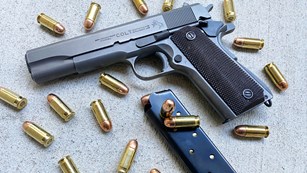
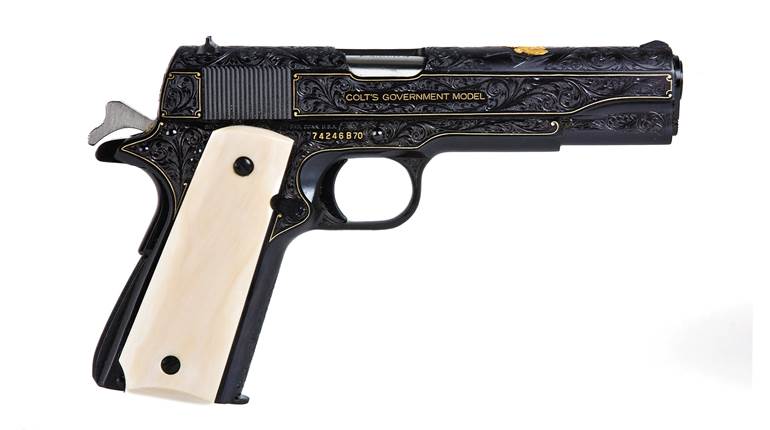
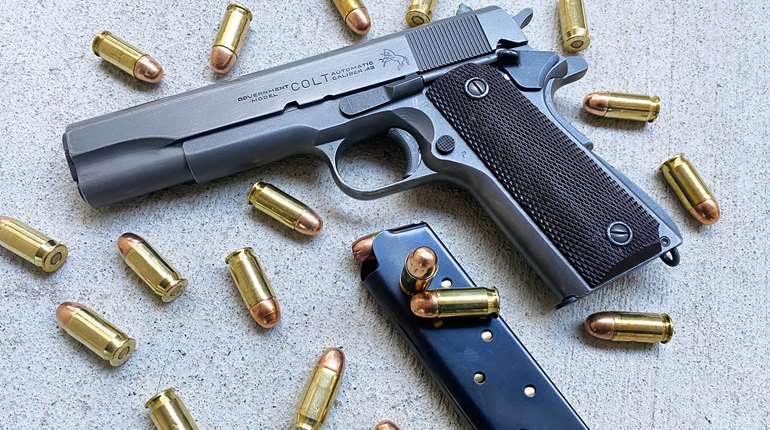
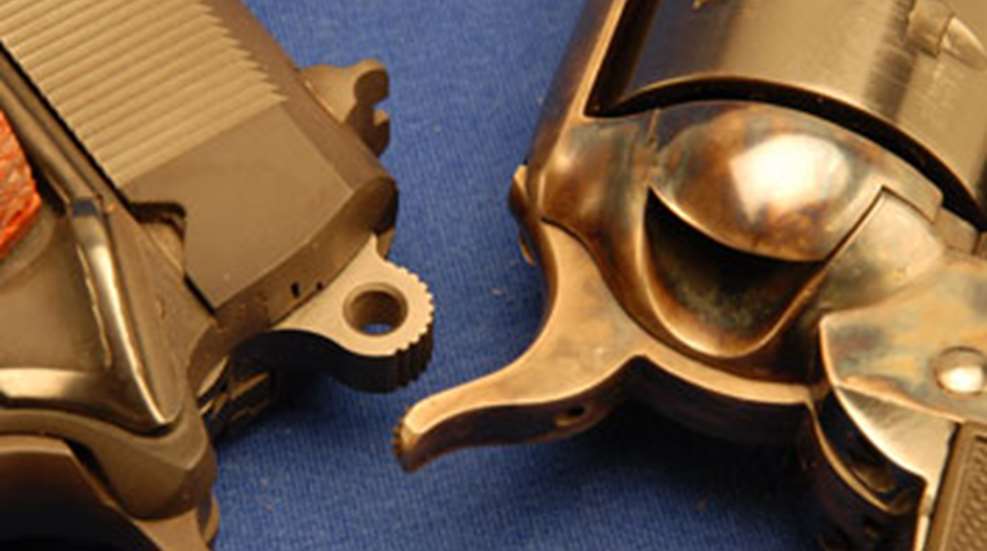
Times are a' changing. Not so long ago, almost every handgun hammer had a spur. This is the rearmost visible extension of the hammer on a pistol or revolver. It's the part on which the shooter places his thumb in order to cock the gun's action.

Hammer spur shape was very important on revolvers with single action trigger systems. Manual cocking was the only way in which to make these revolvers fire. The large contact pad on the spur of so-called “Target” revolvers (which usually have DA/SA trigger systems) was there to make cocking easier in the Timed and Rapid fire stages of the National Match course.

Without exception that I can think of, hammer spurs are not operationally required on hammer-fired semi-automatic pistols. Frequently, manufacturers simply leave them off and thereby achieve a smooth, clean contour to the rear face of the slide. However, if you are tempted to cut off your own hammer spur, proceed with caution. The mass of the hammer spur has another function and it's a lot more subtle. The weight of the spur contributes to a positive strike on the firing pin. You may have to make an adjustment somewhere else in the gun's action.

Latest

Federal 7Mm Backcountry Rifleman Review 2

Federal Signs Agreement With U.S. Army to Improve Ammo Performance

Federal Ammunition announced this week that it has entered into an agreement that allows the U.S. Army to utilize its patented Peak Alloy ammunition case technology for use in multiple cartridges and weapon systems.

Four Armed Citizen Stories That Tell us a Lot

Each self-defense case is different. As we read them, we find ourselves wondering what we would have done, and then asking if the citizen made the best decisions possible in the worst-case scenario.

The Three Rs of Performance Shooting: Rise, Return & Realignment

Way back in the day, the three Rs of learning were colloquially known as "Readin’, Rightin’ and Rithmatic." In today's modern performance shooting, the three Rs become Rise, Return and Realignment, the core mechanics of recoil control.

Subsonic Ammo 101: Everything The Suppressor Shooter Should Know

Slower-than-sound rounds are an art as much as a science. For target shooting, bullet upset is not important, but if you’re using subsonic loads for hunting or self-defense, it becomes critical.

I Have This Old Gun: Model 1874 Gras Rifle

Following the Franco-Prussian War of 1870, the French military were in desperate need of a new service rifle. Their answer was the Model 1874 Gras, which was largely an update to the earlier Chassepot design.

Compact & Quiet: CMMG's ZEROED Banshee

CMMG has expanded its Banshee line of AR-style rifles with the ZEROED, a firearm that is optimized for suppressor use.

Interests


Get the best of American Rifleman delivered to your inbox.