The A.H. Fox F. Grade shotgun that accompanied Roosevelt on his 1909 to 1910 African safari, and later during his “River of Doom” Amazon River expedition, will be on display when the Theodore Roosevelt Presidential Library opens on July 4. American Rifleman can’t think of a better day to officially unveil the Rough Rider’s stunning gun and significant historical artifact to the public than the 250th anniversary of this great nation’s independence.
The craftsmanship and quality poured into this double-barreled shotgun is stunning, although Roosevelt requested a more workmanlike model before his Africa hunt.
“When I wrote you I did not intend to take a shotgun to Africa. I find, however, that I would like to take such a gun, provided that at close quarters I could use it with ball also. In other words I should like in case of an emergency to have it loaded with ball and use it as a spare gun for a lion. Now I have rather a pride in taking American rifles on this trip, and in the same way I should like to take an American gun; but of course you may have by this time decided that you do not care to repeat your very kind offer; in that event will you tell me what the cost of such a gun as I have described, twelve-bore and plain finish, would be?” he wrote in a letter to A.H. Fox in 1908, according to R.L. Wilson’s book “Theodore Roosevelt—Outdoorsman.”
What arrived was different. The exhibition-grade, double-barrel 12-gauge had the words “Made Expressly for Hon. Theodore Roosevelt” inscribed on the right-side barrel. French walnut stock with fleur-de-lis carving, double triggers, extractors scroll engraving, gold inlays and more made it more of a collector’s piece than dangerous-game backup or everyday shooter. Among the few remaining company records are notes that indicate the frame, barrels and stock were personally selected by Ansley H. Fox.
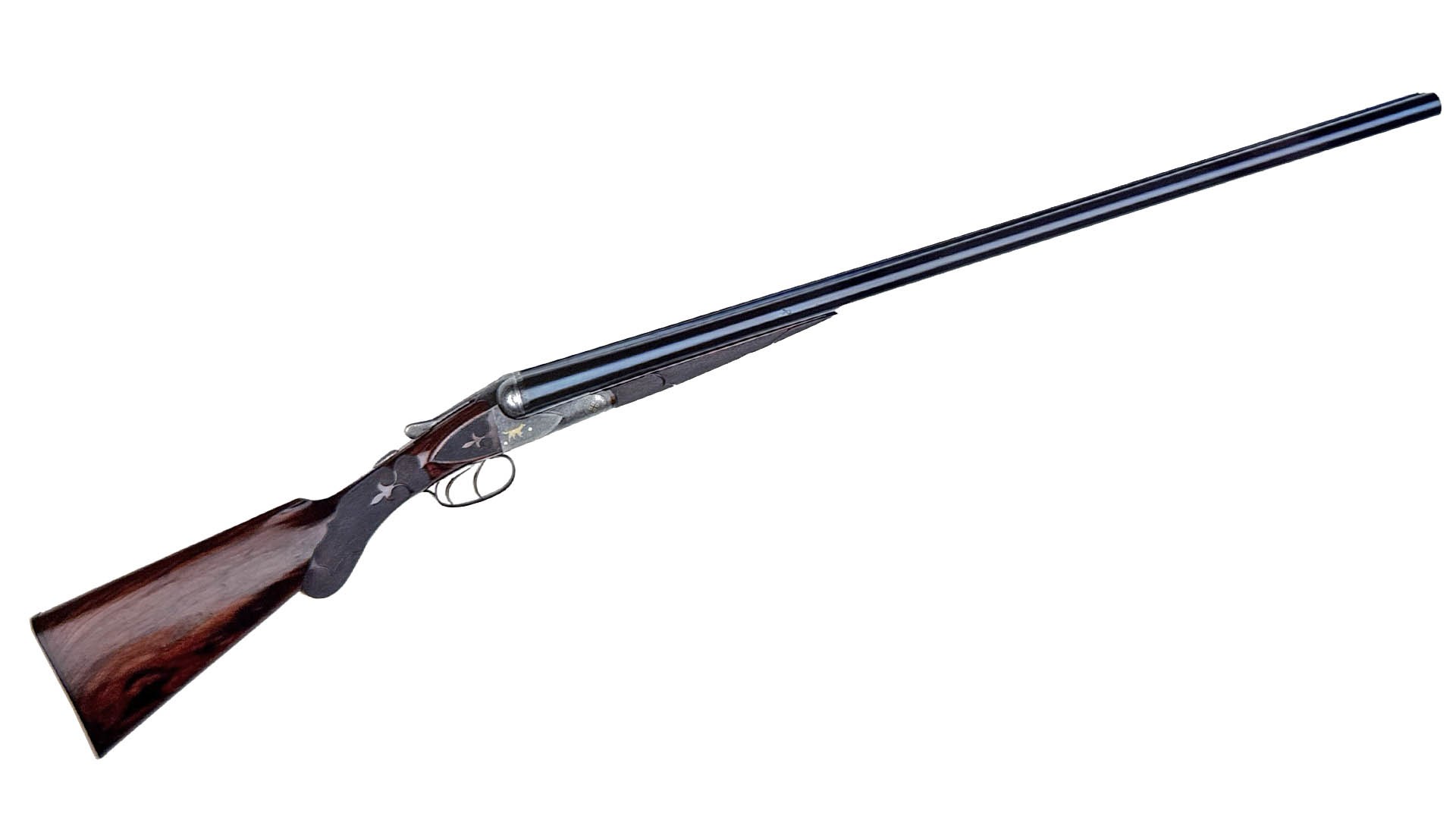
“...The double-barreled shotgun has come, and I really think it is the most beautiful gun I have ever seen,” Roosevelt wrote to the company after arrival. “I am exceedingly proud of it. I am almost ashamed to take it to Africa and expose it to the rough usage it will receive. But now that I have it, I could not possibly make up my mind to leave it behind. I am extremely proud that I am to have such a beautiful bit of American workmanship with me.”
With the shotgun’s well substantiated and continuance provenance, it was assessed at $2 million in February 2026. The museum is highlighting much more than simply its craftsmanship, artwork and value, however.
“The primary narrative we aim to share with visitors is that Roosevelt viewed these firearms not merely as weapons, but as essential tools for gathering specimens during his travels,” explained Susan Sarna, Theodore Roosevelt Presidential Library senior curator of collections. “In many ways, the shotgun functioned like a net—serving as a means for scientific collection and study. Roosevelt’s meticulous attention to detail extended to every aspect of his journey, from his clothing and hats to his glasses and, most importantly, his choice of weaponry.”
“To fully immerse visitors in Roosevelt’s adventure, the gun will be presented in a dedicated case within a room that explores his exploits in Africa,” she added. “By highlighting the shotgun in its proper context, we hope to illustrate both its historical significance and Roosevelt’s thoughtful approach to exploration and conservation.”
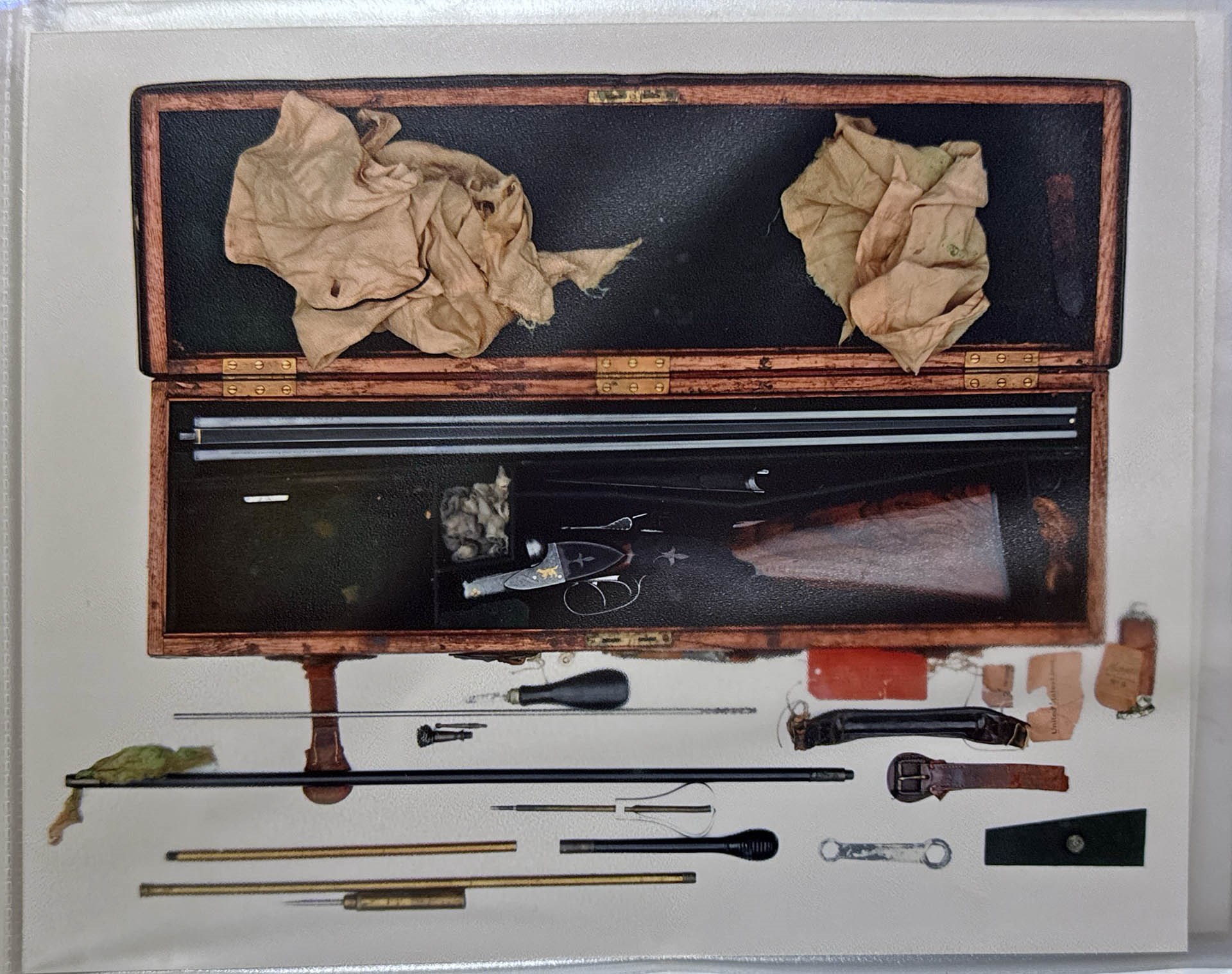
Roosevelt’s son Kermit inherited the shotgun. It was later owned by Kermit Roosevelt, Jr. In 1974, the family sold it to a historian. It was later purchased by a collector and now is in the museum’s collection.
“What stands out is how proud Theodore Roosevelt was to take an American-made firearm on his African expedition,” Sarna said. “While he also brought a Holland & Holland, an English gun he admired, the Fox shotgun held particular significance for him. The library will feature this remarkable piece on display inside its original carrying box, accompanied by all its accessories—even the pajamas Roosevelt used to clean the gun.”
Opening Day & Displays
On July 4, the Theodore Roosevelt Presidential Library—located in Medora, N.D., roughly 3.5 hours from Mount Rushmore—will officially open to the public with a special dedication. That night, Nova Sky Stories will put on “Eyes on the Stars: Theodore Roosevelt and the American West” drone show. Officials are adding to the day’s schedule, and readers are encouraged stay up to date by visiting the library’s Grand Opening webpage.
Much of the displays will be seen by the public for the first time in history. They include items he always kept on his desk at Sagamore Hill, including an inkwell used by Abraham Lincoln, candlestick from the signing of the Treaty of Portsmouth, a photograph of his wife and more.
Visitors will also get a glimpse into a challenging chapter of his life.
“Among these treasures is Theodore Roosevelt’s deeply personal diary from the time when both his wife and mother passed away, featuring the poignant entry marked with an ‘X’ and the words, ‘the light has gone out of my life,’" Sarna said. "In addition, visitors can view a portrait of Abraham Lincoln that Roosevelt kept in his White House office—a piece he often turned to for inspiration, reportedly asking himself, 'What would Lincoln do?' whenever confronted with difficult decisions.”
There’s also full-scale recreation of Roosevelt’s Elkhorn Ranch. “It’s the closest you can get to the Badlands that shaped him,” according to Sarna, “with immersive sights and stories that show how a hunter became one of America’s greatest conservation leaders—and how he learned to balance progress with protecting wild places.”
The grand opening is an amazing way to celebrate this great nation’s 250th anniversary.