Rifleman Q&A: Correct WWII M1 Bayonets

by
posted on September 12, 2021
** When you buy products through the links on our site, we may earn a commission that supports NRA's mission to protect, preserve and defend the Second Amendment. **
soldier rifle m1 bayonet blade gun war

Q. I would like to get a bayonet for display with my World War II M1 Garand rifle. There are different blade lengths and handle types on bayonets said to be for M1s at my local gun shows. What type of bayonet do I need?


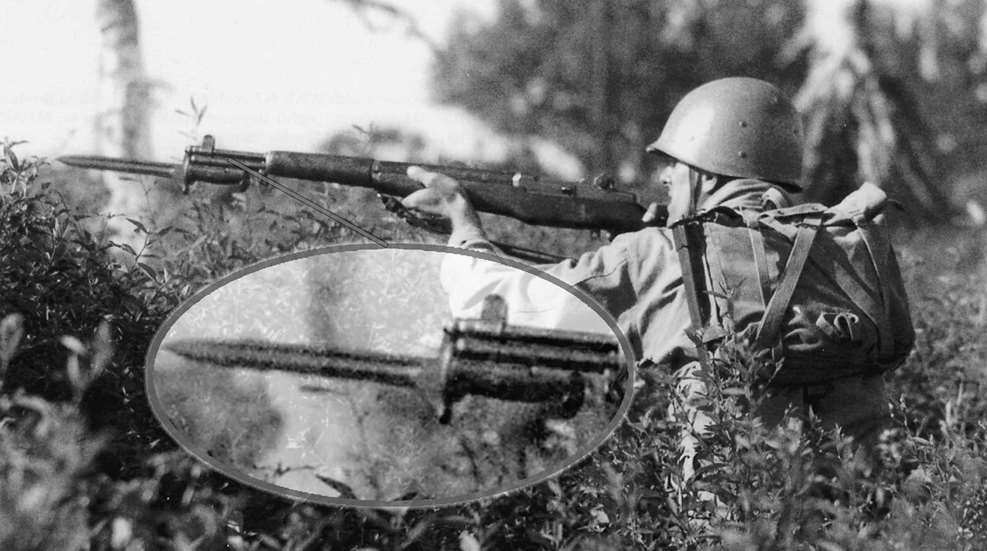
A. For M1 rifles in service up to circa 1943, the M1905 bayonet (16” blade) would be correct. M1905 bayonets were in production from 1905 until the early 1920s at Springfield Armory and from 1905 to 1919 at Rock Island Arsenal.

Large numbers of these bayonets remained in use during World War II. In 1942, the M1905 bayonet was put back into production by several commercial firms. The World War II-vintage M1905 bayonets were not as well crafted as their pre-war, arsenal-made counterparts and were fitted with plastic, rather than walnut, grips.

In early 1943, the M1905 bayonet was superseded by the “M1” bayonet. It was virtually identical to the World War II M1905 bayonet except the blade length was reduced to 10”. Fairly large numbers of M1905 bayonets had their blades shortened to 10”, although many unmodified bayonets remained in use throughout the war.

—Bruce N. Canfield


This “Questions & Answers” was featured in the October 2004 issue of American Rifleman. At time of publication, “Questions & Answers” was compiled by Staff, Ballistics Editor William C. Davis, Jr., and Contributing Editors: David Andrews, Hugh C. Birnbaum, Bruce N. Canfield, O. Reid Coffield, Charles Q. Cutshaw, Charles M. Fagg, Charles Karwan, Angus Laidlaw, Evan P. Marshall, Charles E. Petty, Robert B. Pomeranz, O.D., Jon R. Sundra, Jim Supica, A.W.F. Taylerson, John M. Taylor and John Treakle.

To subscribe to the magazine, please visit the NRA membership page and select American Rifleman as your member magazine.

Latest

French Charleville History 1

The French Charleville: Workhorse Of The American Revolution

Often overlooked, the French "Charleville" infantry musket was one of the most significant longarms of the 18th and 19th centuries and was integral to the success of the Continental Army during the American Revolution.

Lisa Tuason Appointed Interim CEO of Armscor/Rock Island Armory

Following the unexpected passing of Armscor President and CEO Martin Tuason in November, Lisa Tuason was appointed as interim CEO in early December, ensuring continued family leadership.

Preview: BullyWerx BullyTRAKR

Ultra-compact and stealthy by design, the BullyTRAKR is a discreet electronic tracking device that uses nearby smartphones and Wi-Fi Positioning System (WPS) to keep tabs on valuables through that encrypted WPS technology.

I Have This Old Gun: P08 Luger

One of the most iconic sidearms ever made, the P08 Luger was a mainstay in the German army from before World War I until the end of World War II.

Wilson Combat Honors Melvin Forbes With NULA Model 20 Tribute Rifle

Wilson Combat is honoring the 40th anniversary of New Ultra Light Arms, the company founded by legendary riflemaker Melvin Forbes and now part of the Wilson Combat family of companies.

Preview: Otis Technology Pro+ Snap Caps

Dry-fire training is one of the most effective ways to easily improve your firearm-handling skills at home, and safely performing reloads and manipulations requires a good set of snap caps tailored to your firearm.

Interests


Get the best of American Rifleman delivered to your inbox.