When I reminisced about Smith & Wesson's grand magnum—the Model 29—a heck of a lot of readers chimed in with their recollections and impressions. I wish I knew how many of these guns have made their way from Springfield and into the holsters, hands and, I guess, hearts of American shooters. Controversial at the time of its introduction, the .44 Mag. has enjoyed steady sales for over half a century. Lots of readers commented on their favorites and preferences seemed to be equally divided between 4- and 6-inch guns. Oddly enough, no one mentioned the special edition gun that has its own cult following.
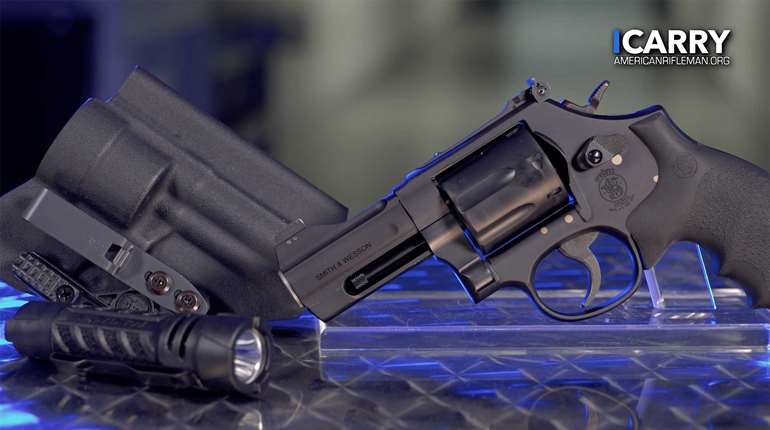
I’m talking about the Mountain Gun. It started as an elegant variation on the basic, stainless-steel Model 629. Designed to be a light and easily carried .44 Mag. that was still heavy enough to be shootable, the Mountain Gun was introduced in the late 1980s. Called either the Mountain Revolver or Mountain Gun, it was a stainless 4-inch .44 Mag. revolver. Although the gun had several special features—like the special chamfered face on the cylinder—its main difference from other 629s was the barrel contour. The Mountain Gun was a return to the much-admired barrel of the 1950 Target series. That shape was gracefully tapered toward the muzzle, and incorporated a slim sighting rib on top and ejector rod shroud underneath, showing a return to the classic shape of days gone by. The first run of guns was 5,000 and Smith & Wesson was astounded at the instant popularity. As a practical matter, the gun made sense because it was lighter and more carryable than regular 629s. But the thing that really made the product a winner was the classic shape of the barrel. It was tapered with a fluted rib and short lug, making it look like a classic from the Golden Age of the 50s.
When S&W announced that there would only be 5,000 of them, they may have made a mistake. As special runs go, 5,000 is quite a lot. They could have sold more, but kept their promise. In time, they made runs of blue-steel Model 29 Mountain guns and they sold quite briskly. Eventually, the Mountain gun concept was applied to several other calibers. I have had review samples in .41 Mag., .45 Colt and .45 ACP, as well as the original .44 Mag. Most of the variations were made in both blue and stainless, but always with the four-inch barrel. I like the blue .41 Mag. a lot, but the .357 Mag version is hard to beat. Remember that S&W created the L frame guns to be perfect for the .357 cartridge. Fitted with a special scaled-down version of the Mountain Gun barrel, the L frame was an absolutely perfect .357 Magnum revolver for carrying.
Most Popular