Just after World War I, a new semi-automatic pistol design emerged in Weimar Germany, and it became an immensely popular handgun both in Europe and the United States, despite having only been produced for a few short years. Watch our "American Rifleman Television" I Have This Old Gun segment above to learn the story of the Ortgies pistol, one of the forgotten handguns of the early 20th century.
"The Ortgies pistol is one of those underappreciated handgun designs from the earlier 20th century, and it has a really pretty fascinating story behind it," American Rifleman Executive Editor Evan Brune said. "Now Ortgies is not a particularly attractive name, but it is the name of the man who started the Ortgies Company and bought the Ortgies handgun design, Heinrich Ortgies."
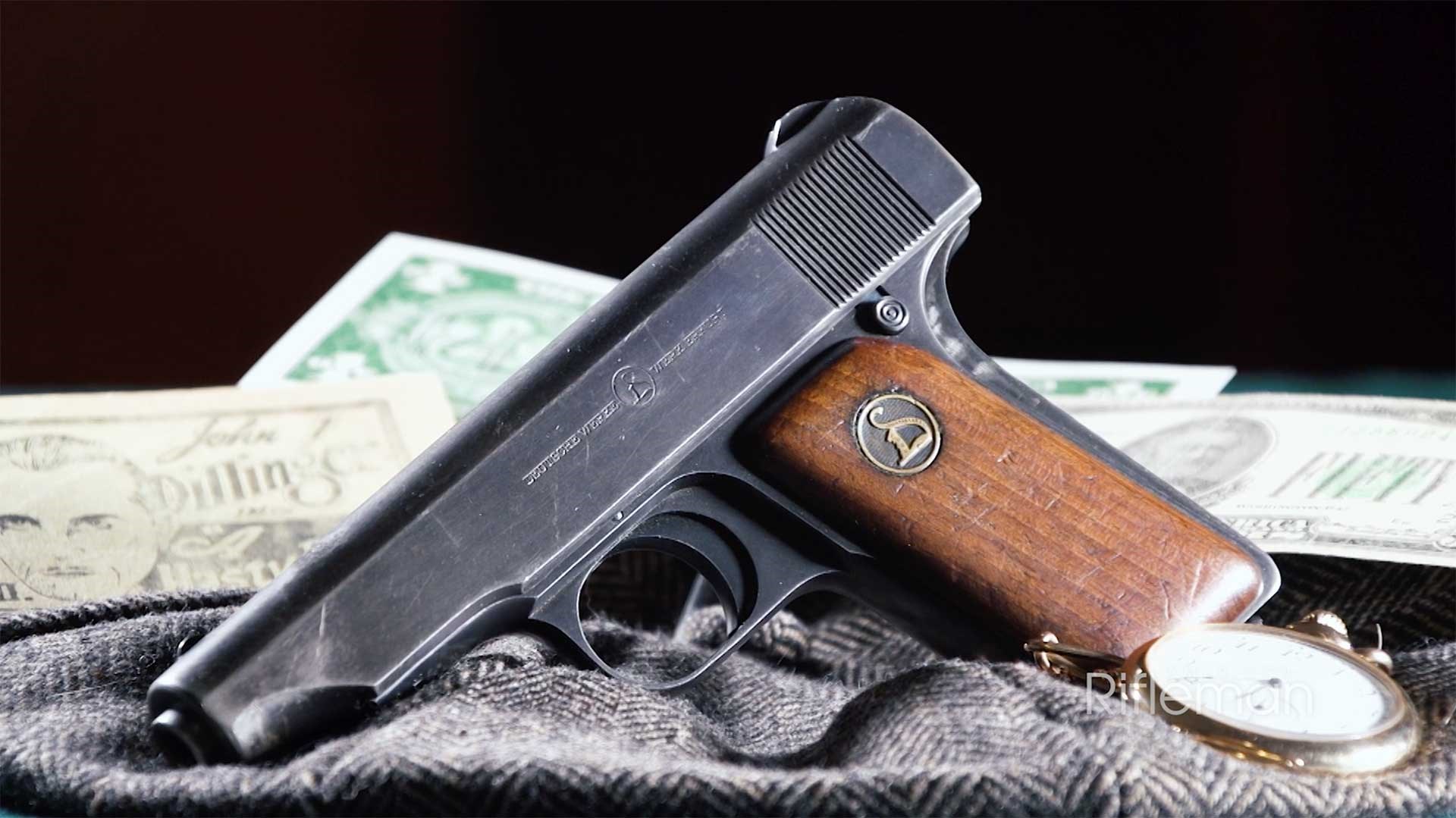
Ortgies had worked as a salesman in eastern Europe, but when he came across a design for a novel semi-automatic pistol developed by a Belgian gunsmith named Brauning, he bought the rights to the design and built his company around it.
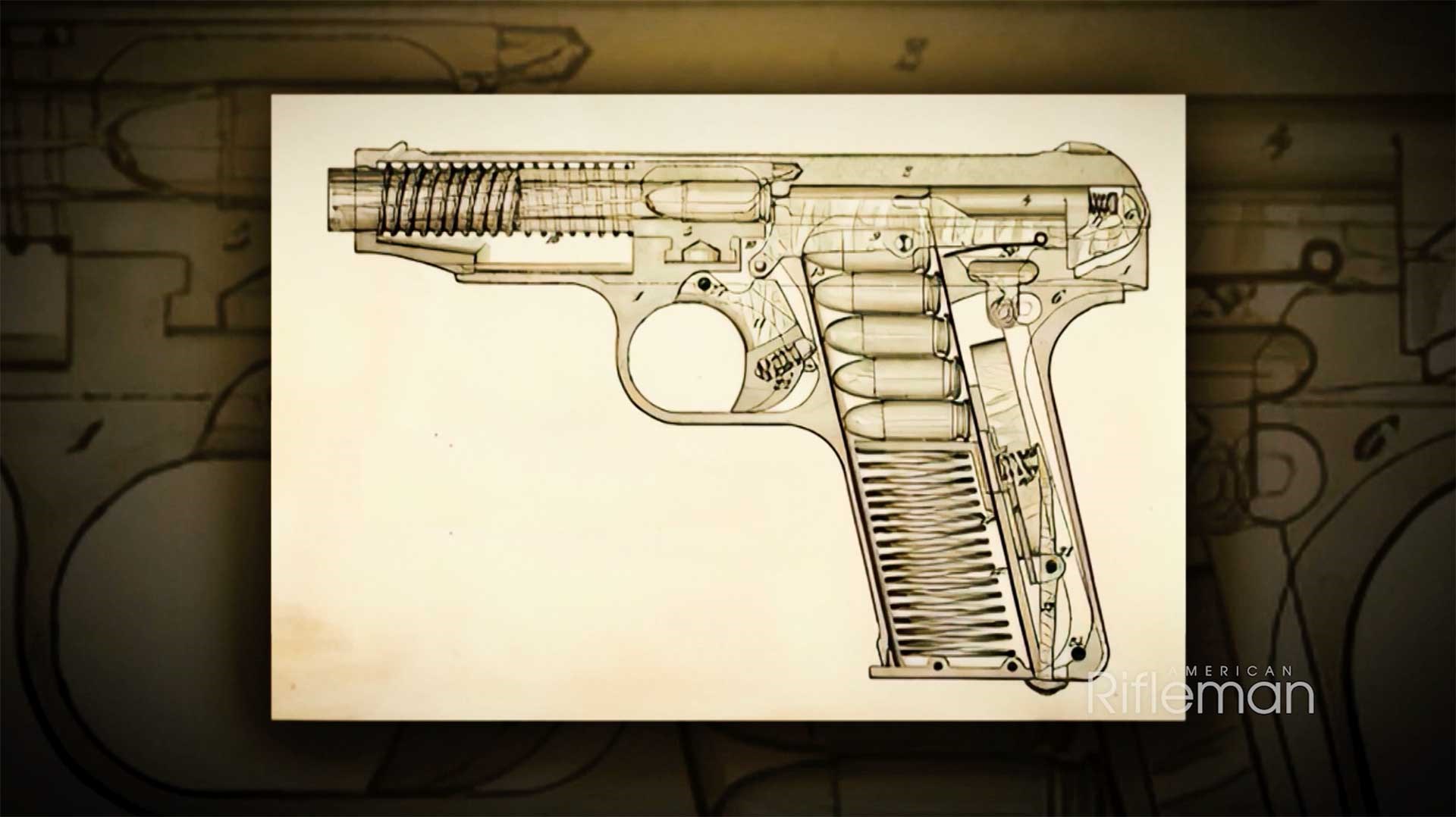
"It's an interesting little blowback auto. It had virtually no screws in it," American Rifleman Field Editor Garry James said. "Even the grips were held on by springs, and its safety arrangement was unique in that it had, on the backstrap, what looks like a standard grip safety, so when you actually grasp the gun to fire it, you push this lever in this safety, and the gun was ready to fire. When you wanted to take it out of service, there was a little button on the side and you pushed that little button and the gun was on Safe."
Ortgies produced about 16,000 pistols under his company name before Deutsche Werke expressed an interest in the design and ultimately bought out Ortgies and began producing the pistol. From 1921 until early 1924, Deutsche Werke produced about 400,000 pistols before production was shut down by allied officials who alleged that production of the gun violated the Versailles Treaty that restricted German armaments.
"One of the things about the Ortgies that people think is they think that it was some kind of secondary, you know, Wehrmacht-issue arm," Brune said. "And so there's a lot of, you know, returning Allied servicemen who have these guns with capture papers and, you know, the stories, of course, float around that it was taken off of some German officer or whatever. But these guns had been out of production for 15 years by the time World War II started."
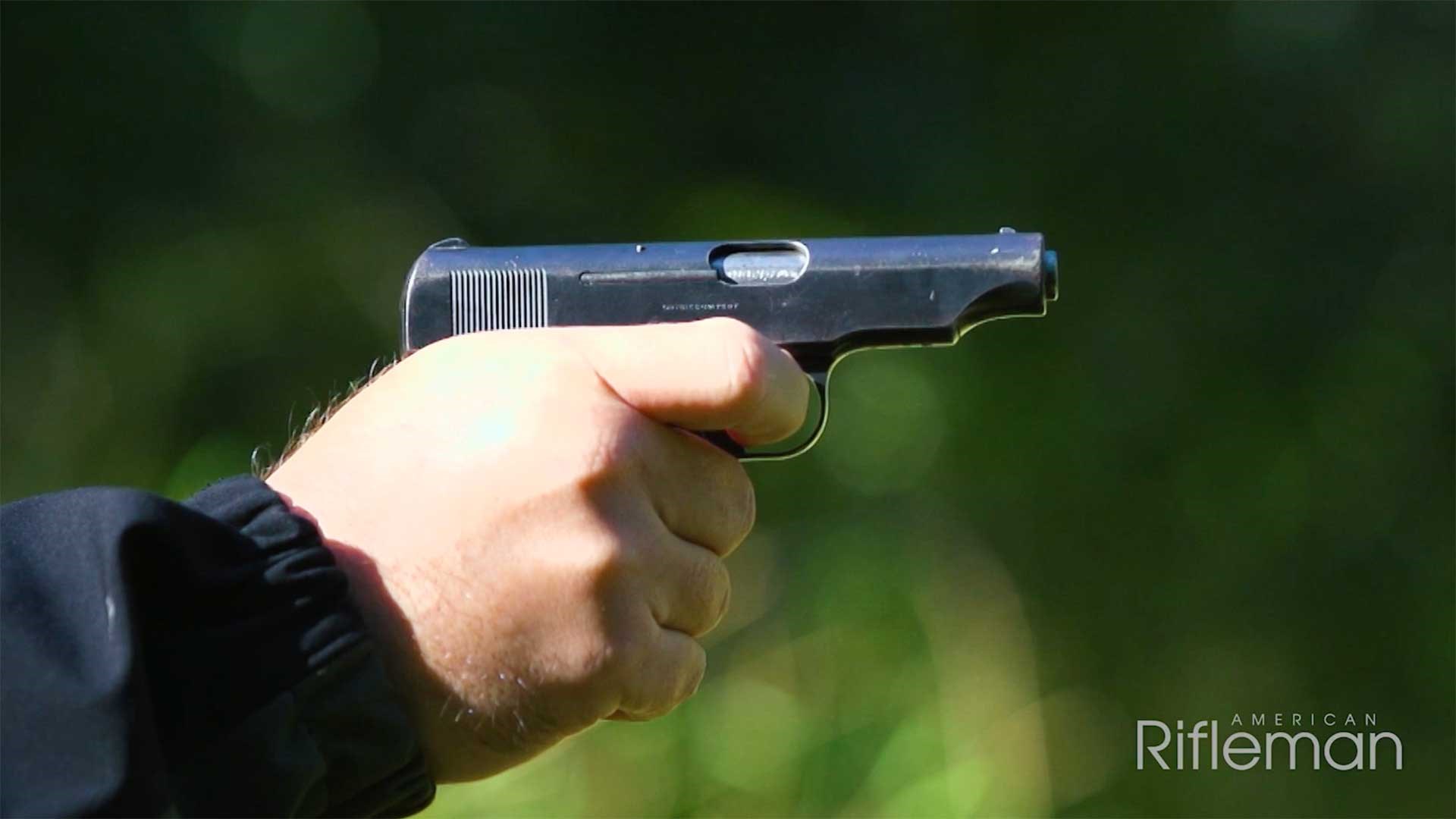
Many of the Ortgies pistols captured and brought back stateside by American GIs at the end of World War II were privately owned handguns or police arms that had been gathered up and confiscated following the Allied victory over Germany in May 1945.
" The gun never found a contract with the military whatsoever," NRA Museum Director Philip Schreier said. "And so as a collector's item, this very fine gun that was manufactured only in the 1920s during the Weimar period never found a collecting base, as far as anyone you know, truly becoming interested in them. You find a lot of them in great condition because they just didn't see a lot of use."
To watch complete segments of past episodes of American Rifleman TV, go to americanrifleman.org/videos/artv. For all-new episodes of ARTV, tune in Wednesday nights to Outdoor Channel 8:30 p.m. and 11:30 p.m. EST.